Is it possible to buy just one motorcycle jacket to cover all of your riding year round? The answer, of course, is “It depends.”
If you’re one of those riders who only goes out on summer weekend recreational rides when the mood strikes, then it’s not hard to live comfortably with just one jacket. Same if you live in a part of the world with consistent weather all year. But what about those of us who live in temperate climates and for whom riding is not such a discretionary activity? If you use your motorcycle to commute to work or for other necessary transportation, regardless of whether it’s sunny and warm or raining and cold, or if you take long trips where you might encounter wide swings in the weather, finding one jacket to handle it all becomes more complicated.
Just as I contemplated how many motorcycles are the right number to have (for me, as long as you can afford it, one that’s good at each kind of riding you want to do), I’ve also considered how many jackets I need, and the answer is the same: one for each type of weather I ride in. Since I ride all year, I need something to protect me but keep me as cool as possible in the heat, something windproof I can add layers beneath for cool and cold weather, and something reliably waterproof.
It can seem impossible to find one jacket to handle all that well. But just as some people prefer one, highly competent do-it-all motorcycle instead of three specialized bikes in the garage, some prefer to have one jacket that can adapt to all conditions, rather than a closet full. And if you’re a young person who just bought your first motorcycle, you probably don’t have much budget left for gear and you’re tempted to skimp on protection — even though when you’re just getting started you really need protection.
That brings me to the potential solution: The Sedici Alexi 2 mesh jacket. It not only comes as close to a jacket for all seasons as anything I’ve tried, but it also does so for a remarkably low price. But can it really handle it all? That’s a tough ask. So let’s see.
The Sedici Alexi 2 motorcycle jacket’s three-in-one system
How can one jacket handle everything from 90-degree F summer afternoons to 40-degree F winter days? The Alexi 2 does it by being a three-piece system.
The shell of the textile jacket has large mesh panels on the chest, back, and arms, so when it’s worn alone, air flows through like it does with any other mesh jacket. It’s the coolest motorcycle gear you can wear in hot weather, and by “cool” I mean temperature, not style. Mesh allows far more air flow than solid-shell jackets with zippered vents that can be opened.
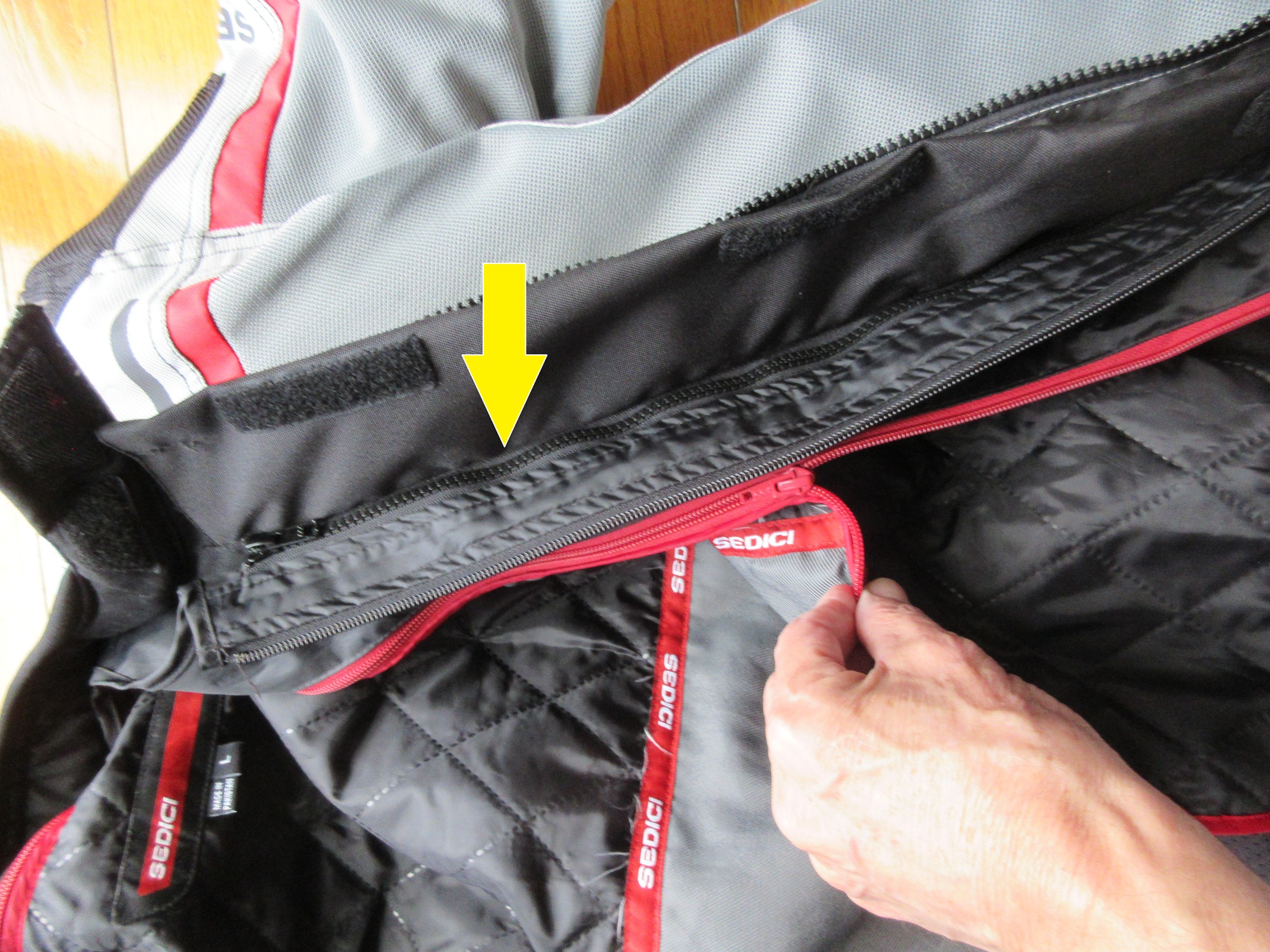
Part two is a windproof and waterproof full-sleeve liner that zips into the shell. Color coded snaps on the liner match up with loops at the cuffs and two zippers connect the liner to the shell alongside the front main zipper. Once installed, the liner has its own main zipper with a flap over it, held in place by Velcro, to keep water out. This liner feels a little thicker and more sturdy than most of the zip-in waterproof liners I’ve seen in mesh jackets.
Part three is the part almost no other mesh jackets offer: a full-sleeve thermal liner, with 100 grams of insulation in the torso and 60 grams in the arms, that zips to the windproof and waterproof liner.
Many mesh jackets come with a windproof and waterproof liner that can be added for cool mornings or when rain hits unexpectedly. Many jackets made for cooler weather come with a thermal liner that can be removed or added as needed. But few offer all three options. The Alexi 2 does, and at a surprisingly low price.
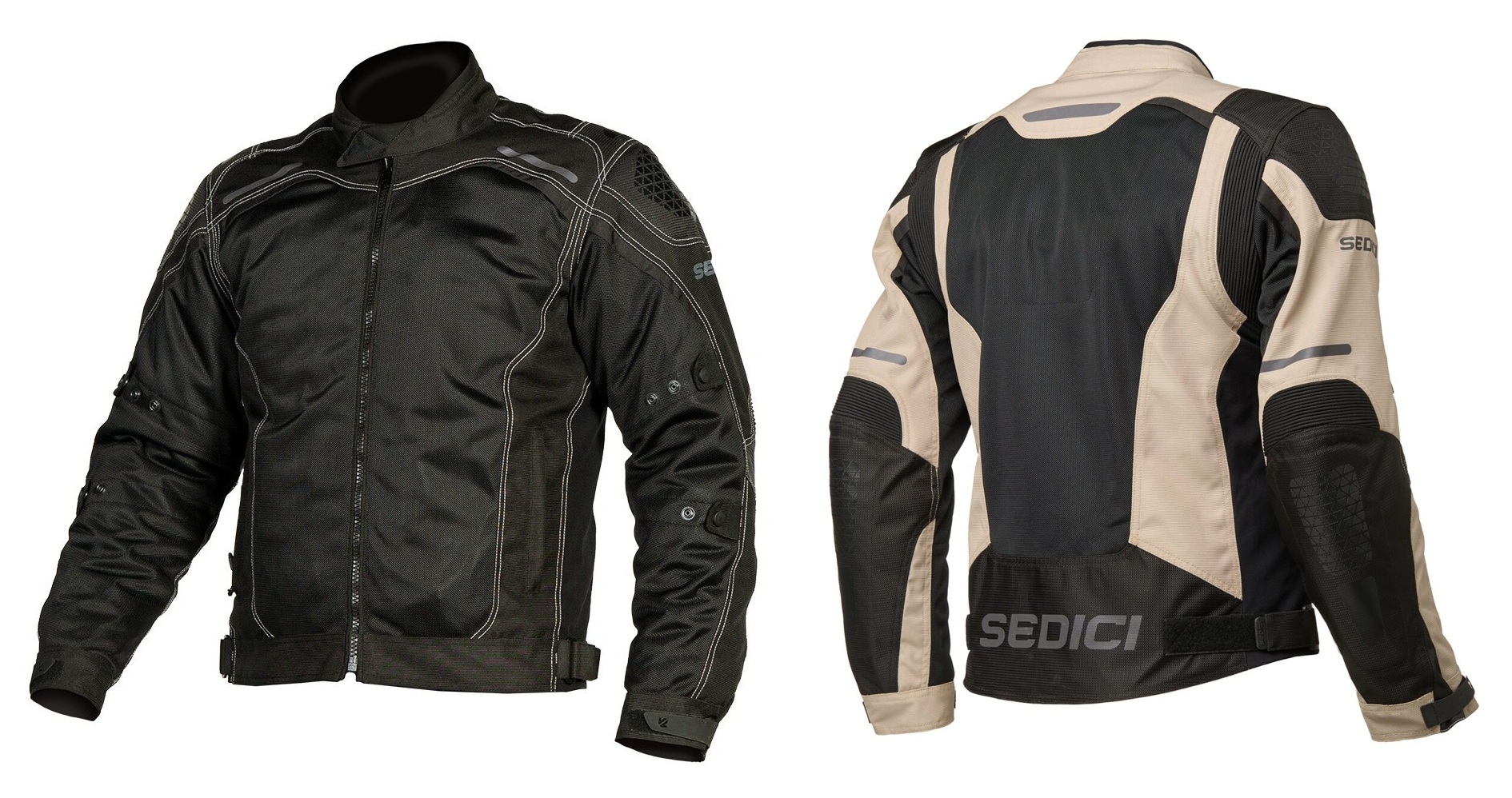
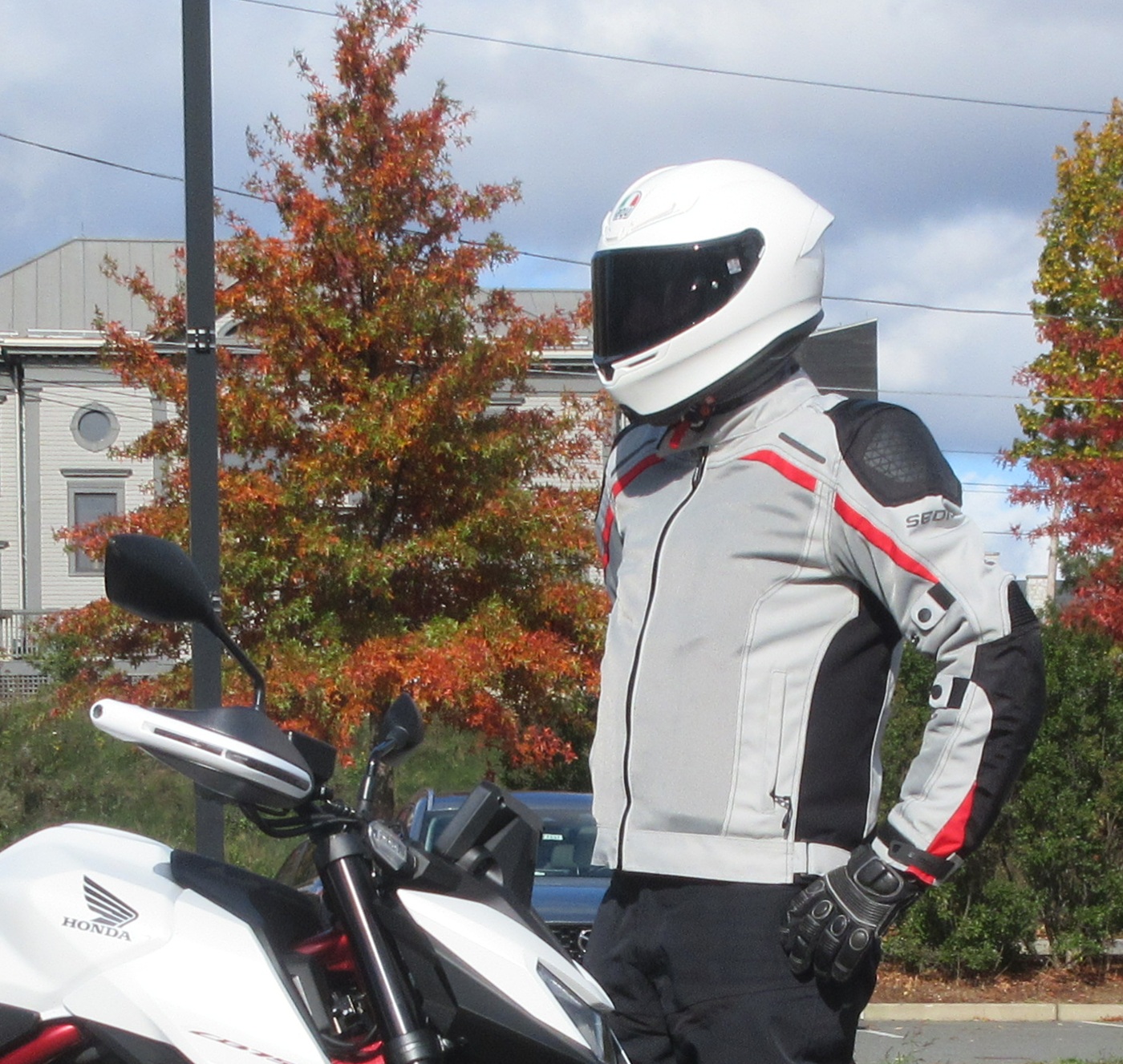
Full disclosure, I receive no compensation for this review or sales of the jacket, but Sedici is the house brand of Comoto, parent company of Common Tread, the media outlet where I am the editor. The jacket sells for $229.99 at RevZilla and Cycle Gear. Three colors are available at RevZilla: a black version with white stitching, a Sand/Black color combination, and the Silver/Black/Red version you see me wearing in the photos here. At Cycle Gear, only the black version is available.
In addition to its temperature-management features, the Alexi 2 comes with CE Level 2 armor at the shoulders and elbows. There’s a pocket for a back protector, which I added. One that’s designed to allow air flow is available and costs about another $60, and I always advise adding a back protector.
So that means for just under $300 you can buy a jacket that makes a plausible case for being the only motorcycle jacket you’ll ever need. It’s easy to spend twice that much on a jacket from more famous brands. But a low price and a list of promises aren’t worth anything if the jacket doesn’t perform in real life. So I rode with the Alexi 2 in a variety of conditions over the past month to see how it worked.
Testing the Sedici Alexi 2
Even though I’ve only had the Sedici Alexi 2 for a little over a month, the timing was perfect and I’ve been able to test it in a wide range of conditions, from 97 degrees F under unblunted sun in the Anza-Borrego Desert of Southern California to 46 degrees F on cool days back home in western Massachusetts. I also rode for about 40 minutes on my little supermoto, which provides no weather protection, in a steady rain to test the claims of the waterproof liner. Any jacket is fine on a dry and perfectly comfortable day, but how did the Alexi 2 handle the heat, the chill, and the wet?
As you’d expect for a jacket that tries to do it all, the Alexi 2 isn’t the best at handling any one of those three extremes, but it did the job in all three cases.
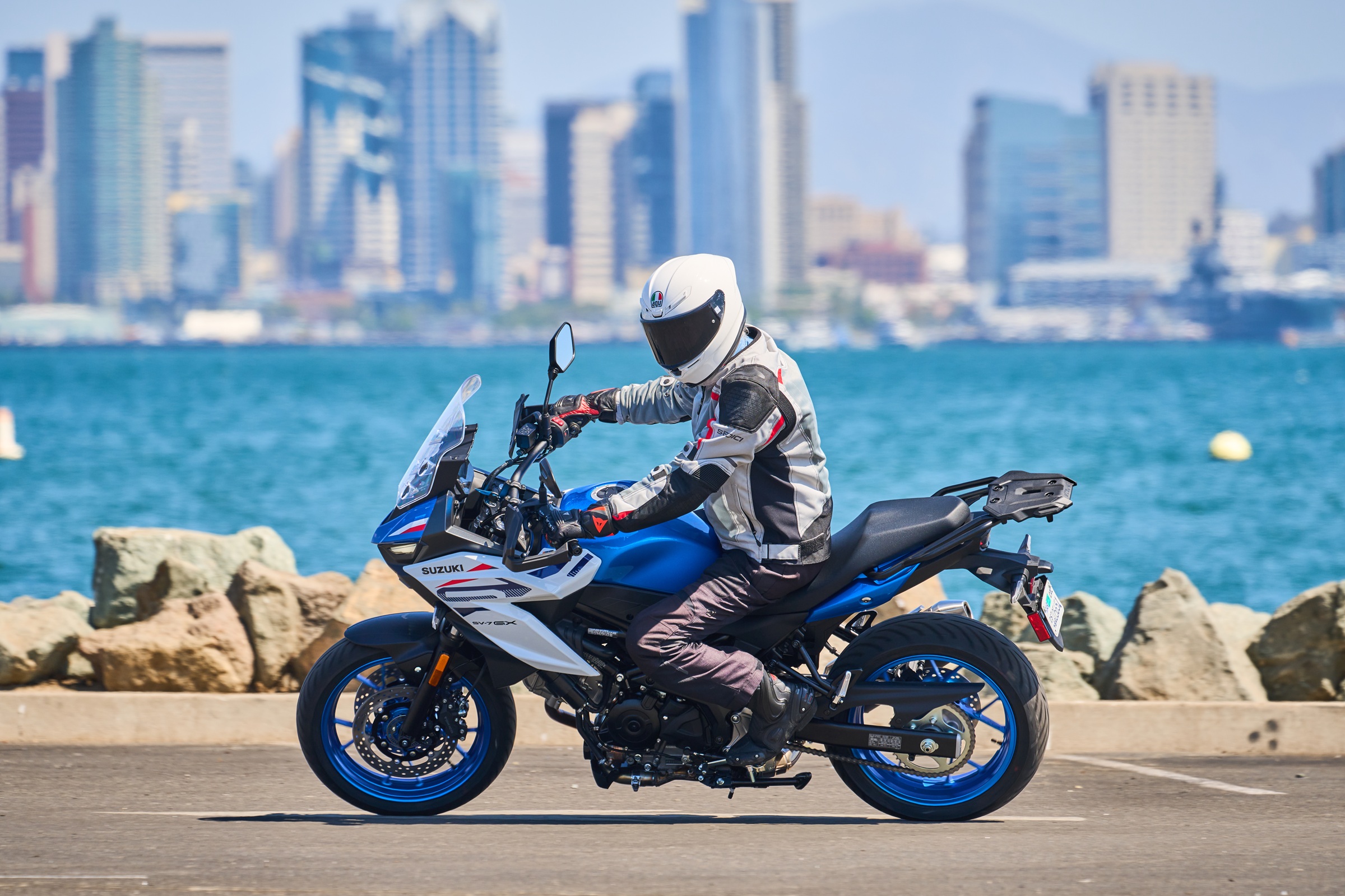
Can it take the heat? My test ride on the Suzuki SV-7GX took me through a variety of terrain, including below sea level in the California desert, where temperatures hit 98 degrees and it wasn’t even noon yet. The mesh panels in the chest, back, and arms flowed a lot of air. The outside of the arms, the shoulders, and other sections of the Alexi 2 are solid textile material, so those areas don’t flow air. I’ve had other jackets, like my old REAX Alta, that have shells that are entirely mesh. That style flows the absolute maximum amount of air. With jackets like the Alexi and the Merlin Shenstone I’ve also used, the solid panels limit air flow a little but they also inspire a lot more confidence about standing up to abrasion in a fall. Overall, after riding through the desert, I was satisfied with the Alexi 2 and I feel like the sturdier construction, compared to a 100% mesh construction, is a fair tradeoff.
Can it keep you from freezing? Winter hasn’t hit yet, even here in the Berkshire Mountains, where it comes early, but I did ride in the Alexi 2 on chilly days. The thermal liner itself is not very thick. The 100 grams of insulation in the body is considered “moderate” and the 60 grams in the sleeves is considered “light” insulation, but it clearly does help. And of course you can always add your own insulating layers underneath. Years of living in tropical climates only exaggerated my natural-born sensitivity to cold. More than once I’ve been riding in upstate New York or Vermont, wearing two shirts and a jacket, totally comfortable, and passed locals out riding in a T-shirt. So while I’d definitely add a modern base layer and my old-style wool sweater under the Alexi 2 on cool days, the thermal liner might be enough, on top of whatever you’re already wearing, for many riders.
Can it keep you dry? I haven’t had many opportunities to test the Alexi 2 in the rain, but as mentioned above I did a 40-minute ride in steady rain one evening. When I got home, no water had gotten through the waterproof liner. The thermal liner inside was dry. That said, there are some inherent limitations in the design that are true with any waist-length jacket. Because there is little overlap between the jacket and my waterproof riding pants, some rain did get blown into my belly button area. I find this commonly happens with a waist-length jacket and that’s why I prefer a three-quarter-length jacket in the rain or serious cold. But overall, I have to say the Alexi 2 did its job in all three areas.
Pros and cons of the Sedici Alexi 2 and a word on fit
The most obvious strength of the Alexi 2 is its versatility. It’s easy to imagine a trip, especially in the western United States, for example, where you might have chilly temperatures at high altitude in the mountains and then be broiling when you drop to sea level in the desert. Plus, you have to be prepared for rain. Packing multiple jackets eats up limited cargo capacity. With the Alexi 2, you can just shed or add layers as needed.
The other obvious advantage is the price, at under $300 even after you add a back protector. It would be difficult (though not necessarily impossible, as I explain in the section below) to cover this wide a range of weather conditions for less money.
As for the cons, one drawback inherent to the multi-part, multi-layer design of the Alexi 2 is the feeling of bulk that inevitably results when you have three separate layers sandwiched together on you. The necessary zippers and fasteners add material and a separate waterproof liner always feels a little bulkier than a waterproof liner bonded to the shell. But that’s a price you pay for the versatility.
While the waterproof liner on the Alexi 2 feels sturdier than just about any others I’ve seen included with a mesh jacket, there’s still the cons inherent with the design. A liner inside the jacket means the shell gets soaked and maybe heavy in the rain, and the air flow through the mesh means it doesn’t keep you as warm as a jacket with a solid shell would. Again, these are prices paid to have the versatility of mesh, waterproofing, and insulation all in one package.
One small con I have about the Alexi 2 is one that’s common to other Sedici jackets: the closure at the throat tends to be scratchy. I often wear a cotton Klim neck tube, whether to keep the air off my exposed neck in cool temperatures or to keep the sun off my neck and to soak with water and keep me cool on super-hot days, and that also helps when I tuck it into the Alexi 2’s collar to keep it from scratching me.
As for fit, I am five feet, 10 inches tall and weigh about 170 pounds, so I wear a medium in some jackets and a large in others. The Alexi 2 I’m wearing is a size large. Without the liners, it feels a bit loose, which is not a bad thing with a mesh jacket because it helps with airflow, and with both liners in it still leaves enough room for me to add my own base layer and wool sweater if needed for additional warmth. If you’re between sizes, your choice might depend on how much you think you’ll wear it in cold weather and how much added insulation you’ll need to fit underneath.
Budget alternatives to the Sedici Alexi 2
While I don’t know of a less expensive alternative to the Alexi 2 that can handle the same wide range of weather, there are other ways to tackle the challenge and you may find that they work better for you.
On multi-day summer road trips, when I know I am going to encounter hot weather, my standard kit is to take a mesh jacket and a rain jacket I can wear over it, plus whatever insulating layer I might need, such as a sweater or sweatshirt, if I’m going to have any cold mornings or lower temperatures at altitude. I take this approach mainly because it covers the widest range of conditions with minimal packing space. I’m ready for the hottest afternoons but if the morning is cool? Put the rain jacket over top of the mesh to shut off the air conditioning? Same for rain.
This approach not only conserves packing space, but is also the most affordable way to cover a range of conditions. You could decide that instead of the Alexi 2’s bulky liners, you can make do with a simple (and therefore inexpensive) mesh jacket with no liners and a basic rain jacket. And if you’re stopped by the side of the road with a rain storm bearing down on you, it’s quicker to pull a rain jacket over top of your mesh jacket than to take off the Alexi 2, zip in the waterproof liner, find the little snaps in the sleeves, match them with their loops, etc.
A very basic rain jacket and a basic, no-frills mesh jacket together won’t come in greatly cheaper than the Alexi 2, but you could save a little money. Plus, if I’m in serious rain, especially for hours at a time on a long trip, I’m far more confident that I’ll stay dry and warm with a rain jacket over top a mesh jacket than with a rain liner zipped inside a mesh jacket. And when it gets colder, you can add insulating layers underneath that you probably already own.
Finally, let me note that for the sake of simplicity I’ve limited this discussion to jackets. Of course a jacket isn’t the only protection you need and the other gear you buy may influence your decision (such as buying a two-piece rain suit instead of just a rain jacket). For a broader discussion of the gear you need, see my common-sense guide to motorcycle gear. And if you still have questions about which jacket is the best choice for you, see my guide on how to choose a motorcycle jacket.