It’s a common question for many new or aspiring riders, especially ones struggling to scrape together enough money to buy a first motorcycle: Do I really need to buy all this gear?
Like so many other things in these contentious times, the answers are often driven by ideology as much as practical, rational advice. At one end of the spectrum are riders who see helmet laws as “totalitarian enactments” and react with a visceral opposition that is rarely aimed at laws requiring seat belts and airbags in cars, for example. At the other end of the spectrum are the ATGATT (All The Gear, All The Time) absolutists who will preach to you about the dangers of riding to the corner convenience store while wearing anything less than full leathers.
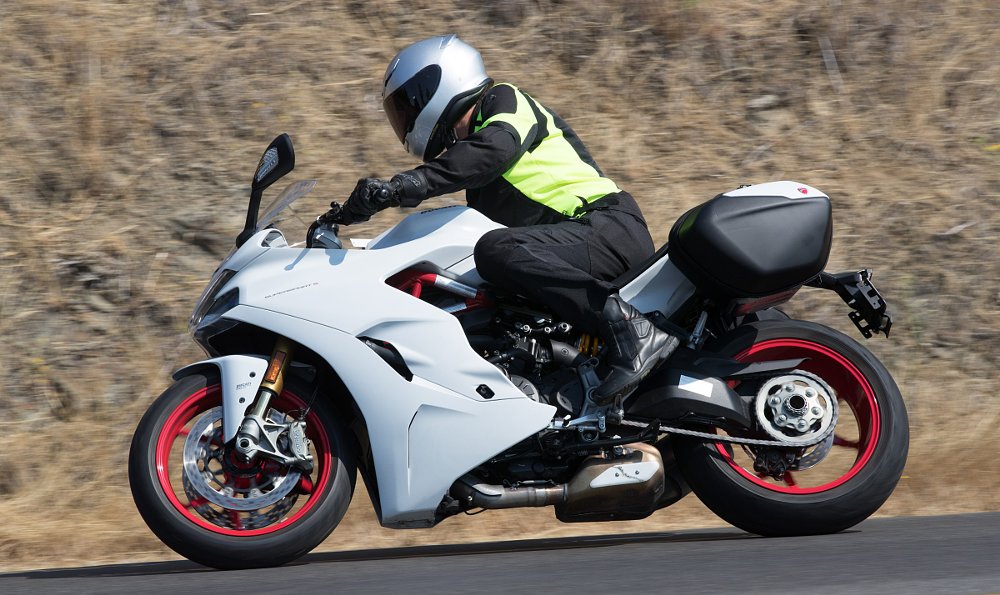
Sure, it can be daunting to try to buy a full complement of gear, especially if you just spent all your money to buy your first motorcycle. But a few pieces can go a long way, such as a mesh jacket for hot weather and rain gear to go over it for cooler mornings or wet days. Photo by Brian J. Nelson.
The question of what motorcycle gear you really need to wear is one that deserves more nuanced and thoughtful consideration, in my view. Not every ride is the same so not every ride demands the same protection. At the same time, it’s important to remember that riding a motorcycle can be a life-changing experience, in both good ways and, if things go wrong, in bad ways. And when things do go wrong, our protective gear is our main line of defense.
So with the hope of providing that careful consideration, here’s my personal approach to deciding what gear to wear. No preaching, no ideology, just (I hope) a common-sense, informed, rational plan that’s based on the nature of the ride, which changes, and the nature of my vulnerabilities, which don’t change.
Priorities, vulnerabilities, and preferences in motorcycle gear
I try to apply common sense by establishing a list of priorities based on what I stand to lose. So when I get dressed for any given ride, I start at the top of this list and work my way down until I feel comfortable, based on the ride I’m taking and the conditions. You can do the same, going down the priority list. What’s an “always” for me might be a “sometimes” or “Nah, I’m OK,” for you, depending on your budget, risk tolerance, the kind of riding you do, the age of your bones compared to mine, and other factors.
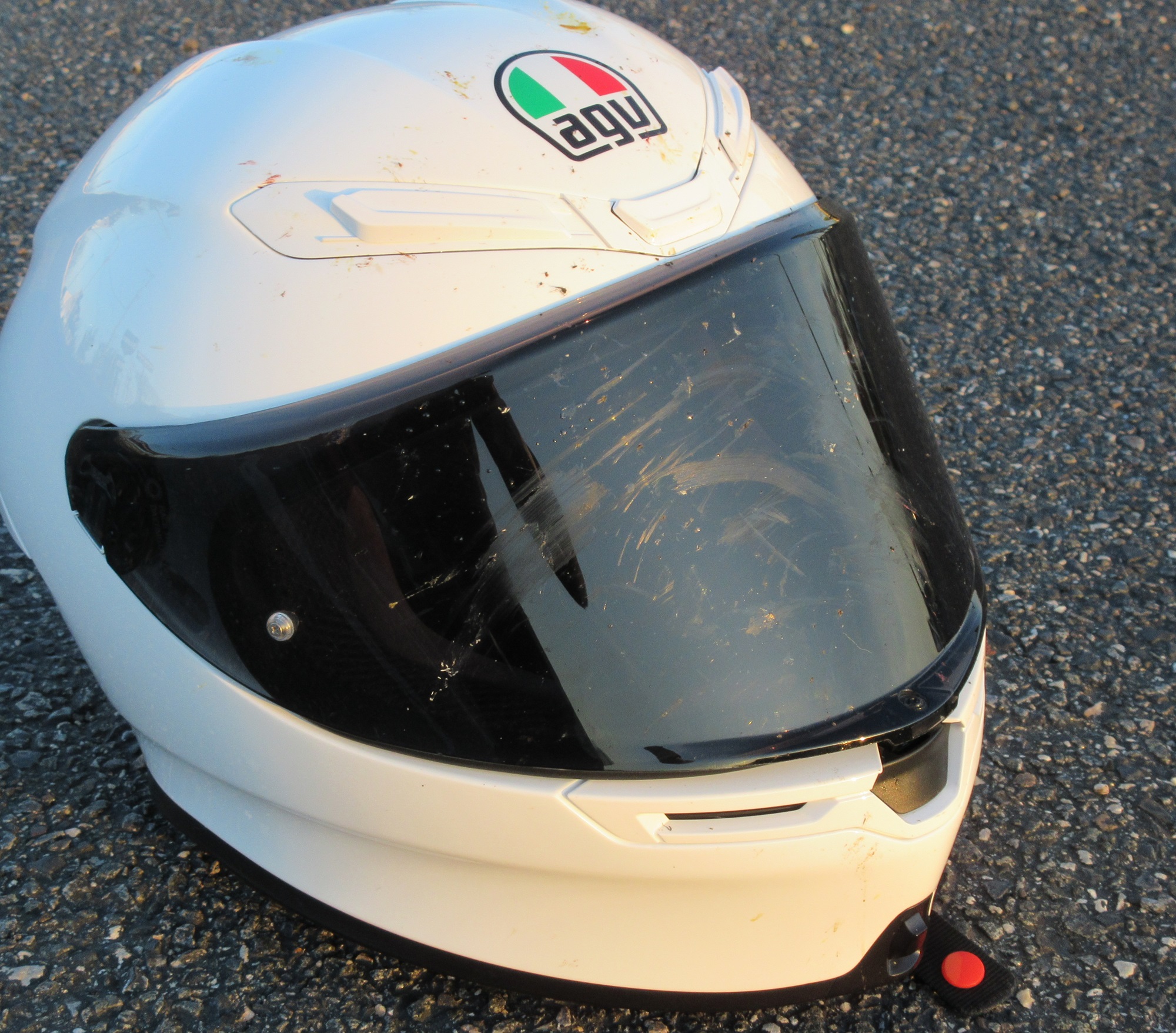
If you’re going to wax romantically about not wearing a helmet so you can feel of the wind in your face on the open road, don’t forget to mention that you’re also going to have these insects smeared across your face. And those little buggers sting at 70 mph.
Helmet: This comes first because without my brain, I’m about as useful to myself, my family, and society as a houseplant. My brain is my most valuable possession and it’s also vulnerable, so a helmet is priority number one. I know some claim to love the wind in their hair. Personally, I can’t stand it. Without a helmet, I feel exposed and vulnerable, bugs feel like shrapnel when they hit my face, my nose gets sunburned and windburned, my eyes dry out more, the wind noise is louder, and I’m generally uncomfortable. Frequency of use: Always.
Ear plugs: Speaking of wind noise… While we usually think of protective gear as the stuff that protects our skin, bones, and organs in a slide or tumble, ear plugs are also safety gear. I’ve explained the benefits in another article (as well as this one, that refutes some of the myths) so I won’t repeat it here, but wearing ear plugs will not only help keep you from being deaf in your old age, but will also make you less fatigued on longer rides. Frequency of use: Always.
Gloves: I’m regularly surprised by how many riders don’t wear gloves, even in cool weather. I have more gloves than any other kind of gear because I want my hands to be protected and comfortable in all conditions. Gloves protect your hands from sun, wind, rain, cold, suicidal beetles, pebbles bouncing off overloaded gravel trucks, and other hazards. In a crash, your arms can get whipped around or you may instinctively put your hands out to catch yourself. Hands are fragile things and I like being able to dress myself in the mornings. On a trip, I always carry an extra pair or two: unlined for afternoons, insulated for cool mornings, and waterproof for cool and rainy moments. In cold weather I wear heated gloves, because hands that are clumsy from the cold reduce my ability to control the motorcycle. Frequency of use: Always.
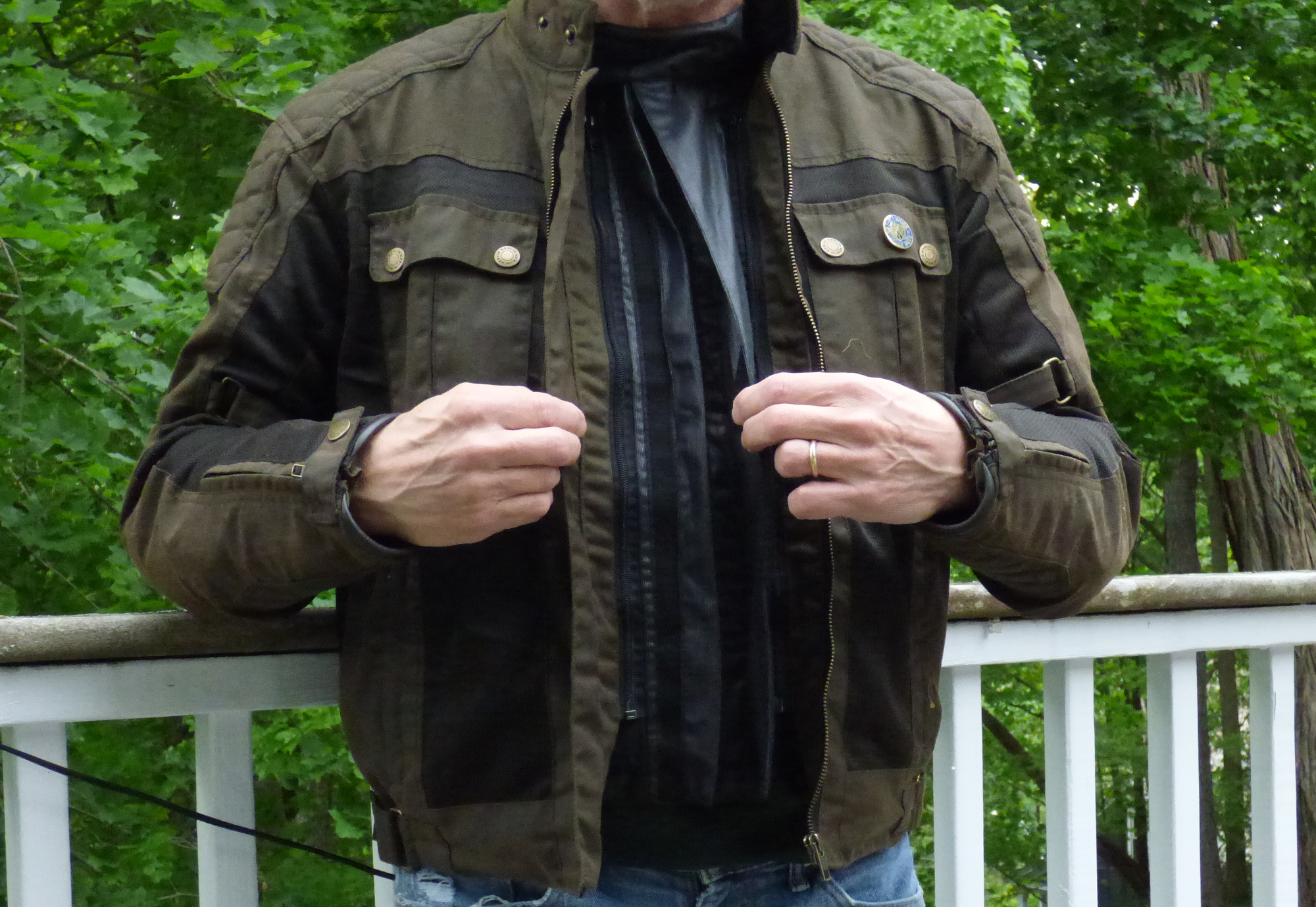
If you’re trying to keep expenses down, it can be hard to find one jacket to cover all conditions. But this Merlin Shenstone Air D3O is an example of a jacket that’s quite versatile, with mesh panels for air flow when it’s hot and a zip-in windproof and waterproof liner when it’s cool or wet. It also has high-quality, comfortable armor.
Jacket: I have plenty of essential organs in the upper half of my body, and lots of skin I don’t want to risk being ground away by asphalt, so unless I’m literally just riding around the block, I wear a real motorcycle jacket that provides abrasion protection and protective armor in the elbows and shoulders. Most jackets come with foam back pads, but I upgrade those to CE-approved back pads that fit in the pockets in the back of the jacket. These back pads are less expensive and more widely available than they used to be and sometimes one pad can be used in two more more different jackets.
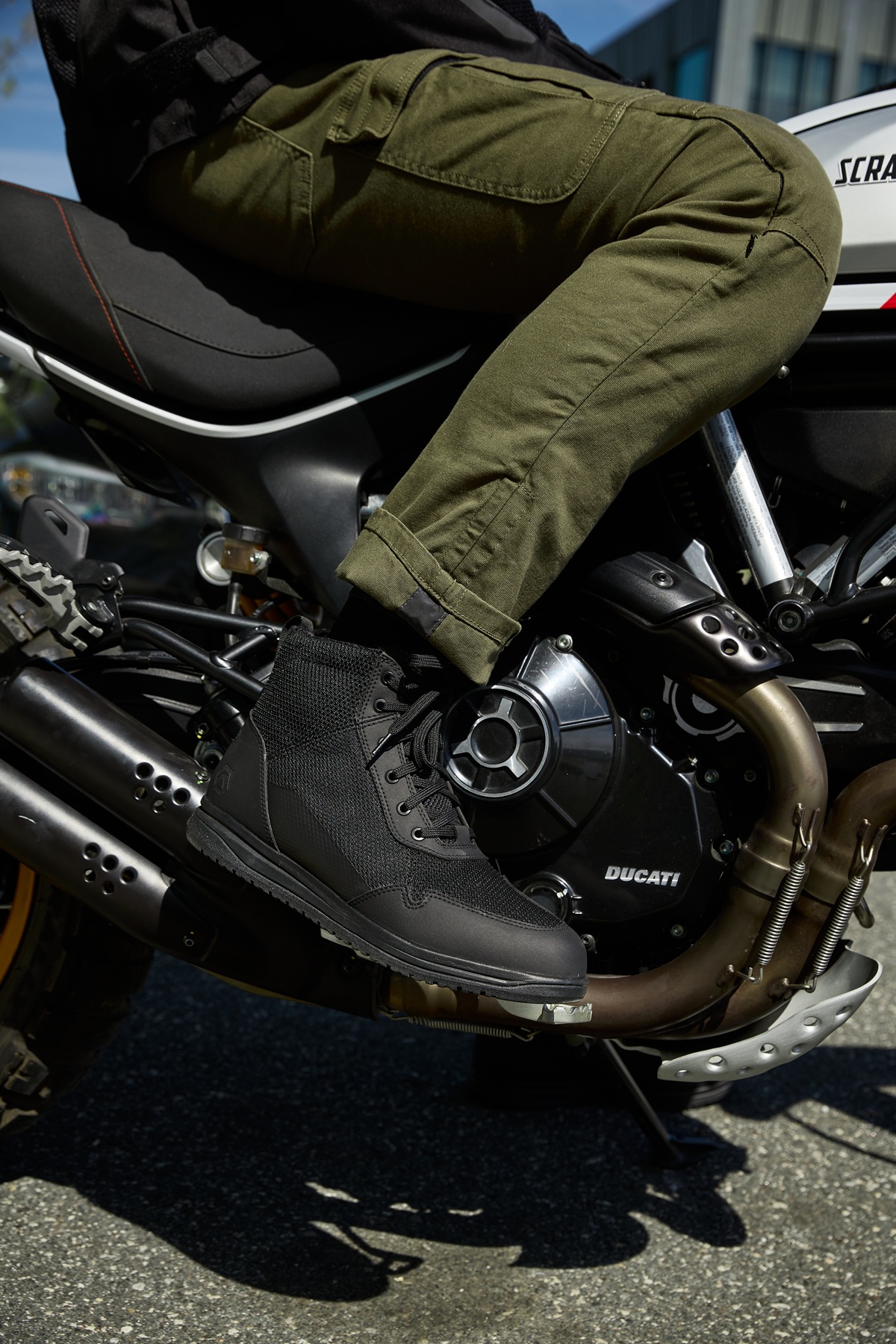
If you’re the type who doesn’t want to wear gear that screams “motorcycle” and wants to blend in when you arrive, today’s riding pants with built-in armor and riding shoes with ankle protection provide a more “normal” look and, usually, more comfort than gear of years past. Comoto photo.
Does your motorcycle jacket have to be leather? While I always wear a one-piece leather suit on the track, I more often wear textile jackets on the street because they are more practical and versatile. They may (emphasize, may) provide less abrasion resistance than leather. But in a street environment, the likelihood of a long slide on asphalt without hitting something, whether a car, a curb, a guardrail, whatever, is smaller. So I’m more concerned with having armor for the impact than an incremental increase in abrasion protection. Think it’s too hot to wear a jacket? When temperatures climb above 80 degrees Fahrenheit, I wear mesh jackets that let the air flow through whenever I’m moving and they also keep some of the sun off me. (See also: How to choose a motorcycle jacket.) Unless I’m taking a very short ride at low speeds in hot weather (an extremely rare combination), I wear a jacket. Frequency of use: Virtually always.
Boots: True motorcycle boots (not fashion boots designed to imitate the look from an old Marlon Brando poster) provide armor to protect your ankle and many also have shin plates. Many provide support that can prevent twisting or hyper-extension of the ankle. Boots made for off-road or dual-sport riding provide even more protection. At the more comfortable end of the spectrum, today’s riding shoes are a good option for city rides, because they still provide protection but work better if you need to walk around and don’t want to stand out (some prefer to blend in) when you reach your destination. Hey, you have to buy shoes anyway, so why not buy purpose-built motorcycle boots or shoes? This is one where you may decide to differ with me, but for myself: Frequency of use: Always.
Pants: Full-on motorcycle pants provide abrasion-resistant materials, armor in the knees and hips, and possibly a waterproof, breathable liner (such as GoreTex). They’re not always comfortable for walking around, however, and again, some people want to blend in when they get where they’re going, not stand out. That’s why in recent years motorcycle-specific jeans have become popular. They look like normal pants but also have integrated armor and small patches of abrasion-resistant material sewn in or, in some cases, blended into the fabric itself. They can easily cost several times the price of regular jeans, however. Looking for a less expensive alternative? You can buy knee guards and hip pads that you wear on your body underneath regular jeans. Again, for city riding where you’re more concerned with impact protection than abrasion resistance, that’s an option. One advantage of on-the-body armor is that it’s likely to stay in place when you need it. Frequency of use: Motorcycle pants, most of the time; motorcycle jeans, sometimes; kneeguards, occasionally if I’m wearing regular jeans.
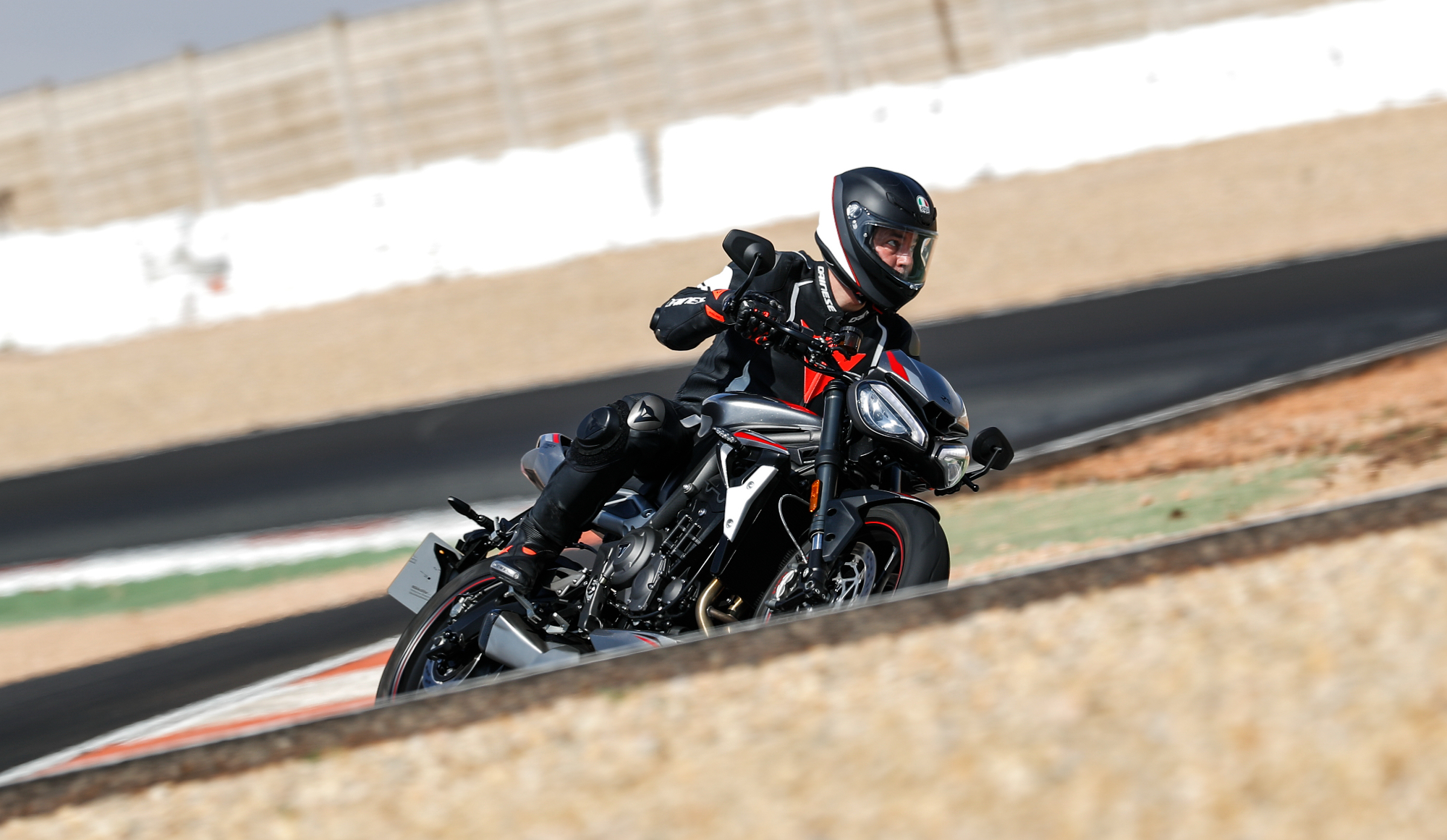
My Dainese leathers and race-oriented gloves and boots provide the maximum protection of any gear I have, but I only wear them on the track. For street riding, I want more versatility and comfort. Photo by Kingdom Creative.
One-piece racing leathers. These are for track days. On the street? Overkill and underversatility. I want pockets, the ability to adjust for temperature, and comfort. I also have a larger and more protective back protector I wear under my leathers at the track. Frequency of use: Only on the track.
So for a long ride where I know I’ll be riding at higher speeds, I’ll wear all of the above except the track-only gear. To ride a few blocks to the hardware store, I may skip a few items. I know it’s possible to have a life-threatening crash even at low speeds and on a short trip, but I make tradeoffs for comfort and convenience and I’ll accept the consequences, if it comes to that. The purpose of this list is to help you prioritize, then make your own decisions based on the ride, the weather, and your own comfort level.
How to spend less on motorcycle gear: Maximum versatility, minimum expense
If you mostly ride on warm days, here’s a tip on how to get the maximum comfort and versatility out of the smallest possible expenditure on gear. Buy one of the mesh jackets with built-in armor. In hot weather, air flows right through them (if you’re moving), so you’ll stay cool and will have protection from sunburn, as well as road rash if something goes wrong. Then buy a rain suit made specifically for motorcycling. (The stuff made for sitting in the stands at a football game will likely be ripped apart quickly by the wind if you wear it while riding.) If the weather turns chilly, even if it’s dry, you can put on the rain suit over the mesh jacket, which blocks the air flow and keeps you surprisingly warm if that hot afternoon turns into a cool evening. It’s like turning off the air conditioning.
Make informed choices, take responsibility
To me, the bottom line is this: It’s about making informed choices, taking personal responsibility, and recognizing the rights of others to make their own decisions, based on their own risk calculations. If you’re an ATTGATT purist, I won’t laugh at you when you’re sweating in your full leathers in a 90-degree traffic jam and I hope you won’t laugh at me if I crash in my mesh jacket and end up with some rash that leathers would have avoided. If you’re a wind-in-your-hair absolutist who won’t ride in a state that requires helmets, then I’ll respect your right to make your own choices, but don’t call me a traitor to the cause because I wear a full-face helmet or lecture me with pseudo-scientific misinformation about helmets causing injuries. In other words, live and let live, make your choices and accept the consequences without whining (or suing someone) and, above all, enjoy the ride.
This is an updated version of an article that previously appeared on this site years ago.




Fantastic, practical breakdown on motorcycling gear! I particularly appreciate the pragmatic approach to balancing protection with everyday usability. While full leather offers unmatched abrasion resistance, modern technical textiles with certified impact armor have made long-distance commuting in variable weather far more manageable. Focusing on realistic risk assessment rather than dogmatic gear choices is exactly the kind of advice new and seasoned riders alike need. Thanks for sharing this thoughtful perspective!
My typical gear is a modular helmet, one of two usually. I also wear a jacket with armor. Usually one of two textile jackets, my favorite being a scorpion ADV jacket or one of two mesh jackets in warmer weather. Lately my footwear of choice have been in the ridge riding boots. A little hipster looking but very comfortable. I do have riding pants and riding jeans, but I often just wear my regular thicker blue jeans. I always wear gloves. Nothing fancy but they’re real motorcycle gloves. And warmer weather I tend to chance it and where thinner dirt bike style gloves. In the cold weather I have heated gloves. I’d rather use heated gloves than heated grips as I can take them from bike to bike. They also tend to keep my whole hand warmer than heated grips