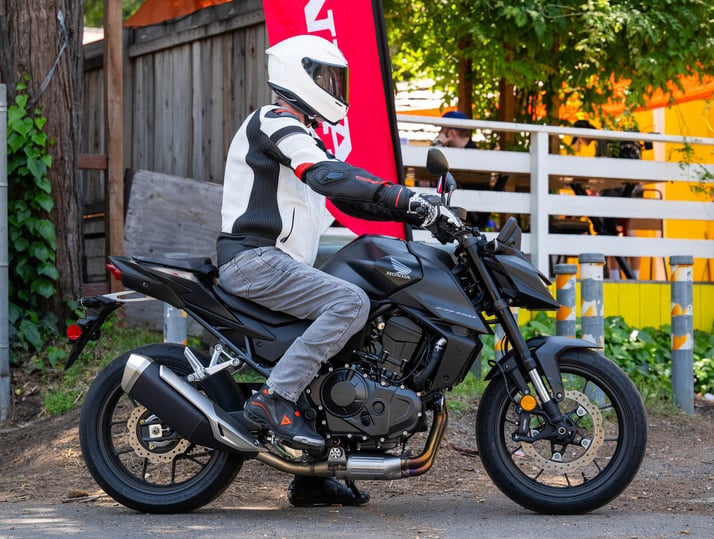
After an uncomfortably long interim period, the Hornet epoch has begun. Yes, it took more than 16 months, but I finally bought a motorcycle to fill the role of my main transportation and the bike I travel on. And yes, I tend to overthink things.
In May of 2025, I wrote about how I looked back at my lifetime of motorcycle riding and could see it divided into several historical epochs, based in large part on which motorcycle was my main ride in those different stages of my riding life. That line of thinking was sparked by the fact that I’d just sold my 2014 Honda VFR Interceptor Deluxe after five years of ownership and approximately 34,000 miles. Of course I still had my Triumph Speed Triple that’s been hanging around for 28 years now and a bit later that summer I bought the used Kawasaki KLX300SM that finally got me into the supermoto ranks and would also serve as the rat bike role in my garage. Not owning a main ride of my own, I did most of my traveling in 2025 on press bikes borrowed from the manufacturers, including a couple of $30,000 luxury rides. But really, I needed to stop patching together other options and just buy myself a properly useful and versatile motorcycle, something I could actually travel across time zones on without worrying about age-related failures (the Speed Triple) or painful seating (the supermoto).
So in late September I did what I’ve been thinking about doing for more than a year and I bought a new leftover 2025 Honda CB750 Hornet in the Matte Pearl White color with the contrasting dark red frame. I’d been seriously considering the Hornet ever since I went to central California in June of 2025 when it was introduced to the motorcycle media and I wrote a review for Common Tread. But later on, Suzuki announced plans for its SV-7GX and that made me hesitate. It seemed to have most of the goodness of the Hornet but with the addition of built-in wind protection. In September of this year, I went to California again, this time for the introduction of the SV-7GX and had the chance to ride it for a few days. Bottom line: I really liked the Suzuki, but I decided I liked the Honda a little more.
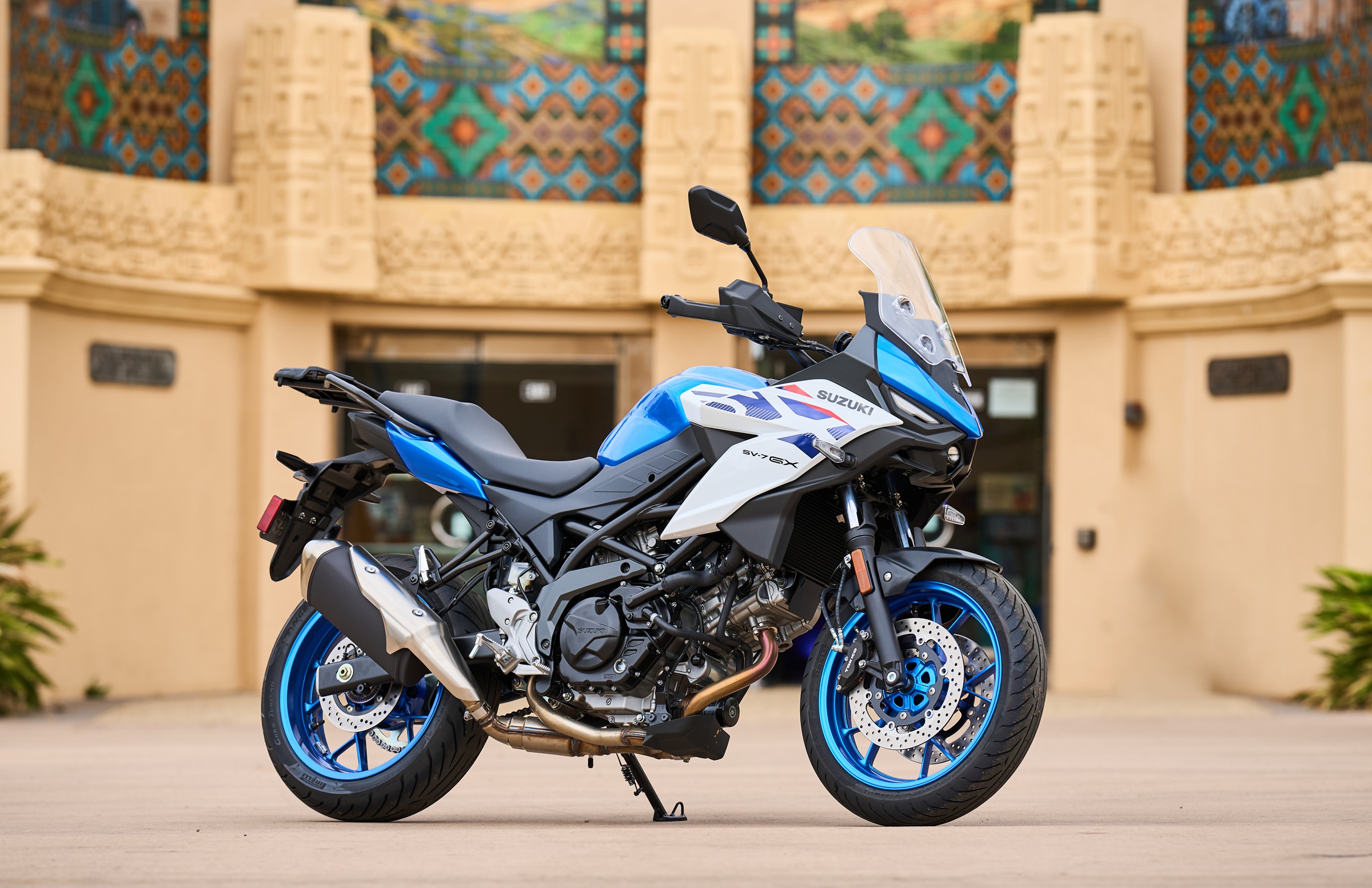
So a couple of days after I got home, I took a train down to Connecticut where a dealership had a leftover white 2025 they were willing to mark down $1,000 and I rode it home.
Coming full circle: The DIY sport-tourer
With the Hornet, I’m coming full circle, and maybe even a little past top dead center, in terms of my main ride.
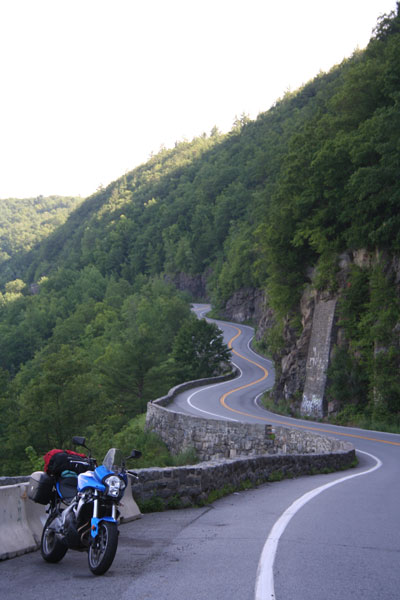
Referring back to my “epochs” story, in the Versys epoch I took a relatively light middleweight and built it into a sport-tourer. During the nine years and nearly 90,000 miles I owned it, I was living in Ohio and most of that time I was making regular trips to RevZilla HQ in Philadelphia. The Versys came with pretty good wind protection, but for travel I added small Givi panniers for waterproof, lockable storage, and handguards and heated grips for those long rides when I was pushing the season.
If the Versys was a kind of DIY sport-touring bike, it was still a step up from my past history of owning and traveling on naked bikes, like my Triumph Speed Triple — which is how I once ended up stopping on I-40 in Tennessee to pick up camping gear that fell off the back of that bike, which was never intended for long-distance touring. When it was time to replace the Versys, I decided I was long overdue to buy a turn-key sport-touring bike made for the purpose. Something put together by a manufacturer instead of assembled by me from parts and accessories. That’s how the VFR800 epoch began.
If you asked a cross section of U.S. motorcyclists to describe a sport-touring motorcycle, they’d end up with something very much like the VFR800 Interceptor Deluxe I bought as a used model in 2020. Though it was already a little out of date when I bought it, the VFR came with features I’d tested on press bikes, such as traction control and ABS, but had never had on one of my own bikes. It also came with nice features such as a center stand and heated grips. The only thing I had to add was the matching panniers, which wasn’t easy or inexpensive, since they were discontinued by then, but I found a pair on eBay and keyed them to match the ignition. And just like that I had a real sport-tourer, not a homebuilt imitation.
And for five years, the overall competence of the VFR was fine. I had a few small issues. My aging neck would get sore on long rides, even though the previous owner had already fitted the bike with HeliBars risers. It felt either a bit too heavy for how comfortable it was or not quite comfortable enough for how heavy it was. The weight became more noticeable when we moved from Ohio to the Boston area and it was, for a while, my only motorcycle when I was spending a lot of time on the narrow, crowded streets of Cambridge. It was only the second full-fairing motorcycle I’d owned (after my Triumph Daytona) and it was even harder to service. Scraped knuckles were inevitable from a simple oil filter change and led to one mistake in which I oiled down the floor in the borrowed work space of my sister’s garage, much to my chagrin. (The break-in 600-mile oil change on the Hornet was perhaps the easiest one I’ve ever done on any vehicle.) I dreaded the infamously expensive valve service and relearned why I don’t like clamshell-style panniers.

Despite that, I didn’t plan to sell it. Until I happened to meet someone who wanted it more than I did, as described in the epochs story. That put me in the market for a replacement.
I’ve always been biased toward light weight, but that has only increased with age. Here’s a cold hard reality check: I had the Versys nine years and the VFR800 five years. If I keep my new Hornet five years, as I fully intend to do, I’ll turn 70 while owning it. I feel the pounds more every year.
So now, I’ve decided a few things about myself. No more motorcycles over 500 pounds. No more full fairings. No clamshell saddlebags. Keep it simple, keep it light, keep it fun. So with the Hornet I’ve come full circle and the plan is to take what is a very good, basic motorcycle and add a few bits to make it fulfill the broader mission of being my main transportation and being capable of longer trips.
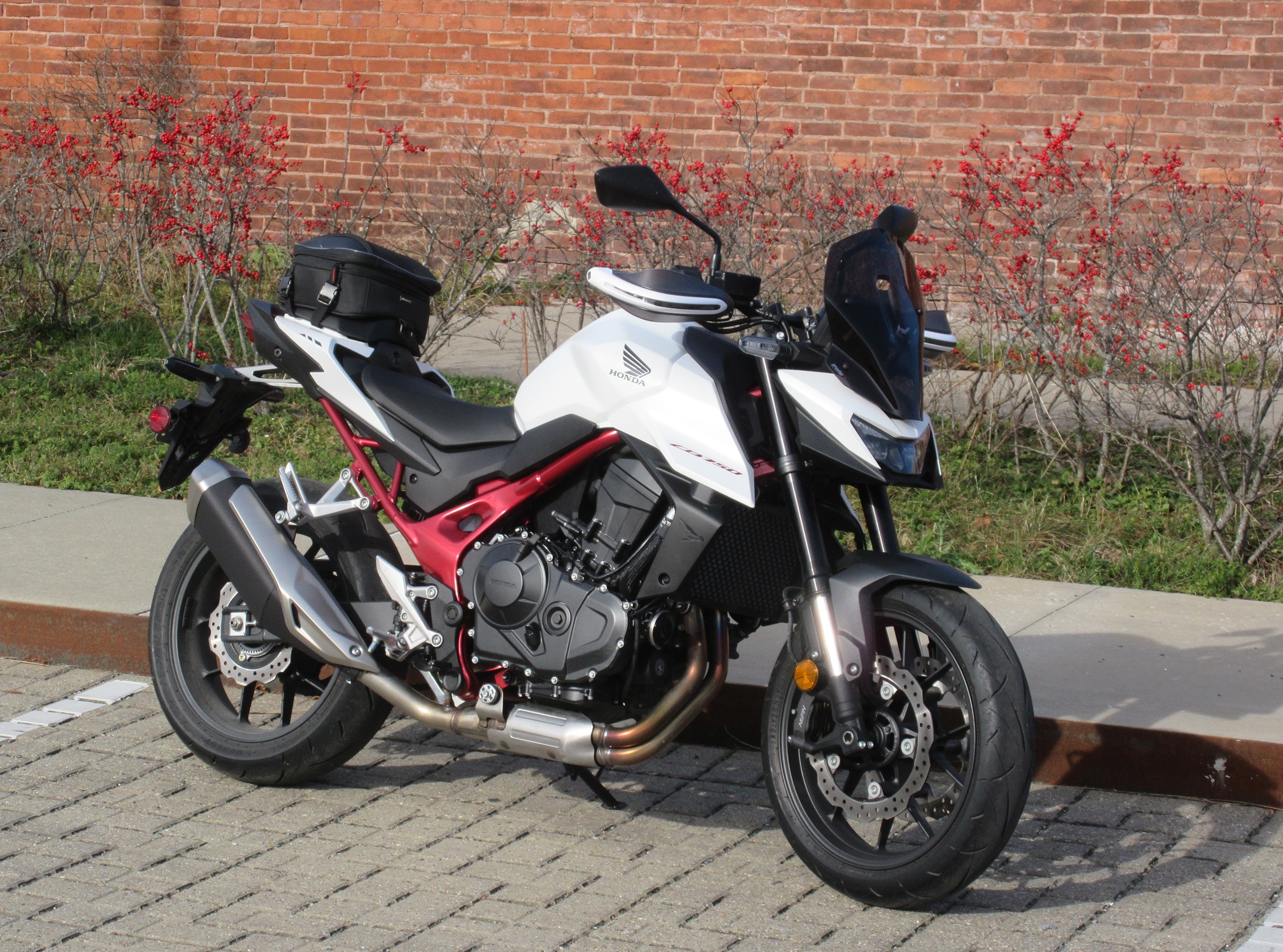
So why did I choose the CB750 Hornet?
As mentioned above, on paper the SV-7GX looked very much like the middleweight sport-touring model I wanted. And when I rode it I really enjoyed it. So why did I buy the Honda instead? The Hornet is roughly 10% more powerful, 10% lighter, and its electronics, brakes, and suspension are just a bit better. I love the handling of both bikes. I could live with either one. I just couldn’t help but think the Hornet was the better platform, and as soon as I rode it away from the dealership, a few days after riding around southern California on the SV-7GX, I was sure I’d made the right decision.
Since 2025 was the first year for the Hornet in the U.S. market (it’s been very popular in Europe for a few years) and the 2026 model got Honda’s E-Clutch system, you might suspect I bought a leftover 2025 because I wanted to avoid the E-Clutch. Not exactly. I’m not opposed to the E-Clutch, since it gives you a choice of using the clutch conventionally or not. But I also didn’t actively want it. In the end, the more important factor was the color. The white 2025 is the only color option of the CB750 Hornet that Honda has brought to the United States that isn’t some variation on matte black. With drivers as distracted as they are, I don’t feel any desire to have my motorcycle blend in with the asphalt. And despite the fact that white has been the most popular color for cars in some years, it is rare in motorcycles, and I like the differentness. I also happen to like a contrasting frame color. So for me the choice was easy, and getting a discount from a dealer who didn’t want to carry a 2025 into 2027 made it better.
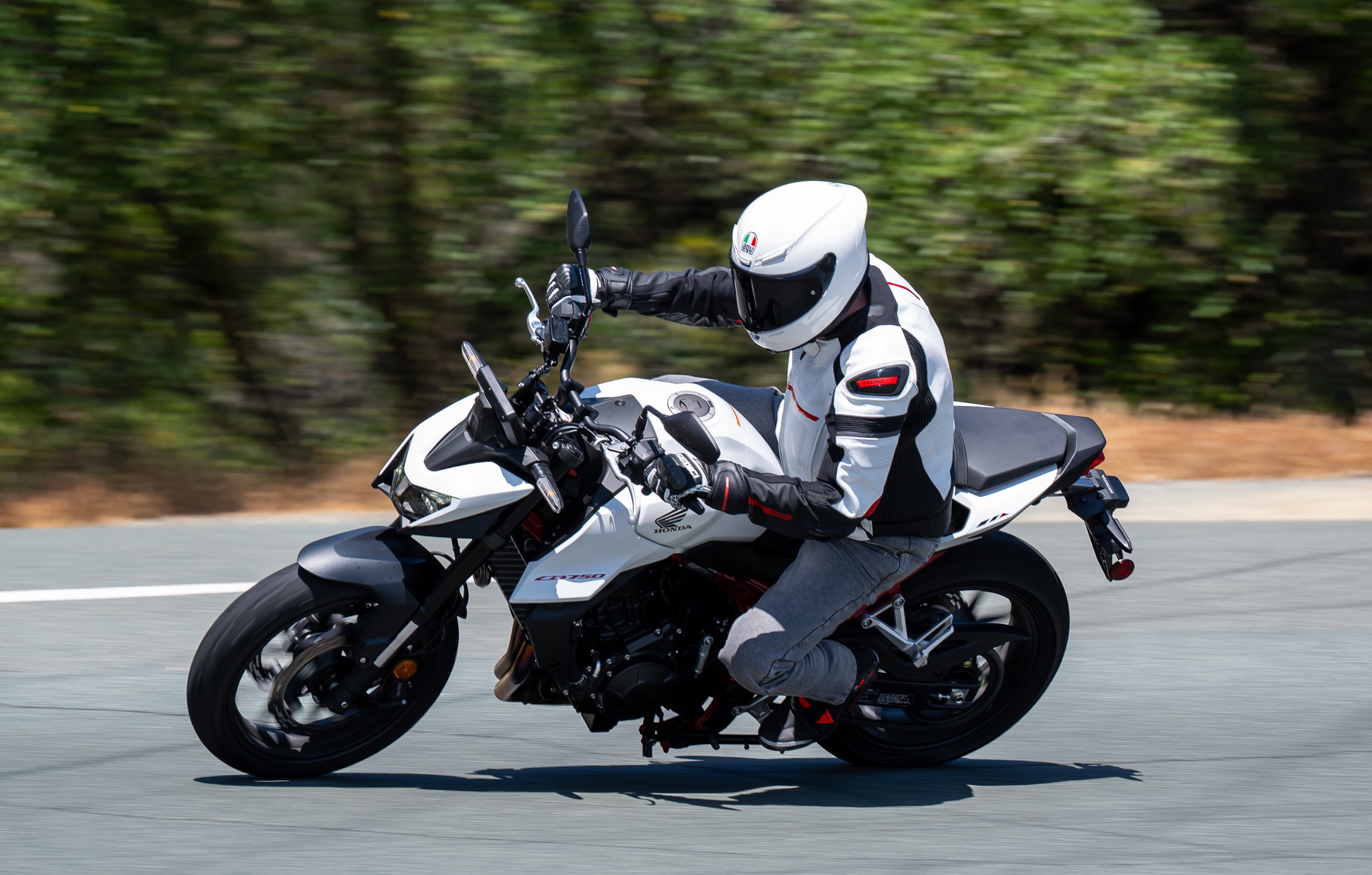
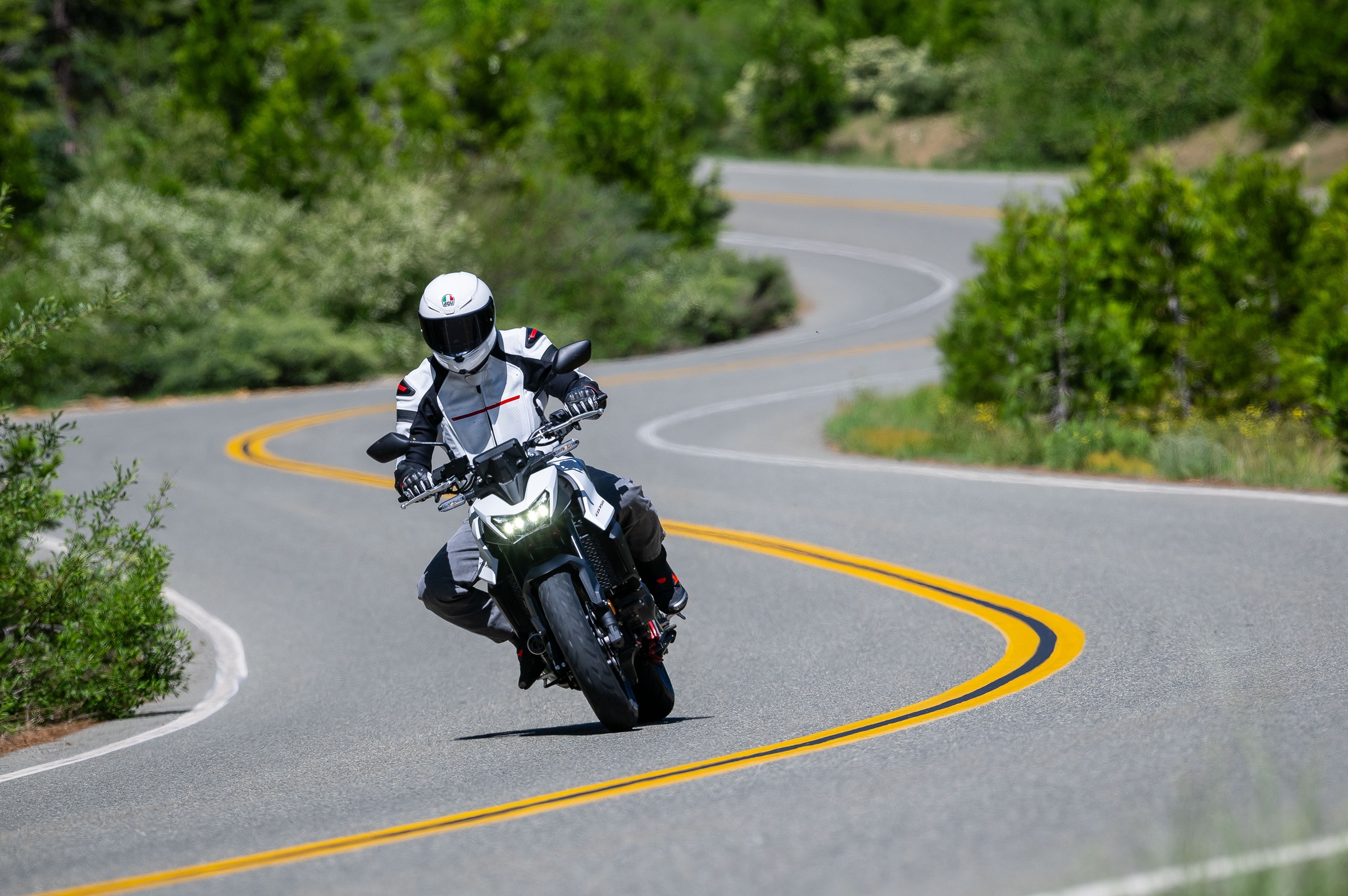
Just about all of us who went to the CB750 Hornet and CB1000 Hornet SP media intro in 2025 were really impressed, even surprised, by the 750. It’s definitely an overachiever for its price point. The handling is light and nimble, so much so that it reminds me of nothing more than a bigger, more powerful, more refined version of my Kawasaki KLX300SM supermoto. The engine produces impressive torque across the rev range and, while I’m not among those who geek out on motorcycle sounds, those who do mostly think it sounds great while producing that power. It has three preset ride modes and two customizable ride modes that allow me to adjust throttle response, engine braking, and the level of traction control. A quickshifter is standard. Its LED headlights light up the night without blinding oncoming traffic. It’s by far the most modern motorcycle I’ve owned, even if it doesn’t have all the luxury and advanced features of some of the ones I’ve tested. It has everything I need (except possibly the wind protection) and nothing I’d rather do without, making it a good base to start from.
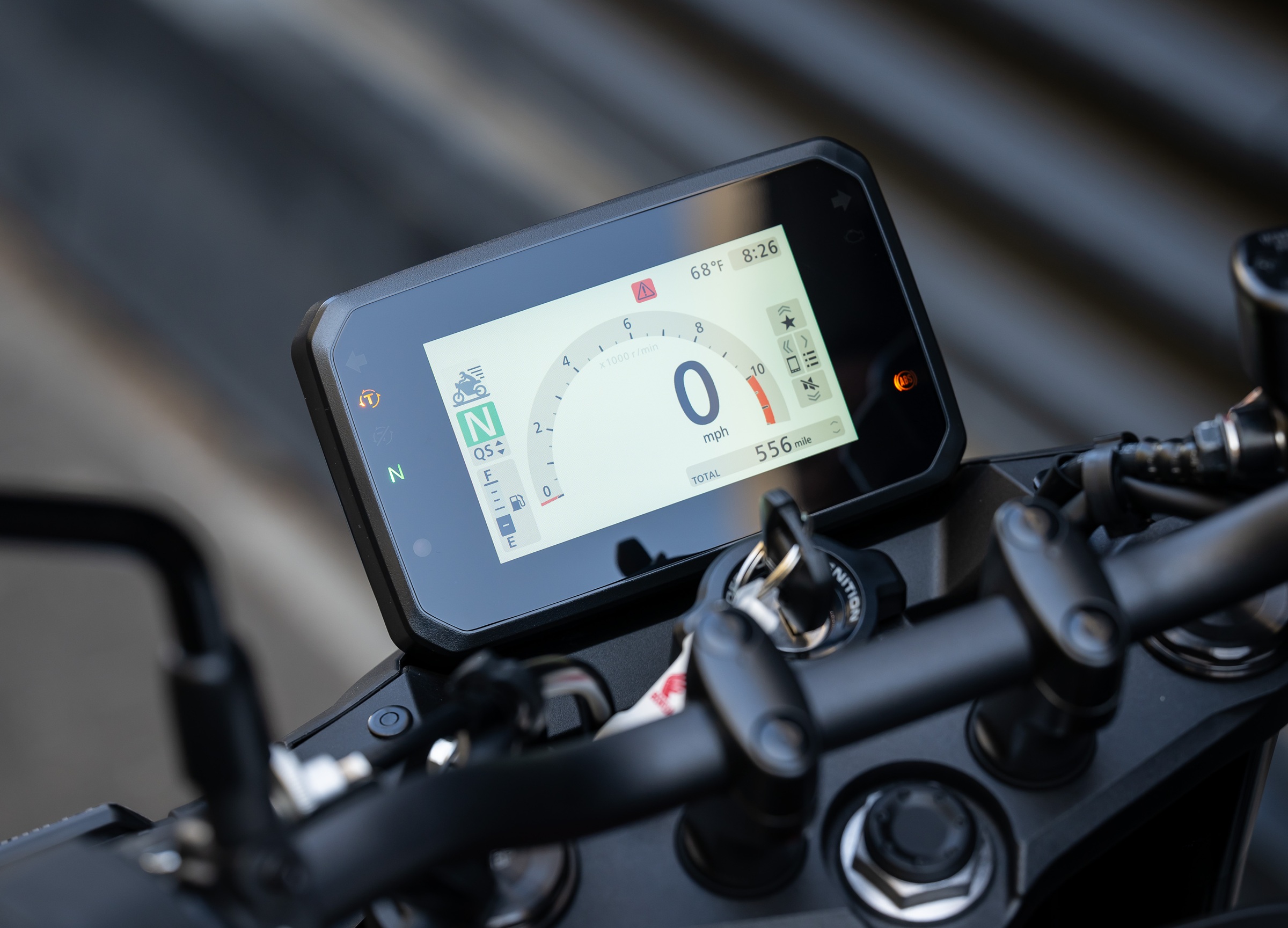
Of course I knew all along that if I went with the Hornet the challenge wouldn’t be daily riding, but outfitting it for longer trips. With the Versys, that was easy. It came with wind protection and I bolted on an affordable set of Givi top-loading bags that didn’t look great but met my needs perfectly. With the Hornet, it’s a bit more complicated.
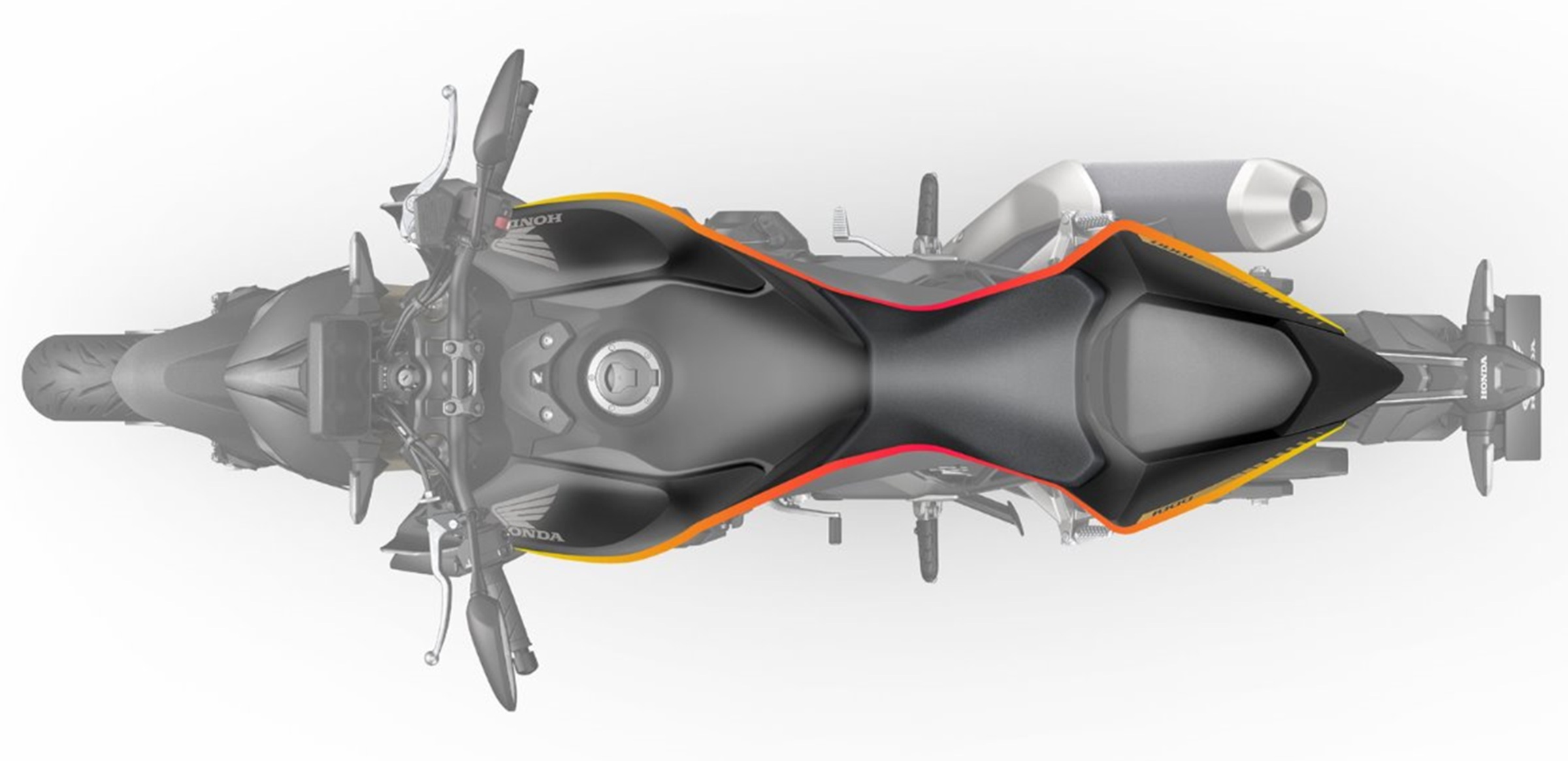
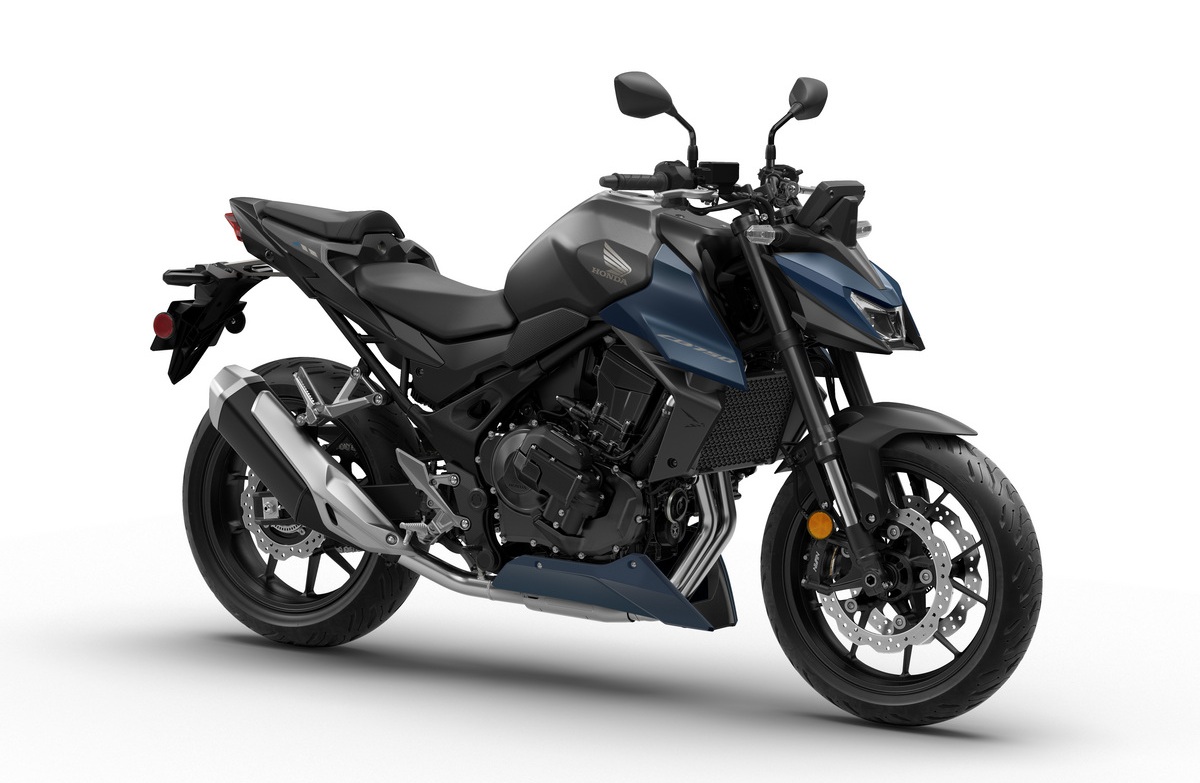
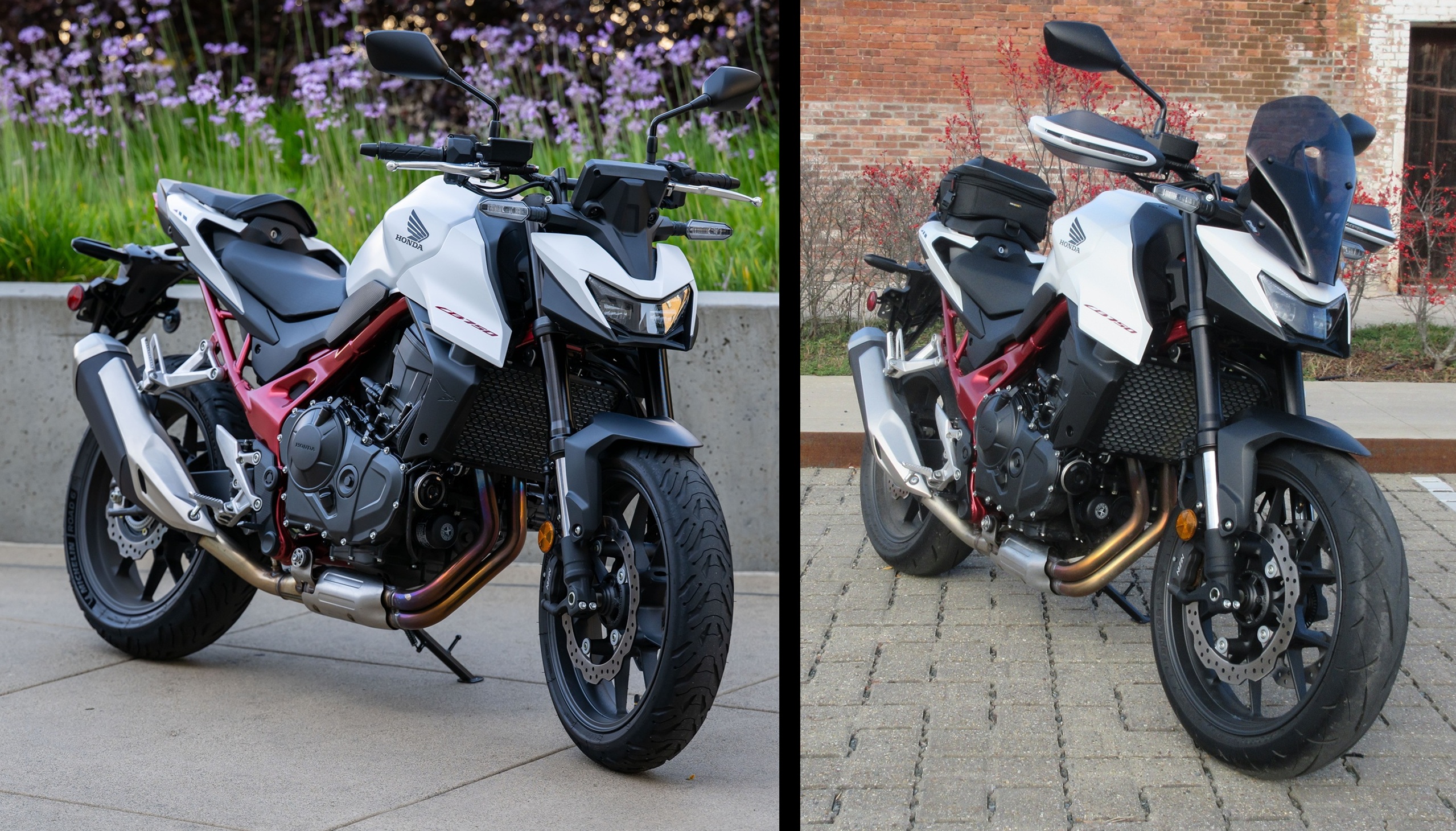
As you can see in the illustration above, Honda feels there’s a certain shape Hornets must have: broad at the shoulders (the front of the motorcycle), narrow at the waist (the seat area) and with a pointy tail. It’s that shape that makes the usual solution of adding panniers, as I did with the Versys, more complicated. The racks to hold side cases have to stick out farther than usual to clear that triangular tail section. There’s a sadly hilarious video on YouTube by an Italian couple called Mr. Foxes and Mrs. Panda in which she puts Shad panniers on her CB750 Hornet and from the look on her face, once she’s installed them, her feelings are unmistakable.
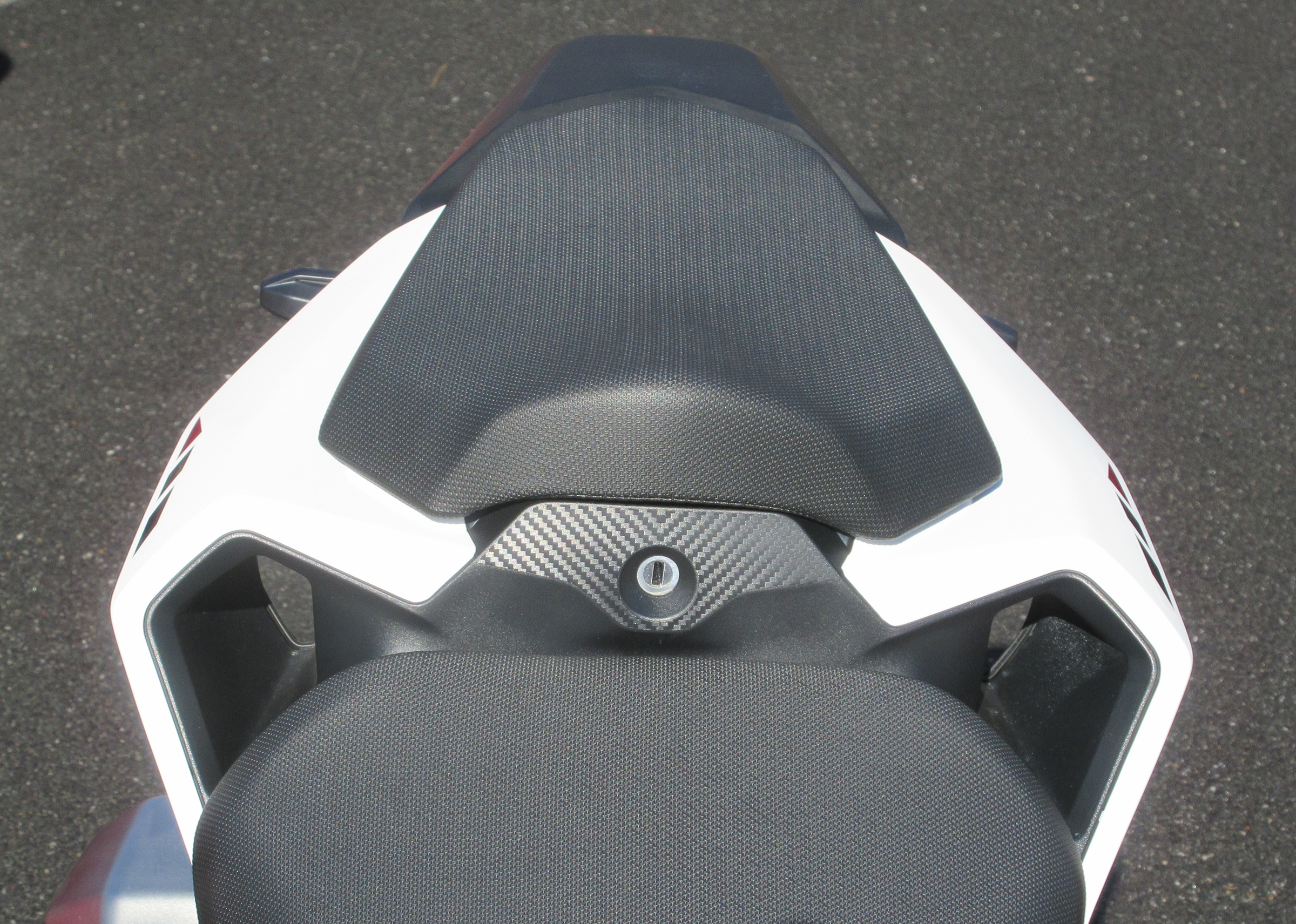
The other option, of course, for locking, waterproof luggage, is to mount a rear rack and top box, but that has the disadvantage of placing weight high and rearward, which does nothing for handling and even less for the appearance. Practical. Not desirable.
For now, I’m using my Nelson Rigg Commuter Sport tail bag, which fits the Hornet’s rear seat perfectly and is just right for picking up a few things while I’m out running errands and for carrying a tire repair kit that doesn’t fit under the seat. I’m still not 100% sure what I’m going to do for a luggage setup for longer trips, but since I often travel for work and that means carrying a laptop and a camera, I need something lockable and waterproof. My tentative plan, since I’m no longer doing any overnight two-up trips, is to mount a top case not on a rear rack, but on a spare passenger seat, as some riders do with sport bikes to keep the weight centralized. I pack really light (since I haven’t been moto-camping in years now), so that and a tank bag would probably work, I think. It’s a tentative plan.
The other long-distance concern is wind protection. My hands are a weak point in cold weather, and over the years I had the Versys, I used both heated grips and, later, heated gloves. To help out, I also had a set of Acerbis handguards, a slimmer, sleeker design made especially for street bikes. When I decided to consider putting the same handguards on the Hornet, I did some searching and found that today they’re called Dual Road. I also was pleased to see that in addition to the black-trim version I had on the Versys, Acerbis now makes a white-trim version that would look custom-made for the Hornet. Then I was displeased to see that they were not imported to the United States. No one domestically sold them. Even the gear experts I work with at RevZilla weren’t able to help. So I suppressed my cheap side and ordered them from Europe, where everyone has them for sale, and ended up paying nearly as much in shipping and import fees as I did for the handguards themselves.
More importantly, I began looking for a windscreen. Honestly, air flow on the Hornet in stock configuration is not bad. I prefer the clean air flow of a naked bike over one with a fairing that’s poorly designed and causes noise or buffeting. But while the digital display sticking up from the Hornet like a tacked-on tablet didn’t cause any ruffled wind, it also didn’t look good to my eye. And in winter, I particularly appreciate keeping some of the blast off my chest.
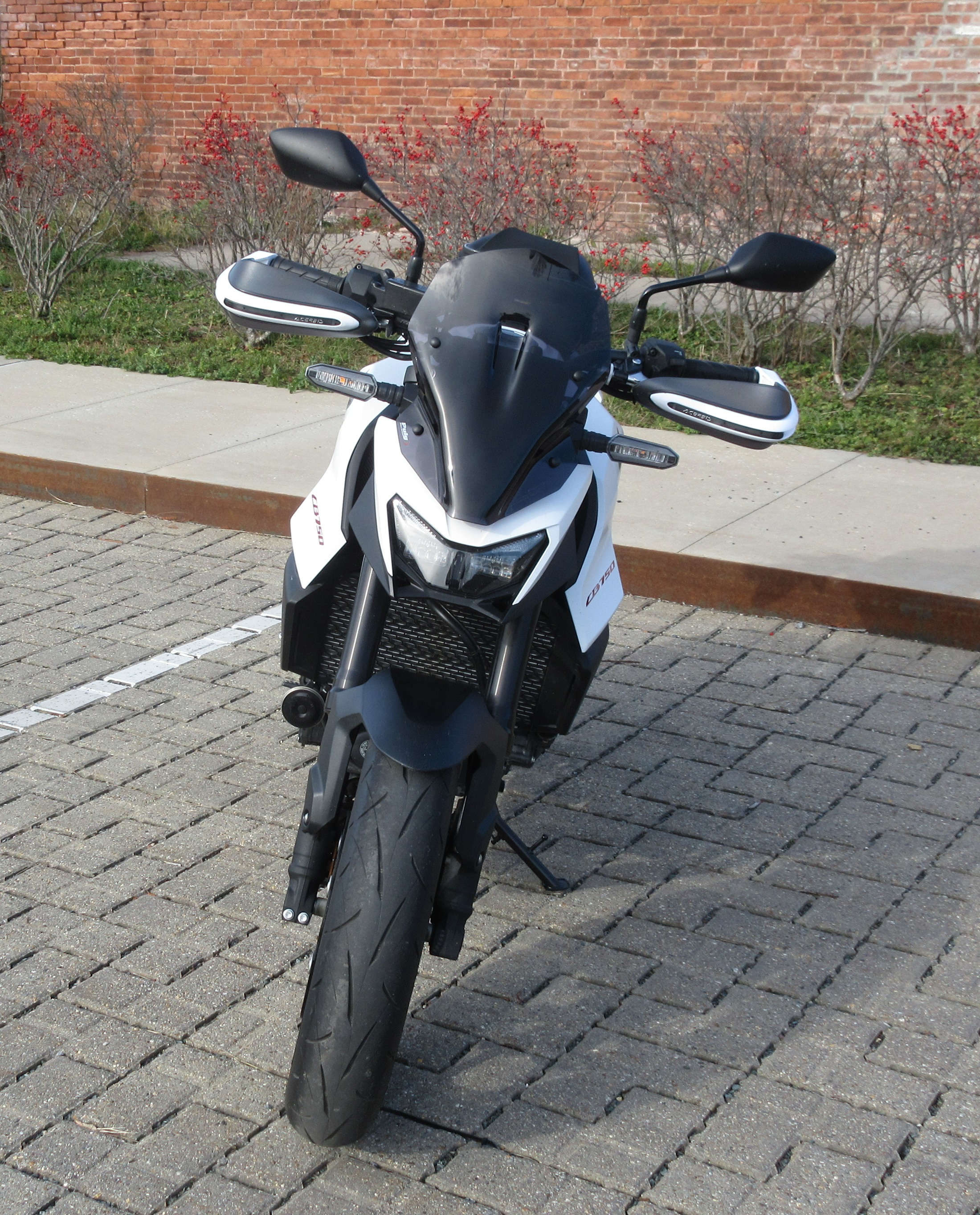
I eventually decided on the Puig Touring New Generation windscreen in dark smoke (to hide the unattractive backside of the digital display). This was the biggest gamble of the entire process, because all you can do is try to find online accounts from other owners who have used the same windscreen and make an educated guess at how it will perform. Fortunately, since I was able to get the Puig for under $200, I didn’t feel it was a huge risk.
In the end, without buying half a dozen windscreens and comparison-testing them back to back, I’m about as sure as I can be that it’s probably the right choice. Since I put it on, I have ridden in some cool weather and it keeps the air off my chest, which really helps. Air flow over the top of the relatively small screen hits me around the faceshield or forehead of my helmet. My subjective impression is that it might be a small bit noisier than without the windscreen, but unless I take it off and do back-to-back rides, I’m not 100% sure. And in any case, it doesn’t cause any noise or buffeting that would outweigh the benefits on a long ride of keeping the air off my upper body. Plus, it looks like it belongs on the bike, not a “universal” aftermarket add-on, and I think it makes the somewhat homely Hornet face better.
So thus begins my new epoch and my next experiment in finding the right all-around motorcycle for me for my everyday transportation and the kind of traveling that’s my definition of sport-touring. I still have the supermoto for running errands around town, any time I plan to take advantage of the local dirt-road shortcuts, or if the weather is really foul and I don’t want to dirty up that white paint. I still have the Speed Triple for any time I want the vintage experience, though I suspect its semi-retirement will get even quieter now. When the Speed Triple was parked alongside the VFR800, I sometimes took the old girl out for a ride if I wanted a more raw and sporty experience. Now, the Hornet is so agile and so much lighter that it feels like it would run circles around the old Speed Triple. I’ll still ride the Triumph for old times’ sake.
The Hornet gives me the greater capability and sophistication I lacked with the Versys, in part just because it’s so much more modern. The Hornet feels rorty where the Versys felt rough. The Hornet gives me the light and easy handling I missed with the VFR800 Interceptor. The VFR felt stable and solid but a bit brick-like, while the Hornet wants to zip. And both offer about the same level of comfort in the end.
Of course I still have to solve the luggage puzzle and, with winter setting in, it’s going to be months before I truly put it to the test of a multi-day, long-distance trip. But come what may, the Hornet epoch has begun and so far I’m feeling very good about it.




I like the look of the windshield but the other thing I’d worry about on a long ride is how cramped the legroom is. The bike looks small.
Everyone has different pain points. For me, my neck muscles and shoulders tend to get tired so the semi-sporty slightly leaned-forward riding position I used to prefer doesn’t work for me any more as good as sitting straight upright does.
Other people have problems with too sharp a bend in the knees or hips. For me, that hasn’t been a problem.
But while the Hornet is definitely compact, it’s not terribly tight on legroom. The photo below shows the ergonomics. For reference, I have a 32-inch inseam.