An amply powerful engine, reasonably light weight, quality suspension, adjustable wind protection, a comfortable riding position, integrated and color-matched luggage. The new Triumph Tiger Sport 800 Tour looks like it could be the quintessential, classic, sport-touring motorcycle. On paper, at least. But we’ve all been fooled at one time or another by a paper tiger that turned out to be something less than the real deal.
So as I picked up the “Matte Cobalt” blue Tiger at my colleague Spurgeon’s house in Pennsylvania (he’d already put nearly 3,000 miles on the loaner himself; his review will be out soon) I was looking forward to finding out if the Tiger Sport 800 Tour would live up to appearances. To find out what it’s like to live with this newest sport-tourer, my plan called for a week of riding on roads ranging from open interstates to tightly coiled two-lanes in western North Carolina, as well as some commuting-like riding as I attended the MotoAmerica Superbike round of racing at Michelin Raceway Road Atlanta and ventured into Atlanta to return the Tiger to Triumph’s U.S. headquarters. I expected that slate of varied riding would answer my questions.
This sport-touring question is more than a theoretical discussion for me. In my recent essay, “How many motorcycles is enough?“, I explained that the number, for me, was three. But ever since I sold my 2014 Honda VFR800 Interceptor Deluxe nearly a year ago, I’ve been missing the most important element of that three-motorcycle lineup: a comfortable, capable, and reliable motorcycle for long-distance travel. I’ve enjoyed a variety of motorcycles from quirky to capable to humble, but the key to my lineup is a competent sport-tourer. Which I currently lack. Would the Tiger be a more modern and capable iteration of the VFR?
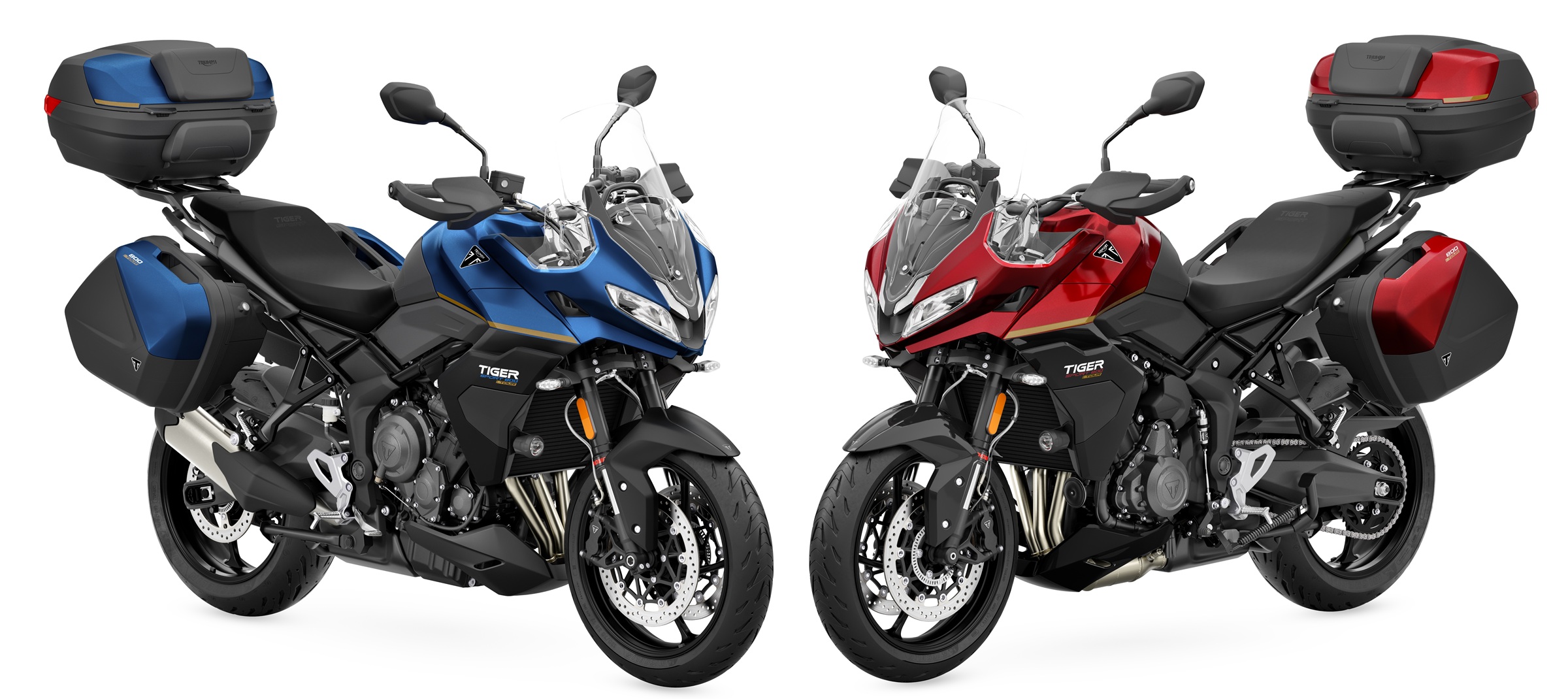
The Triumph Tiger Sport 800 Tour comes fully equipped with travel-ready features such as the three-piece luggage, cruise control, a center stand, heated grips, and a lot more. It’s available in Matte Cobalt and Carnival Red color options. The MSRP in the United States is $14,695. Triumph photos.
A few new features put the “Tour” in the Tiger
The Tiger Sport 800 was introduced as a 2025 model, adding a step up in Triumph’s line above the earlier Tiger Sport 660. The 800 added not just more power than the 660, but a significant 42% more power. And perhaps just as important, if not more, it brought upgraded adjustable suspension and stronger brakes to the platform. When my colleague Dustin got to test ride the 800 more than a year ago in Spain, he was impressed well beyond his expectations.
For 2026, Triumph introduced the Tour version of the Tiger Sport 800, which adds a fairly long list of features desired by riders planning to do longer miles on their Tigers. The most obvious addition is the three-piece luggage setup that provides a total of 28 gallons of storage. While Triumph doesn’t guarantee the side cases and top box are waterproof, the company will sell you waterproof, roll-top inner bags for $92 for the two side cases and $53 for the top box. You can pack your delicates inside those and not only know they are safe from rain, but you can also more easily carry them into your hotel room at the end of the day when you’re on a trip. The hard luggage alone certainly looks like it would be waterproof (is Triumph just being overly cautious?) but I didn’t hit a bit of rain in my week with the Tiger Sport 800 Tour, so I can’t say for sure.
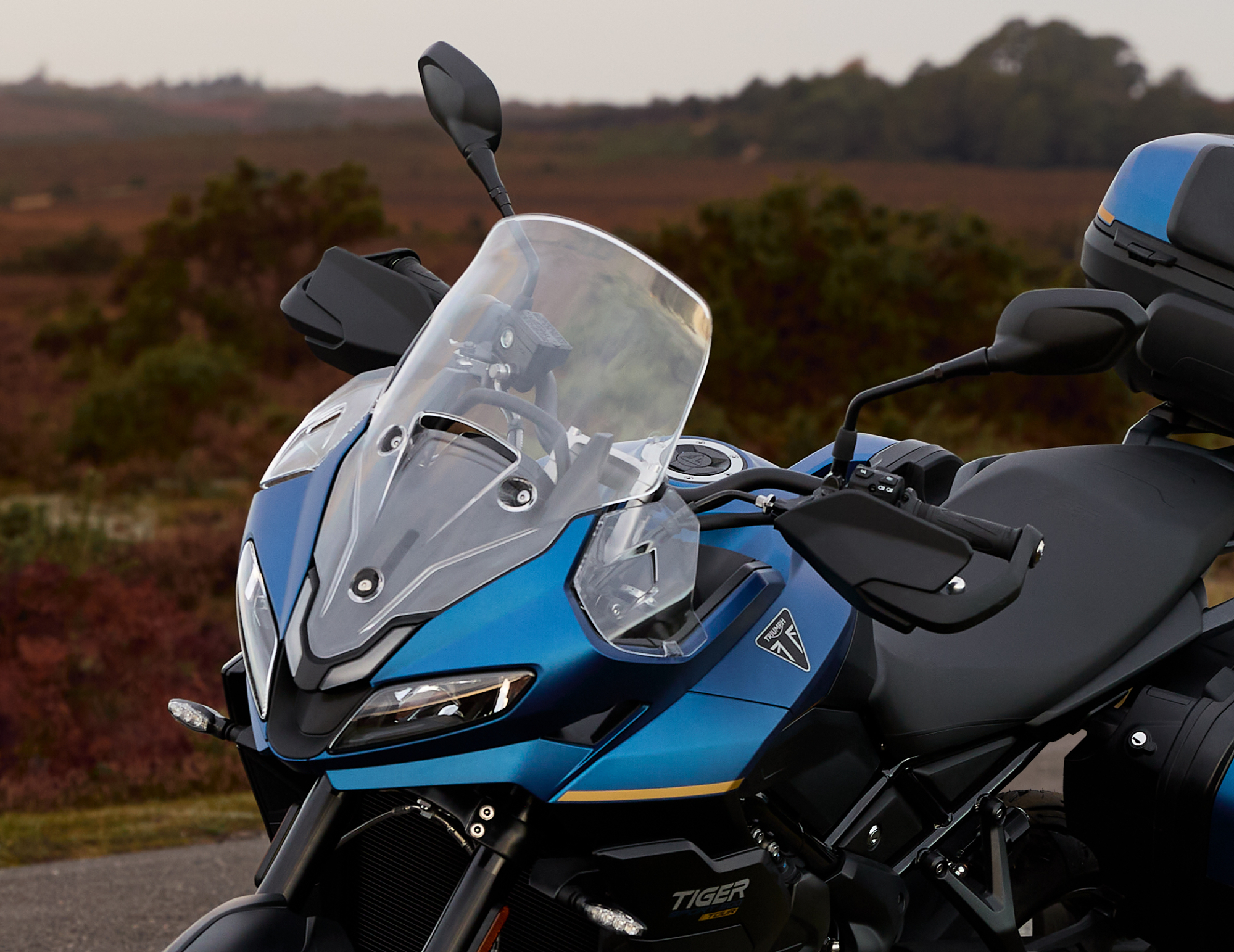
The Tiger Sport 800 Tour has LED lights all around. The windscreen is easily adjusted for height by hand. Triumph photo.
Along with the luggage, Triumph has fitted the Tiger Sport 800 Tour with most of the features that many riders consider essential for a modern, properly equipped sport-tourer and a few that might be considered nice-to-have extras: a center stand, cruise control, heated grips, handguards, an adjustable windscreen, a quickshifter, self-canceling turn signals, a tire-pressure monitoring system, a full array of trip-computer functions in the combination of TFT and LCD digital display, and a full suite of electronic rider aids and anti-lock brakes for added safety.
U.S. MSRP on the Tour model is $1,700 more than the base Tiger Sport 800 (or $1,850 more, if you choose the base model in gray paint), but buying all those accessories individually for your base Tiger Sport 800 would add up to around $3,000, so if those are parts you want, the Tour is a better deal.
Triumph added all those features on top of the excellent engine found in the base Tiger Sport 800. And they kept the weight down. A claimed 511 pounds. Sounds promising. So I set out on a multi-day ride to see if it all added up to that sport-touring ideal: a competent motorcycle comfortable enough to blast across big miles and sporty enough to be fun when you get to the great riding at your destination.
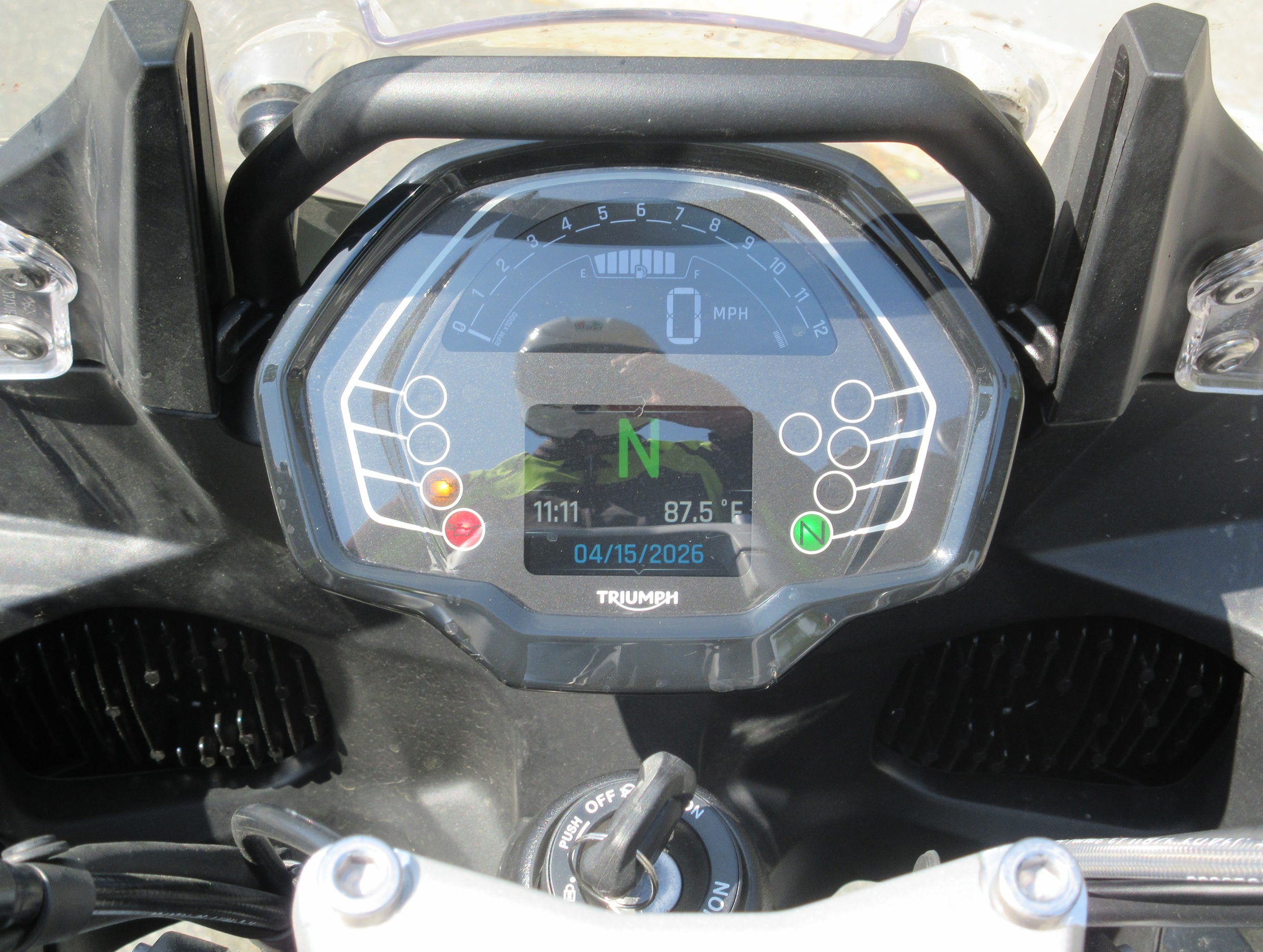
Some will look at the digital display on the Tiger Sport 800 Tour, which is a combination of an LCD display and a TFT section, and will be disappointed it’s not as fancy as the large TFT panels of up to 10 inches on some other motorcycles today. Other riders will be happy they don’t have something that looks like another computer screen on their ride. My only complaint was the reflections. The photo above is a test. Which do you see? The bike in neutral on a warm April day or the rider taking a photo?
My test ride on the Tiger Sport 800 Tour
The ultimate purpose of my six-day, 1,165-mile test ride on the Tiger Sport 800 Tour was to return the motorcycle to Triumph’s U.S. headquarters in Atlanta, but along the way I planned to use it for every kind of riding a typical user might want to do (except I didn’t have a chance to ride it two-up). I picked up the bike from my friend’s house in late afternoon and blazed southwestward to lay down a hundred interstate miles and position myself for a ride south that would avoid the worst of the East Coast urban corridor. The next two days both involved a few hours of making time on the interstate, followed by some of the best curvy back roads I could identify, and ending the day with some local highways to get to my destination. Then I spent the weekend commuting from a hotel to Road Atlanta for the races. My final day with the Tiger Sport 800 Tour, I squeezed in a bit more sightseeing and then returned the motorcycle in the urban traffic of Atlanta.
At first sit, I realized the Tiger Sport 800 Tour offers an upright, neutral riding position. I’m five feet, 11 inches tall with a 32-inch inseam and my back was almost exactly vertical as I reached for the Tiger’s wide handlebar. Legroom was ample and the 32.6-inch seat height let me get my feet comfortably on the ground. Speaking of the saddle, the Tour comes with a one-piece seat that’s intended to be more comfortable than the one on the base Tiger Sport 800, and I found it to be a good compromise: big enough to be supportive but still trim enough bot not interfering with body movement for sportier riding. It’s a little flatter and firmer than you might expect on a full-blown touring motorcycle, but that’s part of the sport-touring compromise. Bottom line: I rode long days and comfort was never an issue.
Through all the varied riding I did on those long days, the Triumph inline-triple engine upheld the company’s reputation for producing three-cylinder engines that have enough unique characteristics to be fun but are too competent and smooth to be tiring or troublesome. Triumph rates the 12-valve triple at 113 horsepower, which falls into the range I consider the sweet spot. Rolling down the interstate, 5,000 rpm on the tachometer in sixth gear yielded an indicated 73 mph (other sources suggest the Tiger’s speedometer reads a few miles per hour high, as most do). At that speed, the engine is unstressed and in the middle of the powerband, ready for roll-on acceleration if needed, but there is no buzzing whatsoever. In fact, I didn’t find any bothersome vibration at any engine speed and the mirrors provided a clear view behind.
Compared to the near-antique three-cylinder Triumph in my garage, the Tiger Sport 800 feels vastly more refined, as you’d expect and as it should. But it still feels like a Triumph triple, not a twin or a four-cylinder. You still get that “character” that some riders love to talk about, but you don’t pay a price in terms of being able to do the kinds of full days of varied riding that I set out to do on this trip.
For managing that power, the Tiger Sport 800 Tour comes with three riding modes, Sport, Road, and Rain, and there’s a dedicated mode button on the lefthand switchgear that makes it simple to change modes. You don’t have to stop or roll off the throttle to switch. The riding modes also adjust the settings of the lean-angle-sensitive traction control and ABS. While there is no customizable mode, you can adjust the three preset modes. For example, you can go into the menu and decide you want to apply the Sport level of traction control to the Road riding mode, basically combining a lower level of traction control intervention with the smoother throttle response of the Road mode.
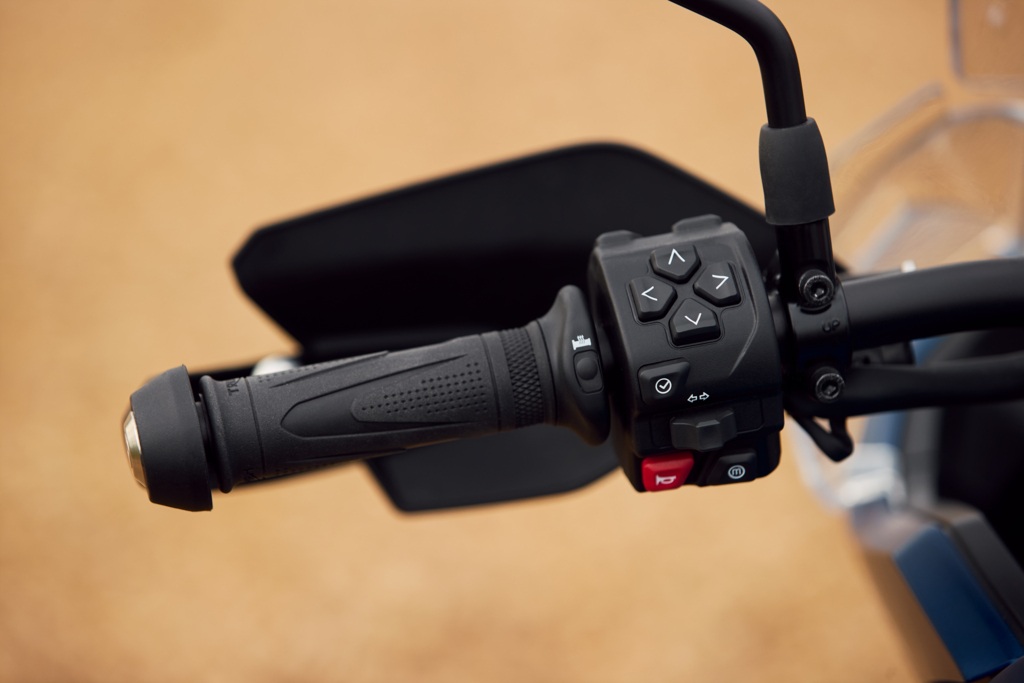
The four arrow buttons make navigating through the menu easier than most motorcycles these days. The cruise control buttons are on top of the switchgear pods, and the “M” button at the bottom allows for easy and quick changes to the riding mode. The button on the grip toggles the heated grips, standard on the Tour model, through three levels and off. Triumph photo.
I spent the vast majority of my riding time in Road mode. Unlike many other motorcycles I’ve ridden, including some Triumphs of the past, the Sport mode on the Tiger Sport 800 Tour did not provide a twitchy, hard-to-be-smooth throttle response in pursuit of an “exciting” feel. Encountering no rain, I never felt the need to use the Rain mode, but given the intended mission of this bike and how well the other two modes worked, plus the limited adjustability built in, I didn’t feel that the lack of a custom riding mode was an issue.
The “sport” highlight of my sport-touring trip came on my second long day. After visiting a friend in Durham, North Carolina, I blazed across the state on Interstate 40 to Asheville and from there began meandering along some of western North Carolina’s tightly coiled two-lanes through the Nantahala National Forest, including a couple of short sections of the Blue Ridge Parkway. This is where the Showa suspension and the radial-mount, four-piston front brake calipers were properly tested, along with the three-cylinder engine.
The fork is fully adjustable but I never felt the need to tinker with it. On the stock settings, the suspension provided a firm but compliant ride as I rode through mile after mile of second-gear corners in the national forest. The front suspension hit that sweet spot, providing feedback and control when the turns got tight, but not feeling harsh or overly stiff. The rear suspension is adjustable for preload and rebound damping, but adjusting the rebound involves lying on the ground and reaching the adjustment screw with a long screwdriver, something I didn’t have with me. Fortunately, I didn’t feel the need to adjust anything except the preload, and that’s easily done with a remote adjuster that’s so easy to reach I could change it while riding. I dialed back the preload setting from where it had been left by Spurgeon, who both outweighs me and packs more than I do, but still a few clicks more than the factory setting. Other than that, I was both pleased and impressed with the suspension settings in their stock position.
Along with the suspension, the brakes are another component that are upgraded on the Tiger Sport 800 compared to the Tiger Sport 660. With ample power and good feel, the brakes left me with nothing to criticize after using them a few thousand times for all those twists and turns through the forest.
Another appreciated feature was the easily adjustable windscreen. Some more expensive competitors come with electrically adjustable windscreens, a luxury that adds complexity, weight, and cost. Some less expensive competitors require you to break out the tools to change the windscreen height. I’m happy with the Tiger Sport 800 Tour’s manually adjustable windscreen. Just tug on the handle above the digital display. All the way down felt right for most riding. All the way up was good for cool mornings while droning down the interstate. Neither position caused any unusual turbulence.
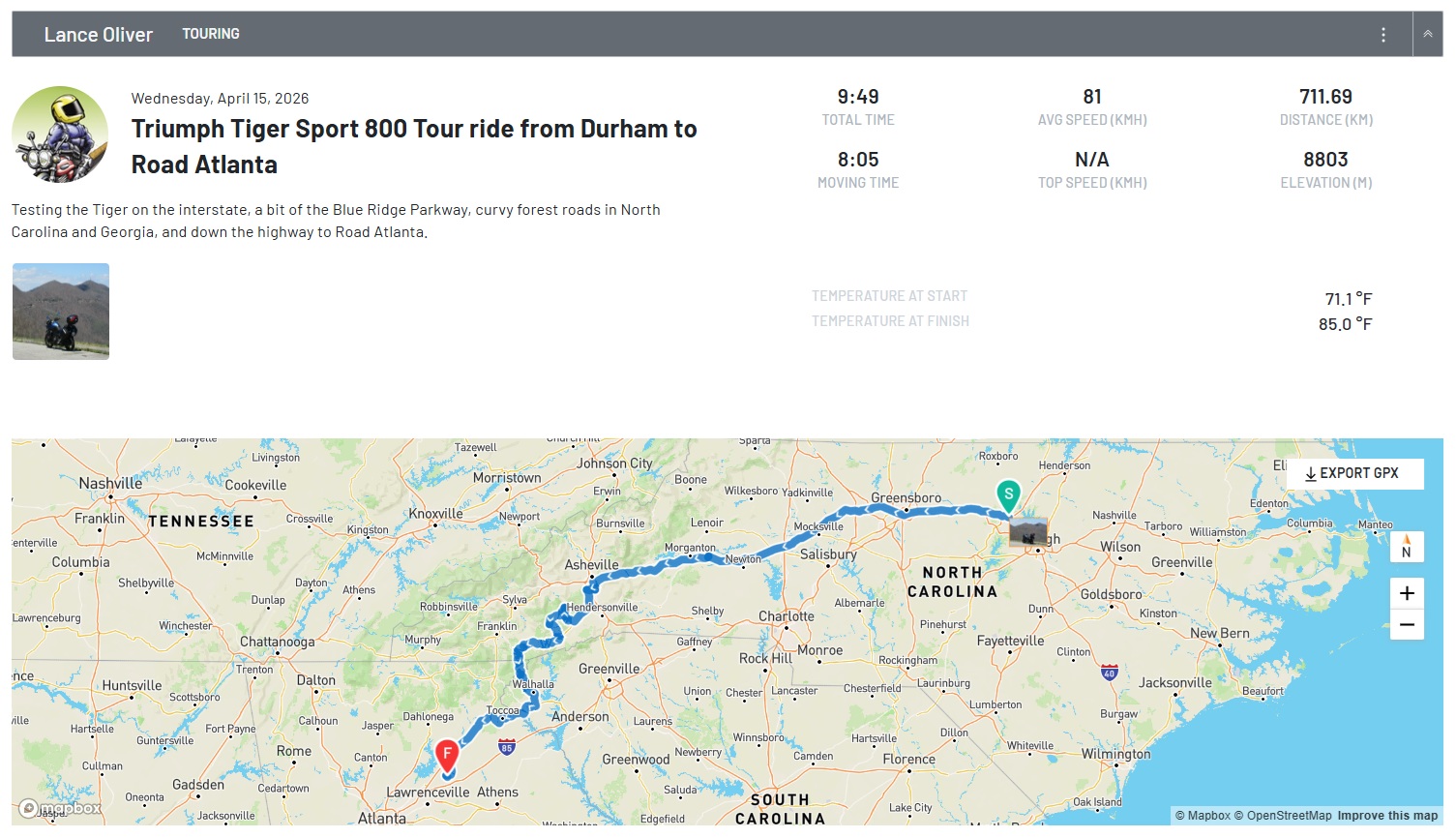
In a full day of riding, I covered 442 miles and just about all the kinds of roads a sport-touring motorcycle is expected to handle with competence. Visit REVER for an interactive map.
As you can see in the REVER map above (click the link for details), my second long day of riding threw everything at the Tiger Sport 800 Tour that a sport-touring motorcycle should be able to handle: enough comfort that hours on the interstate that didn’t tire me out and diminish my enjoyment of the good roads to come; great handling and ample power for fully enjoying a couple hundred miles of great mountain roads; and smooth competence for finishing off the day with some boring local highways to get to my destination. So, an excellent engine, superb handling, and solid brakes mean the Tiger Sport 800 Tour is motorcycle perfection, right? Well, perfection is not really for this world.
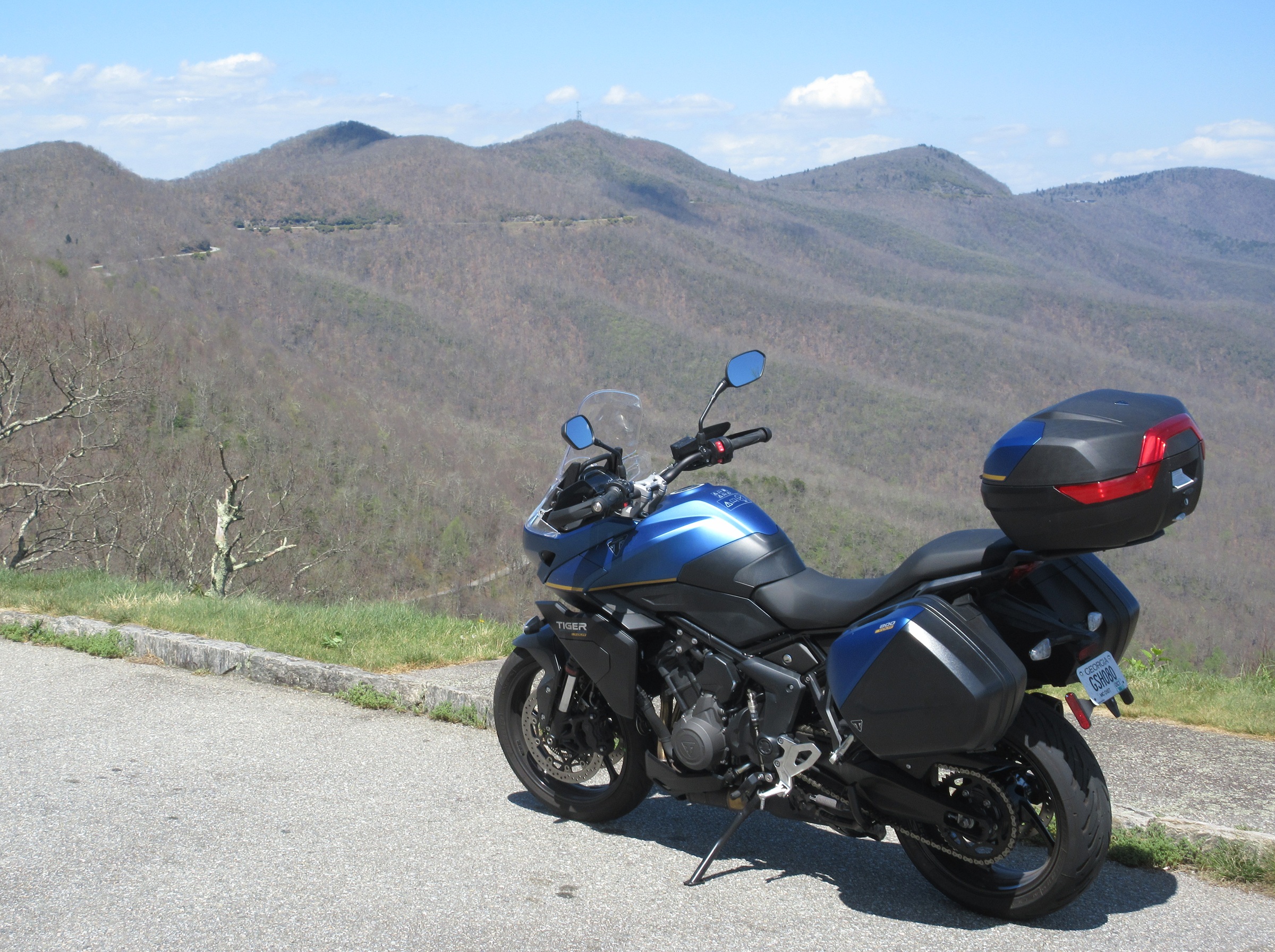
I got some unseasonably warm — even record-setting, in some cases — weather for my mid-April trip, but in the highest elevations of western North Carolina along the Blue Ridge Parkway, the leaves still hadn’t emerged on the trees. Down below, spring was blooming beautifully. This is sport-touring riding territory.
A few shortcomings on the Tiger Sport 800 Tour
I found a few things less than perfect on the Tiger Sport 800 Tour. Most of them were minor issues that would be deal-breakers for only a few demanding riders, and one was more significant, in my mind.
While the engine and fueling are excellent, the one significant disappointment I had with the Tiger was the transmission. It’s not terrible, by any means, but it has an odd feel, lacking that snick-snick quick and accurate movement that the best transmissions have. After discussing it with Spurgeon while he was writing his review, we eventually agreed that the best way to describe it is “not precise.” The quickshifter, called Triumph Shift Assist in company branding, can be turned off, and that improved the feel slightly, though it was not transformative. The other unfortunate aspect is that the quickshifter was not among the better ones I’ve tested, either. Completing the picture, the cable-actuated clutch required more effort and felt less refined than I’d like.
The reason I feel that so-so transmission action is significant is because it’s something you use many times every ride, so you’ll always notice it, even if you get used to it. It’s also something that detracts from the overall impression of quality and competence that the drivetrain otherwise exudes.
The other issues I noticed with the Tiger were also areas where it felt like some small decisions were detracting from the feeling of quality, and sometimes it’s hard to imagine why the Triumph designers made the decisions they did. But they’re mostly little things.
Little things like the fact that the brake lever is adjustable but the clutch lever isn’t (which might matter less if the clutch pull were lighter and smoother). Another example, in this age when so many are using their phones for navigation, is the lack of a USB outlet to keep your device charged. Triumph will sell you one as an accessory for the Tiger Sport 800 Tour for $35, but you can buy other Triumphs that cost a little more than a third of the price of this motorcycle and get a USB port standard.
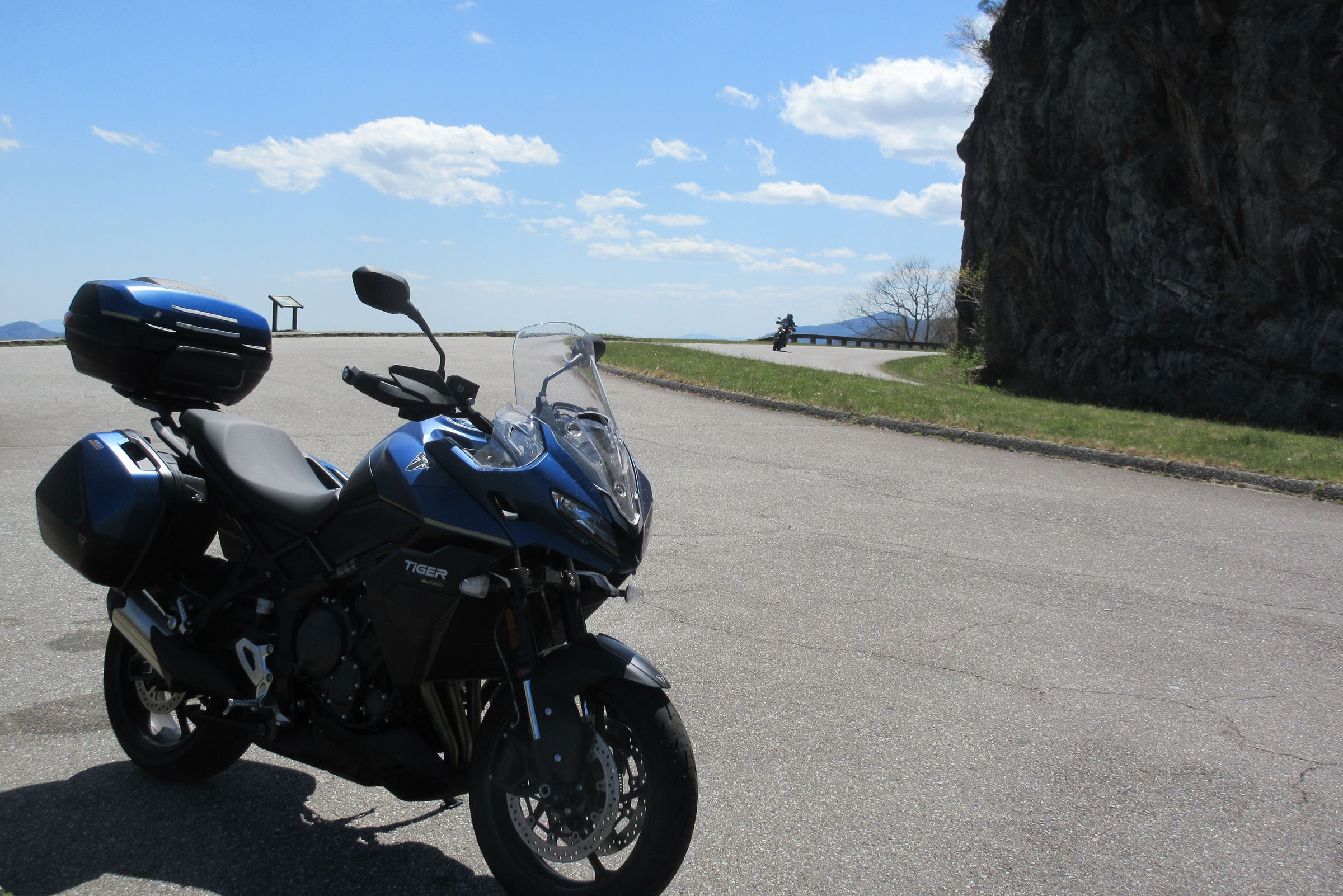
I was definitely not the only one taking advantage of some record-setting high temperatures to make an early-in-the-season visit to some mountain roads.
Maybe the one cost-cutting (if that’s truly the reason) measure that’s hardest to understand is the cruise control. It’s simple enough to use. One button on the top of the left switchgear turns it on, and then you get to the speed you want and hit the button again to set the speed. The drawback is that there’s no way to adjust your speed. If you want to go three miles per hour faster, you can’t hit a “+” button, like on most systems. Instead, you have to disengage cruise, accelerate to the speed you want, and set the speed again. You also have to hope you got your timing just right and set the speed you want, not something just a little faster or slower than you want.
This more rudimentary system wouldn’t be so hard to explain except for the fact that past Triumphs have had cruise control that allowed speed adjustment. Why the step backwards?
The luggage worked well and my complaint with it is not specific to Triumph. For reasons I can’t understand, all the manufacturers insist that sport-touring motorcycles must have clamshell-style side cases instead of simpler and sturdier top-loading cases. The clamshell cases are harder to load and unload and the design inevitably puts stresses on the hinges, raising the odds of damage. On top of that, Triumph and all the other manufacturers shape the side cases to make them look better, instead of making them a plain rectangle. I’ve traveled contentedly for six-figure mileage without a top case, but for this trip, for example, I had to carry my laptop computer for work, and fitting it in the side cases with their rounded corners was nearly impossible. I needed the top box despite packing light.
One of the things I love about modern sport-touring motorcycles is the competence they exude. A feeling of quality and the ability to handle all kinds of riding, with no sweat. While the Tiger Sport 800 Tour’s basic package of engine, suspension, and brakes definitely present that image, a few small hard-to-understand design decisions chip away at the edges.
I also had one glitch with the Tiger, the same one Spurgeon experienced a few times on his longer ride. For me, it happened twice. I was rolling along happily when the dash suddenly flashed red with a warning that the front tire pressure had dropped to 22 psi. From the way the motorcycle was handling, I knew the TPMS was lying, but I pulled over to check anyway. As soon as I cycled the key, the front tire pressure read 38 psi again. The good part is that when I tested tire pressures a few times, the readings on the display exactly matched the reading on the pump I carry with me. The bad part was the occasional false alarm. Whether that was a one-off problem with the motorcycle we had or is a broader issue, I can’t say.
The evolution of sport-touring motorcycles
On an episode of the Highside/Lowside podcast a few years ago, I joined my friends and podcast hosts Spurgeon and Zack to discuss the evolution of the sport-touring class. Just as drivers in the four-wheel world have migrated from sedans and coupes to SUVs and then to crossovers that provide some of the advantages of SUVs without the off-road pretense and compromises, motorcyclists in the United States have migrated from traditional sport-tourers like my old VFR to big adventure-touring motorcycles and, more recently, we’ve seen a shift toward smaller adventure bikes for those who really do go off-road and a move toward the “crossovers” or “tall-rounders” for those who plan to stick to pavement but want the upright ergonomics of an adventure-tourer.
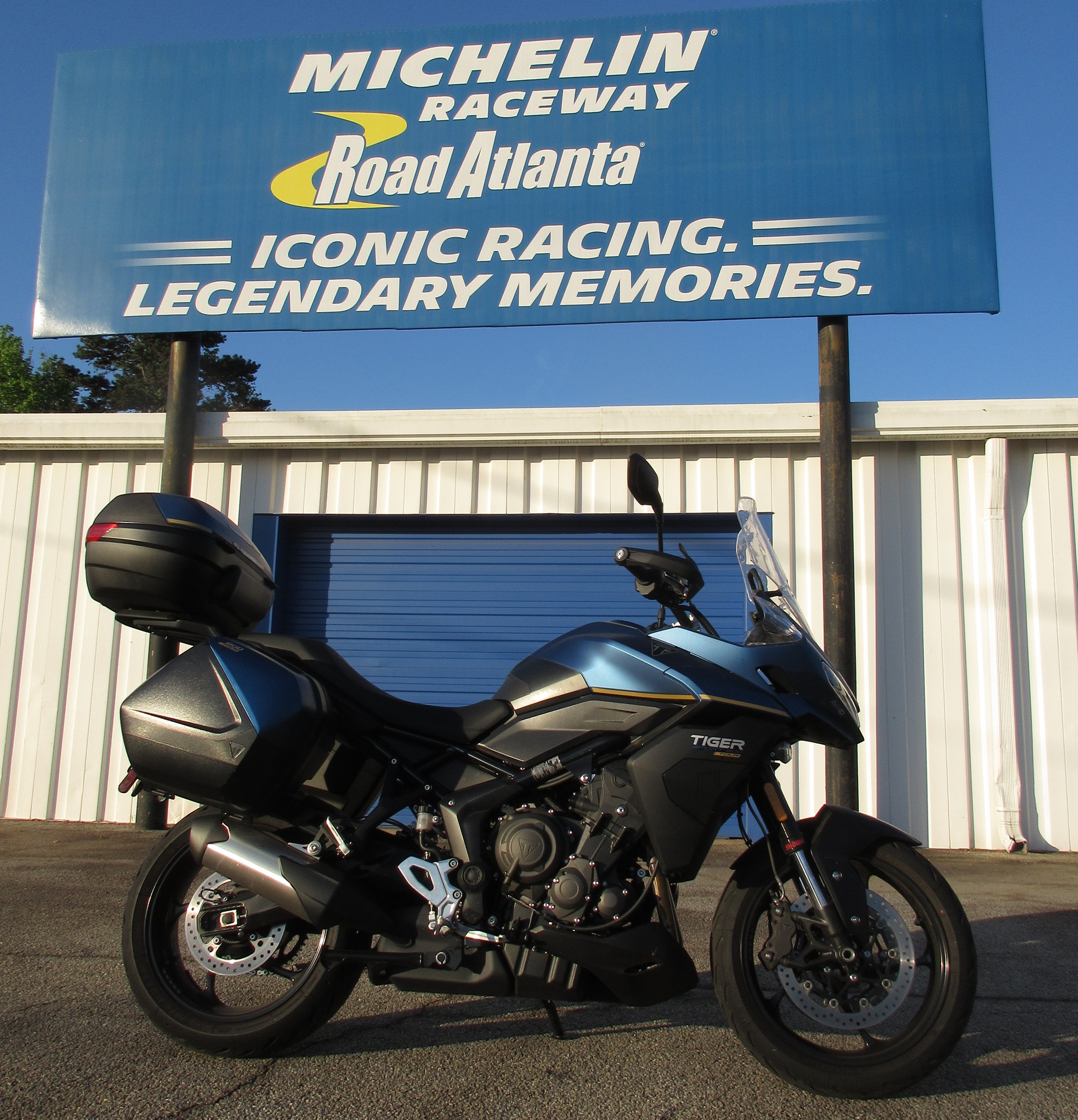
The Tiger Sport 800 Tour carried me across parts of six states to get me to Georgia, where I covered the MotoAmerica Superbikes at Road Atlanta round of racing. I regularly got 50 miles per gallon, so a 200-mile range between fill-ups was easily attained.
In addition to my personal VFR800 Interceptor, I’ve had the chance to test-ride a few examples (follow the links to see my reviews) of these branches on the current sport-touring tree: the Suzuki GSX-S1000GT+, which is very much in the vein of the traditional sport-touring motorcycle, more powerful and slightly sportier in feel than the Triumph; the Kawasaki Versys 1000 SE LT+, a street-only machine but with an ADV stance and upspec electronically adjustable suspension; and a BMW R 1300 RT, which adds many more features, more weight, a higher price, and thus pushes the edge of the sport-touring spectrum and would be placed by some in the touring category.
Though they differ in style and feel, each of those three motorcycles is someone’s right answer to the question of what’s the best way to cross a time zone or two in comfort and still have enough agility to enjoy spirited riding when the roads get good. And for others, the answer will be to equip a smaller and lighter motorcycle with some accessories, as I did in the past with the Kawasaki Versys I rode for nearly 90,000 miles. (And I may well decide to take the same route in replacing the VFR.)
You sometimes hear some people say the sport-touring category is dying out (and that was the impetus for the podcast discussion mentioned above), but I disagree. Usually, the person making that assertion is thinking of a model that’s been discontinued and working with a very narrow and traditional definition of a sport-touring motorcycle, whether that’s a heavier, more touring-focused motorcycle like the Yamaha FJR1300 with its shaft drive, or a lighter, sportier bike with just the minimal baggage (literal and figurative) needed to take a weekend trip, like the Ducati Supersport I rode several years ago. But there’s not only a lot of space between those points on the spectrum, and lots of bikes that fill it in, like the ones I mentioned above, but also there are plenty of adjacent bikes that do a great job of fulfilling the sport-touring mission.
That’s why I argue that sport-touring motorcycles aren’t dying off, but rather they’re evolving. And like a person who matures and becomes more multi-faceted with experience, this class of motorcycles offers more variety and choice than ever. Sport-touring is an activity, not just a narrow class of vehicle, and the goal is to find the one that’s best for you, not some theoretical best of all.
The Triumph Tiger Sport 800 Tour makes a strong case for those whose sweet spot is in the middle ground. Not skimping on the features you probably feel you need but without the expense and complexity of the really high-tech stuff such as adaptive cruise control and electronically adjustable suspension. The classic sport-touring motorcycle is alive and well.
| 2026 Triumph Tiger Sport 800 Tour | |
|---|---|
| Price (MSRP) | $14,695 base |
| Engine | 798 cc, liquid-cooled, 12-valve, inline triple |
| Transmission, final drive | Six-speed, chain |
| Claimed horsepower | 113 @ 10,750 rpm |
| Claimed torque | 84 newton-meters (62 foot-pounds) @ 8,500 |
| Electronic rider aids | Three riding modes; lean-angle-sensitive traction control |
| Frame | Tubular steel perimeter |
| Front suspension | Showa 41 mm inverted separate function fork with adjustable compression and rebound damping; 5.9 inches of travel |
| Rear suspension | Showa shock adjustable for rebound damping and preload; 5.9 inches of travel |
| Front brake | Dual radial-mount four-piston calipers, 310 mm discs, with lean-angle-sensitive ABS (OCABS) |
| Rear brake | Single-piston caliper, 255 mm disc, with lean-angle-sensitive ABS (OCABS) |
| Rake, trail | 23.8 degrees, 3.9 inches |
| Wheelbase | 55.5 inches |
| Seat height | 32.6 inches |
| Fuel capacity | 4.9 gallons |
| Tires | 120/70R17 front, 180/55R17 rear |
| Claimed weight | 511.5 pounds wet |
| More info | triumphmotorcycles.com |




I’m tired of throwing soft saddlebags on a naked bike and I’m ready to buy my first motorcycle with integrated saddlebags. I’ve been looking at the Suzuki GT+ but this Tiger has me having second thoughts. The price is about the same. I don’t think I need or even want the Tiger’s top box. Thoughts on how the two compare?
I really like and can recommend both of these motorcycles. The differences are in the nuances. The Suzuki GSX-S1000GT+ leans a bit more sporty with more power (not that I felt the Tiger was ever lacking), very slightly sportier ergonomics, and a quickshifter that works great. The Tiger Sport 800 Tour leans more comfortable with a comfier seat, adjustable windscreen, and heated grips. You can’t put a center stand on the Suzuki but it comes standard on the Triumph.
Do you ever travel two-up? That’s when the Tiger’s top box would be really valuable, both for the added capacity and as a backrest for the passenger. If you only ride solo, you could always remove the top box whenever you don’t need it.
Both have fun engines that are popular for good reason, both handle well, and they are close to each other on the spectrum. It really comes down to which features matter most to you and whether your riding preferences lean a bit more to the sport side or the touring side.