If you’ve ridden motorcycles for long in the United States, you’ve probably heard things like this, most likely from riders of my (old) generation. Bigger is better. You can’t tour on a “little” 650. For comfort, you want road-hugging weight.
Not for the first time, I’m out of step with a lot of riders who look like me. I’ve always been a believer that lighter is better. I put 90,000 miles on a 650, including many 500-mile days (and several longer ones). And while I love the road, I don’t want to hug it. I’d rather fly along it.
The tide has changed, though. Younger riders are embracing smaller motorcycles, not just because they’re more fun to ride, but also because they’re more affordable, in everything from fuel mileage to insurance. Manufacturers have noticed and have greatly expanded (and improved) the range of options in the past decade or so. Consider that Honda now offers 22 different street-legal motorcycle models under 500 cc in the U.S. market.
We’ve particularly seen a range of new options in the middleweight adventure-touring class, as riders came to realize that the massive adventure bikes were too much for even mild off-road riding. Progress has been slower, however, in the middleweight sport-touring class. And that’s the very category of motorcycle I prefer, as my history with the aforementioned Kawasaki Versys 650 and my Honda VFR800 Interceptor Deluxe shows.
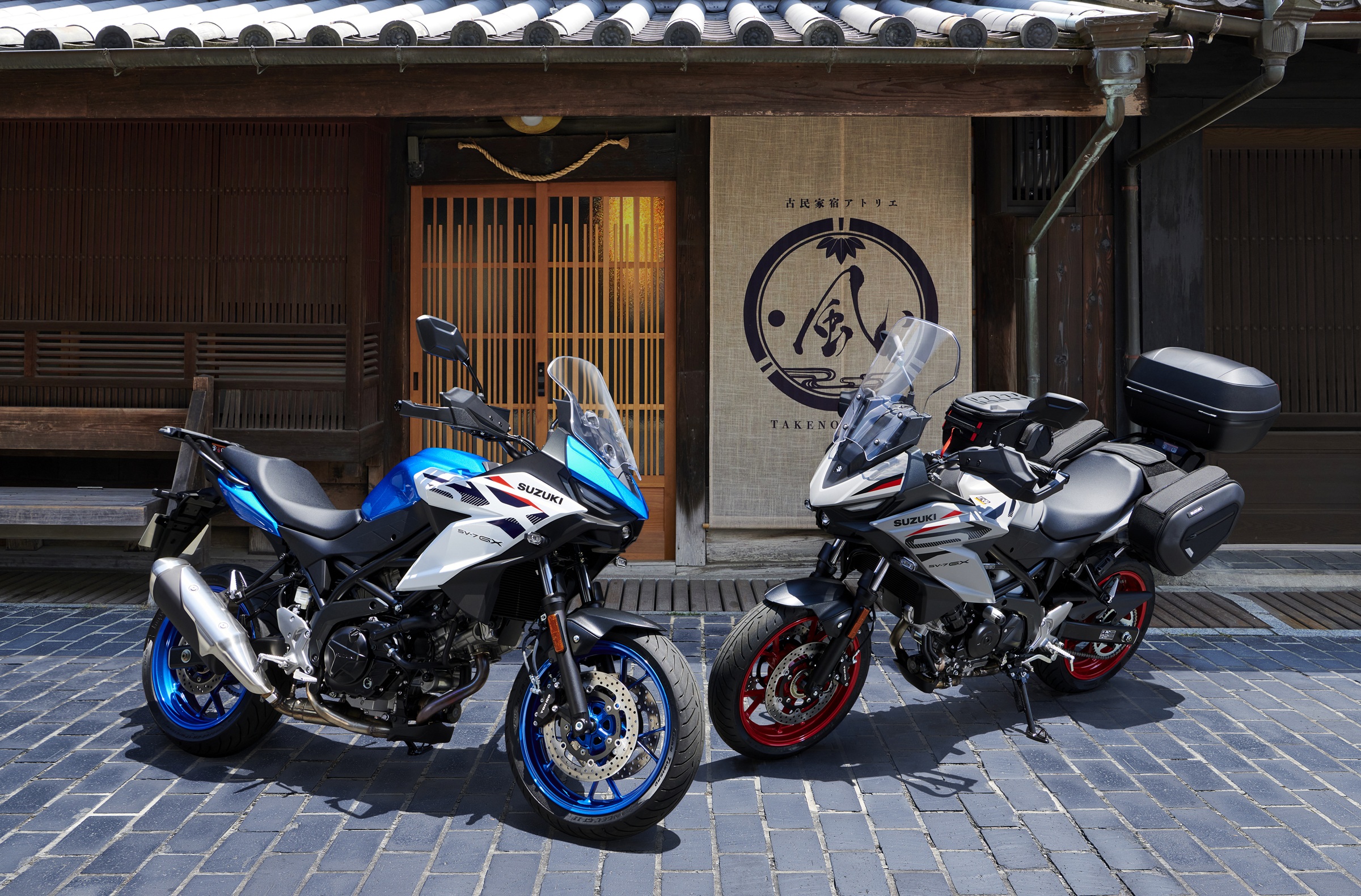
The two color options in the SV-7GX, the version with graphics, are Pearl Brilliant White/Metallic Triton Blue with blue wheels and Pearl Matte Greige with red wheels. Touring accessories shown on the Pearl Matte Greige bike above include a taller windscreen, thicker seat, tank bag, throw-over saddlebags, and a locking top box. Suzuki photo.
That brings us to the motorcycle at hand: the 2027 Suzuki SV-7GX. If you’re looking for a middleweight street-only motorcycle that’s light and nimble enough to make local transportation fun, but also offers built-in wind protection, comfortable ergonomics, and at least some options for luggage to make it long-haul-capable (and I am looking for one), there aren’t many turn-key options. But the SV-7GX is one. So I was happy to get the chance to spend a couple of days test riding the SV-7GX in Southern California recently.
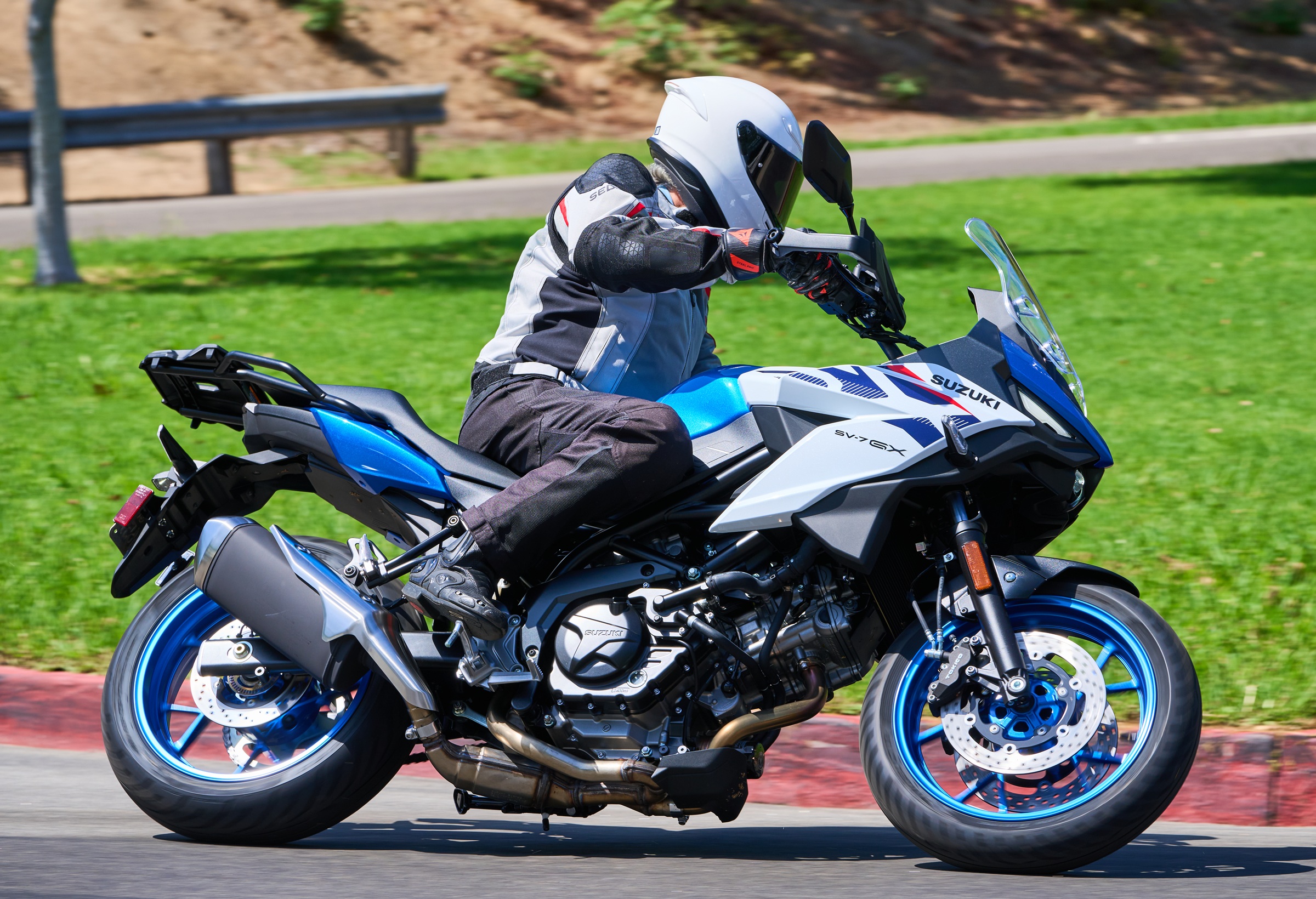
Instead of abandoning the popular and long-lived 645 cc V-twin, Suzuki updated it and gave it a new home in the SV-7GX. Photo by Joseph Agustin.
Suzuki’s popular V-twin lives on in a new model
When Suzuki launched its new line of 800 cc parallel-twin models in recent years, many of us assumed that meant the long-running and popular 645 cc V-twin engine in the SV650 and V-Strom 650 was doomed to extinction. Since the SV650 was first introduced in 1999, more than half a million of the engines have been produced. But it was no longer sold in Europe because it didn’t meet current emissions standards. Instead of killing off the popular V-twin, Suzuki updated it and put it in the new SV-7GX. And given that investment in the platform, I expect to see the engine carry on in a new SV650 and in the V-Strom.
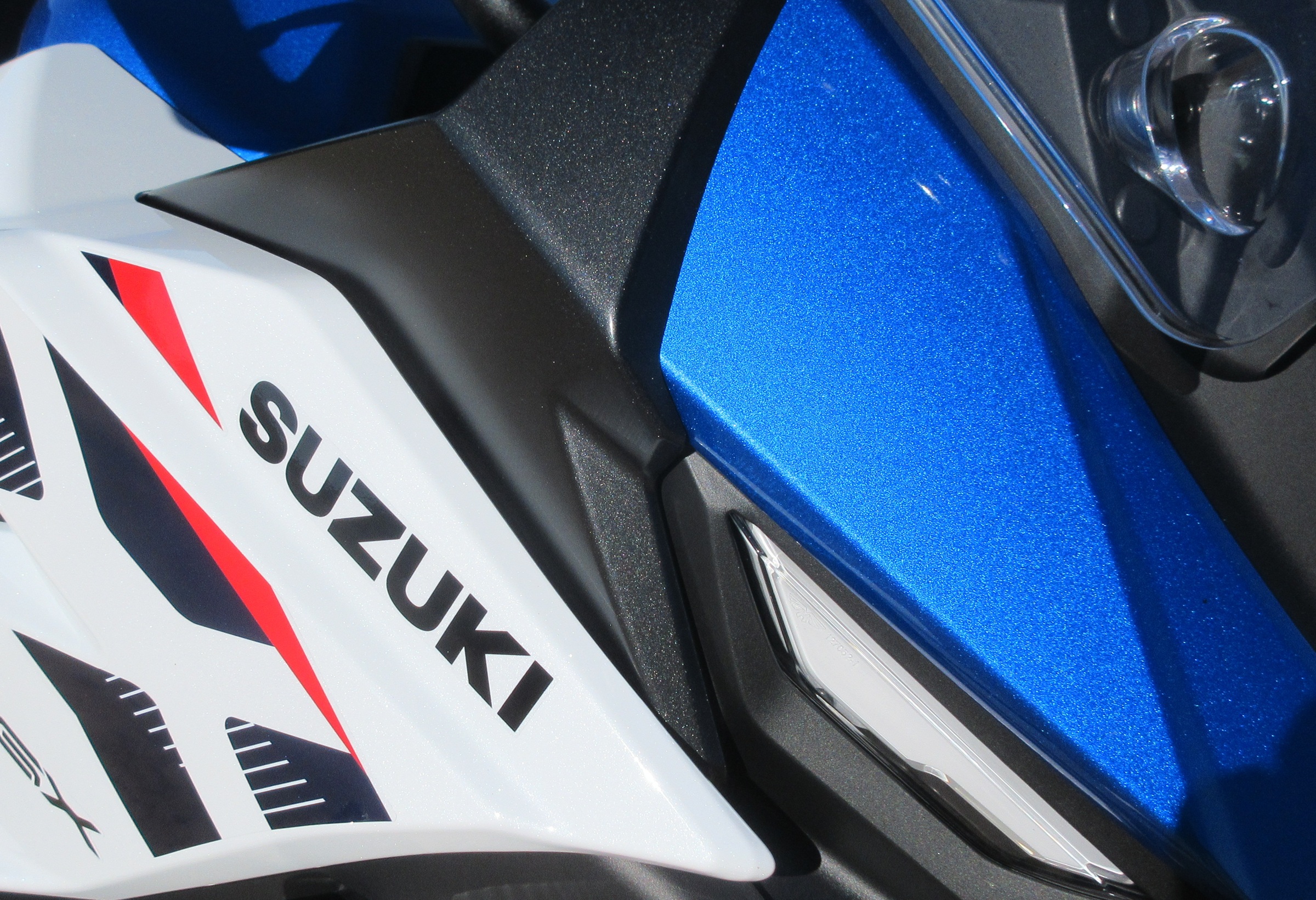
Three paint options mean there’s something for everyone. Like sparkle? The Pearl Brilliant White/Metallic Triton Blue glitters in the sunlight. Don’t like sparkle? The Pearl Matte Greige is a gloss-free finish. Don’t want graphics? The Pearl Brilliant White with black wheels on the SV-7GXV version is a blank canvas. Be aware that the graphics are decals, not paint.
The SV-7GX splits the difference between the SV650 and the V-Strom 650. It takes the SV’s trellis frame and 17-inch wheels, but adds upright ergonomics and wind protection, similar to the mildly adventure-touring V-Strom. A ride-by-wire throttle and new electronic throttle bodies are among the changes that made the engine able to pass emissions tests.
With the ride-by-wire throttle, the SV-7GX comes with a relatively simple but functional set of electronic rider aids. There are three ride modes, which Suzuki calls SDMS for Suzuki Drive Mode Selector, three levels of traction control plus off, and a bi-directional quickshifter.
Modes A, for Active, and B, for Basic, both provide full power but A gives a more urgent, snappier throttle response. Unlike some other Suzuki models, the C mode, (for Comfort, but similar to a Rain mode on other machines) not only softens throttle response but also reduces maximum power to 60 horsepower. That might be useful not only when you’re riding in wet and cold conditions with iffy traction, but also for a new rider moving up from a smaller and less powerful motorcycle who wants to get used to the bigger bike gradually.
The ride modes control only throttle response and power level. The rider can set the traction control separately, choosing from three levels of intervention or turning it off. In most other manufacturers’ systems, both of those parameters are controlled by the ride mode. Suzuki’s system is simpler but actually gives you greater flexibility to fine tune the electronic riding aids the way you want them.
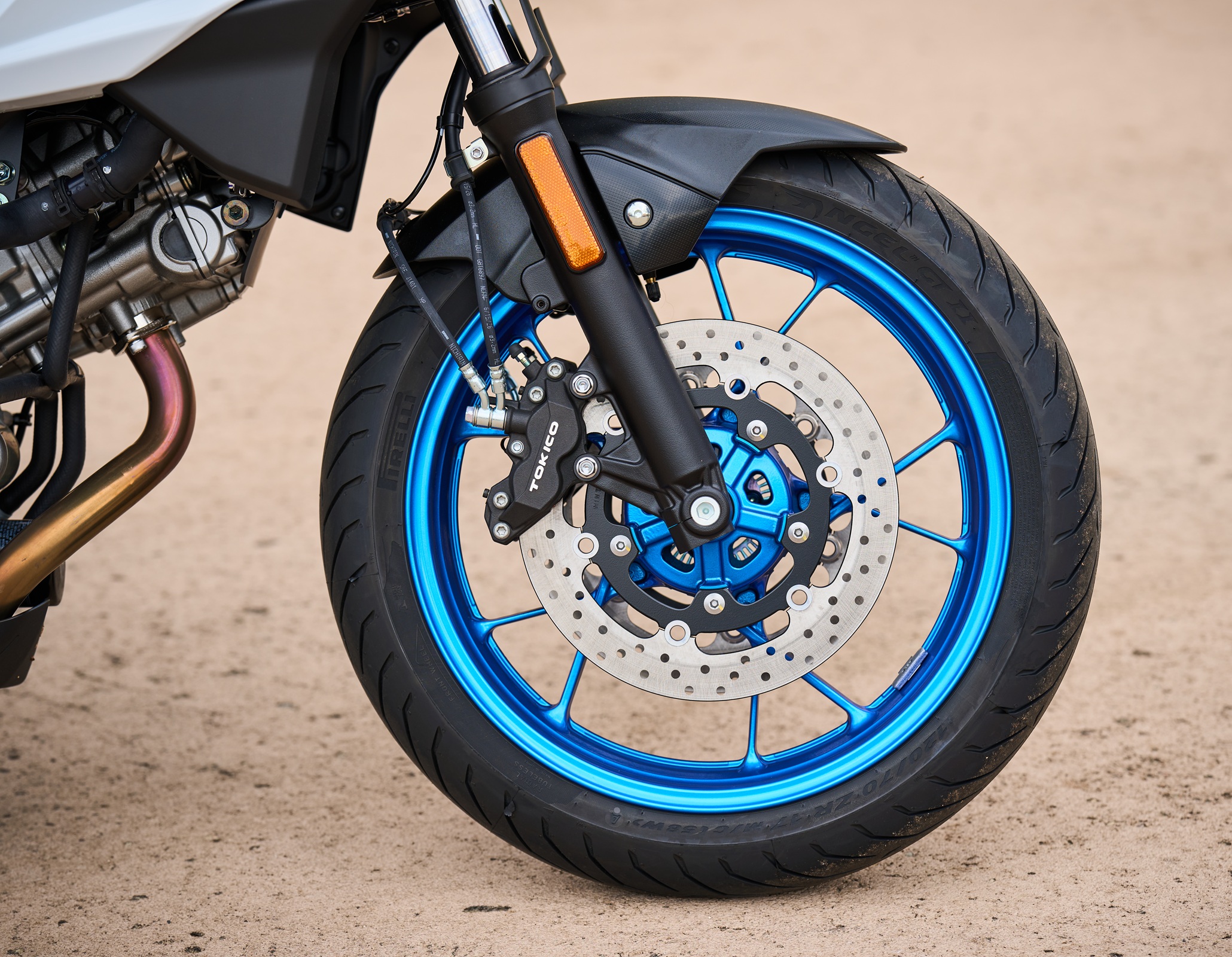
Nothing fancy about either the front brakes or suspension, but they work well. Largely because the lighter weight of the SV-7GX puts fewer demands on the components. Photo by Joseph Agustin.
Brakes and suspension are nothing fancy. Four-piston Tokico calipers squeeze dual 290 mm rotors up front and ABS is standard. The conventional 41 mm fork is non-adjustable and the rear, linkage-style shock is adjustable only for preload.
In many ways, the SV-7GX is a mix of upgraded features and basic features. The wind protection, a larger, 4.6-gallon tank, an extra 10 millimeter of seat padding for the rider and 20 millimeters for the passenger, and the standard rear rack all make the SV-7GX more travel-worthy than the SV650. The windscreen is adjustable, but only with a hex wrench and a few minutes of your time. The digital display is a full-color TFT, but a rather small one at 4.2 inches. In other words, a mix of thoughtful features and corners cut.
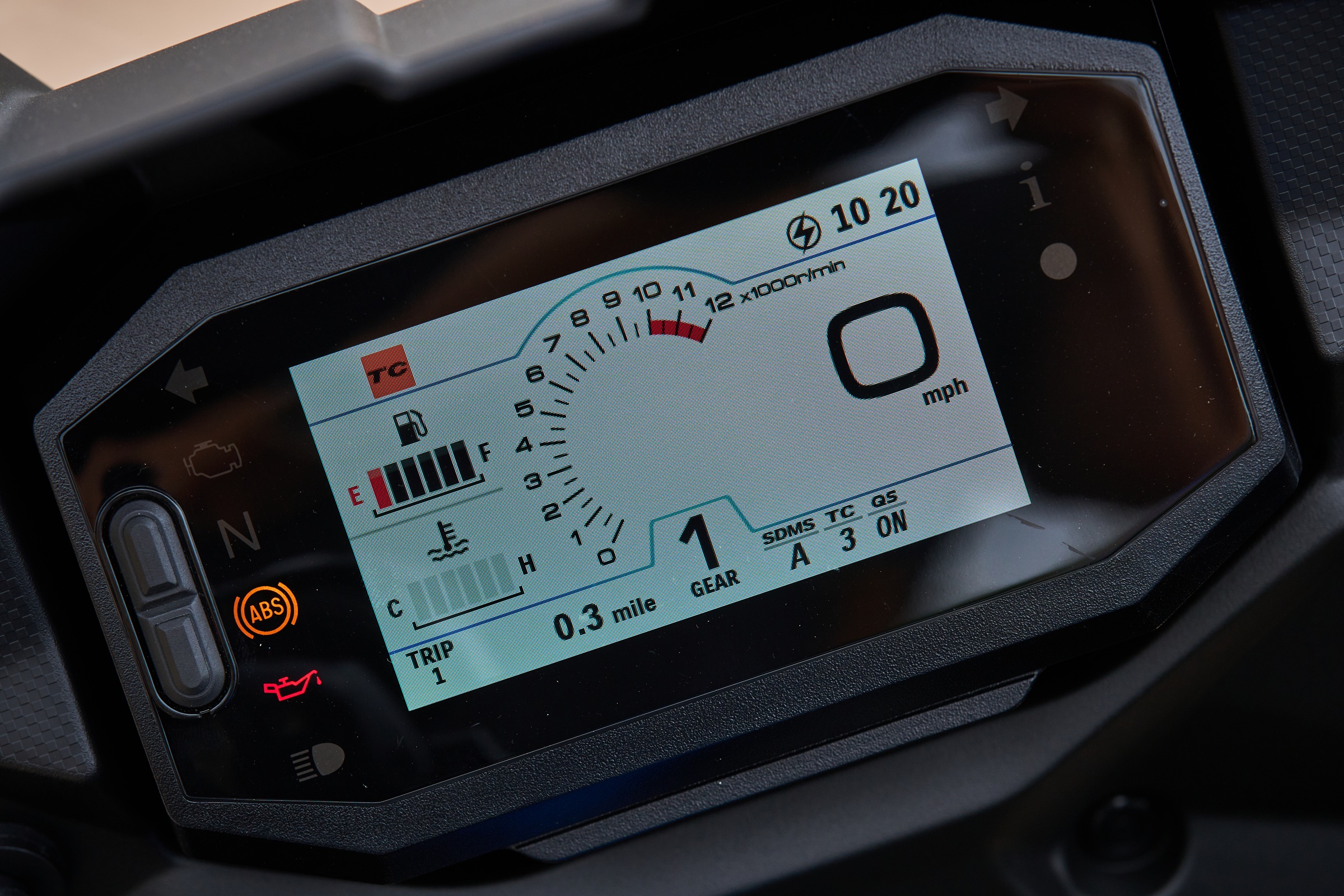
The 4.2-inch display is smaller than the dash on some competitors, but it fits in a lot of information. Photo by Joseph Agustin.
With an affordable MSRP of $8,599 for the SV-GX in the two versions with graphics, or $200 less for the mechanically identical SV-7GXV with solid white paint and black wheels, this new middleweight had the potential to be either a bargain or a disappointment. Suzuki introduced the new motorcycle to the media in San Diego and let us ride away with test units. That gave me a couple of days to give it a more thorough test ride in a range of conditions, which is exactly what you’d expect a versatile middleweight to be able to handle.
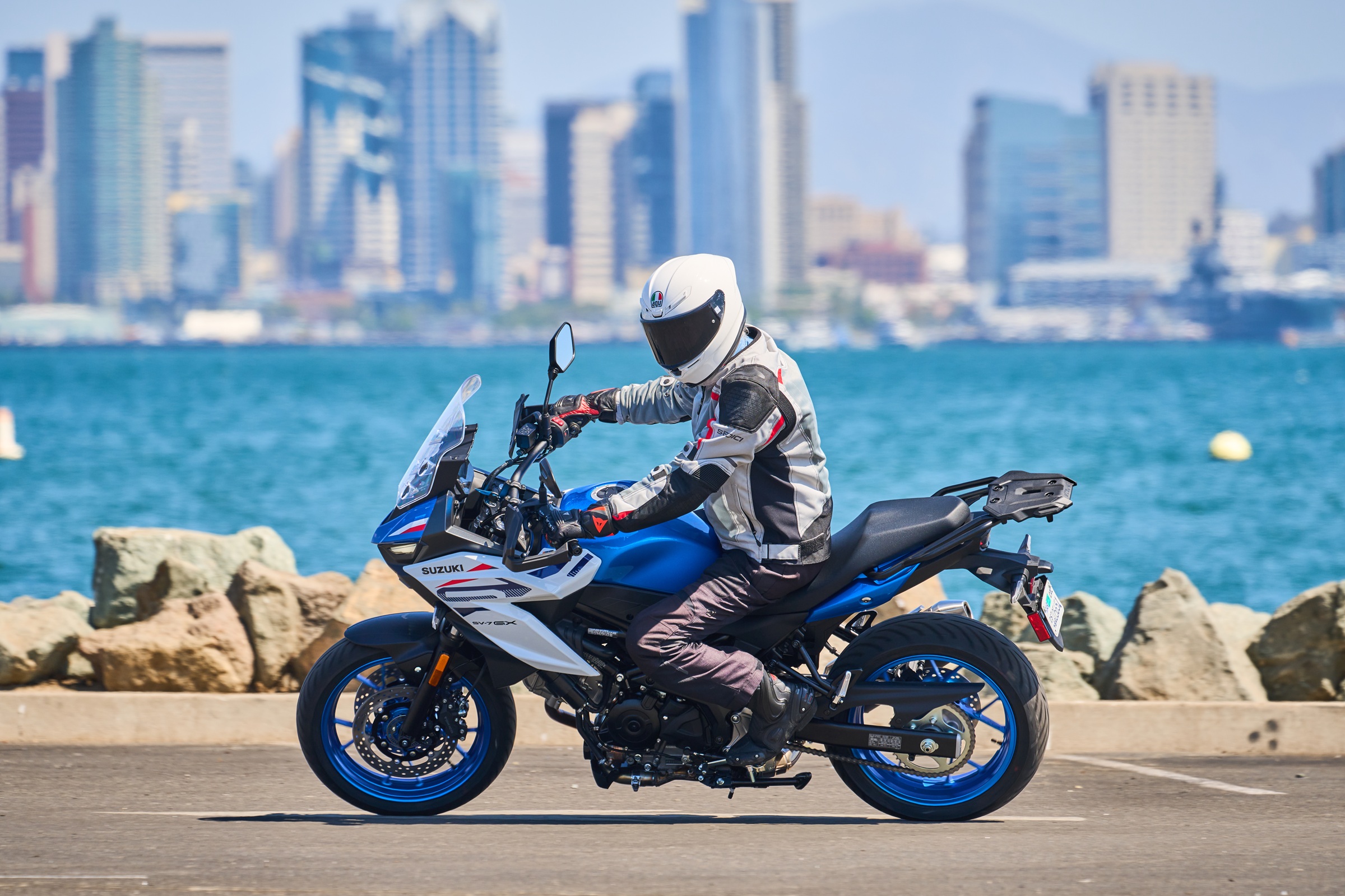
After a short ride around San Diego, Suzuki cut us loose with SV-7GXs for more thorough test rides. Photo by Joseph Agustin.
Riding the Suzuki SV-7GX from 6,000 feet to below sea level
After leaving San Diego, I spent the next day giving the SV-7GX a full test ride. As you can see from the REVER map, my route included a variety of roads and conditions to see if the SV was as versatile as it looked on paper. I started with a ride across the Sunrise Highway in San Diego County, rising to 5,900 feet, then dropped down into the desert for a longer blast on Interstate 8, through the stop lights of El Centro, and then across the desert floor on Route 78, where I dropped below sea level and the late-morning temperature hit 98 degrees F. I finished off with the best part, a loop of the hairpins and sweepers of Palomar Mountain and ended the ride in my favorite little Gold Rush town of Julian. The next day, I took the SV to the Common Tread office in the Los Angeles area, so I also got a full dose of city riding and freeway lane-splitting.
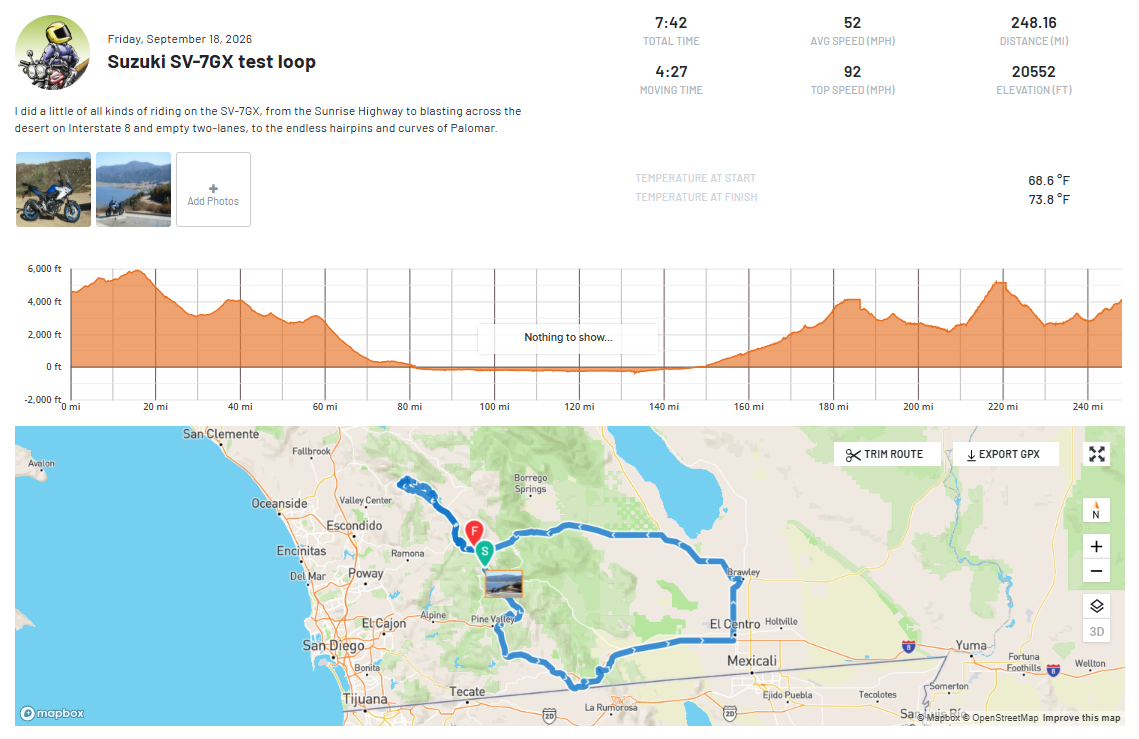
My day-long test ride covered all kinds of roads. Click on the map to see more detail at REVER.
Setting out for my ride, the SV-7GX’s ergonomics instantly felt neutral and comfortable. The upright position is good for visibility in city riding and for comfort on long rides. And, when I got to the curves of Sunrise Highway through the Laguna Mountains, there was no penalty in terms of handling.
Actually, the handling is, to me, one of the strongest points of the SV-7GX. While the suspension is non-adjustable except for rear preload, the calibration was good for my weight of 170 pounds before gear. That may differ for you if you’re significantly larger or smaller. You can tell the suspension isn’t the expensive stuff. There’s a bit of harshness over crumbled pavement, a little too much fork dive under initial braking. But it doesn’t really hold back the SV-7GX.
Light effort is enough to tip into a curve and once leaned over the SV-7GX holds its line with no surprises, whether under acceleration, steady throttle, or braking. The sweet handling is aided by two crucial elements. First, the Suzuki engineers got the fueling spot-on when they updated the V-twin to meet emissions. There is no off-idle abruptness and no peaks or dips in the powerband. That made it easier to stay smooth as I twisted through the mountains. Another contributing factor is the Pirelli Angel GT II sport-touring tires Suzuki chose. And the fact that the rear is a 160-section, instead of the wider 180-section some bigger models wear, also adds to the agility.
With the fun of the Sunrise Highway behind me, I jumped on Interstate 8 to see how the SV-7GX could lay down miles. The SV-7GX showed 5,000 rpm (halfway to its 10,000 rpm redline) at an indicated 70 mph in sixth gear. I never noticed any bothersome vibrations and the wind protection was good. Air flow over the windscreen hit me at forehead level, putting my upper body in still air. There was no unpleasant buffeting. The wind protection from the fairing and the standard-issue handguards would be particularly welcome in colder temperatures. But I was about to enter the desert lowlands, dropping below sea level and passing the popular Ocotillo Wells off-road riding areas before returning to the mountains.
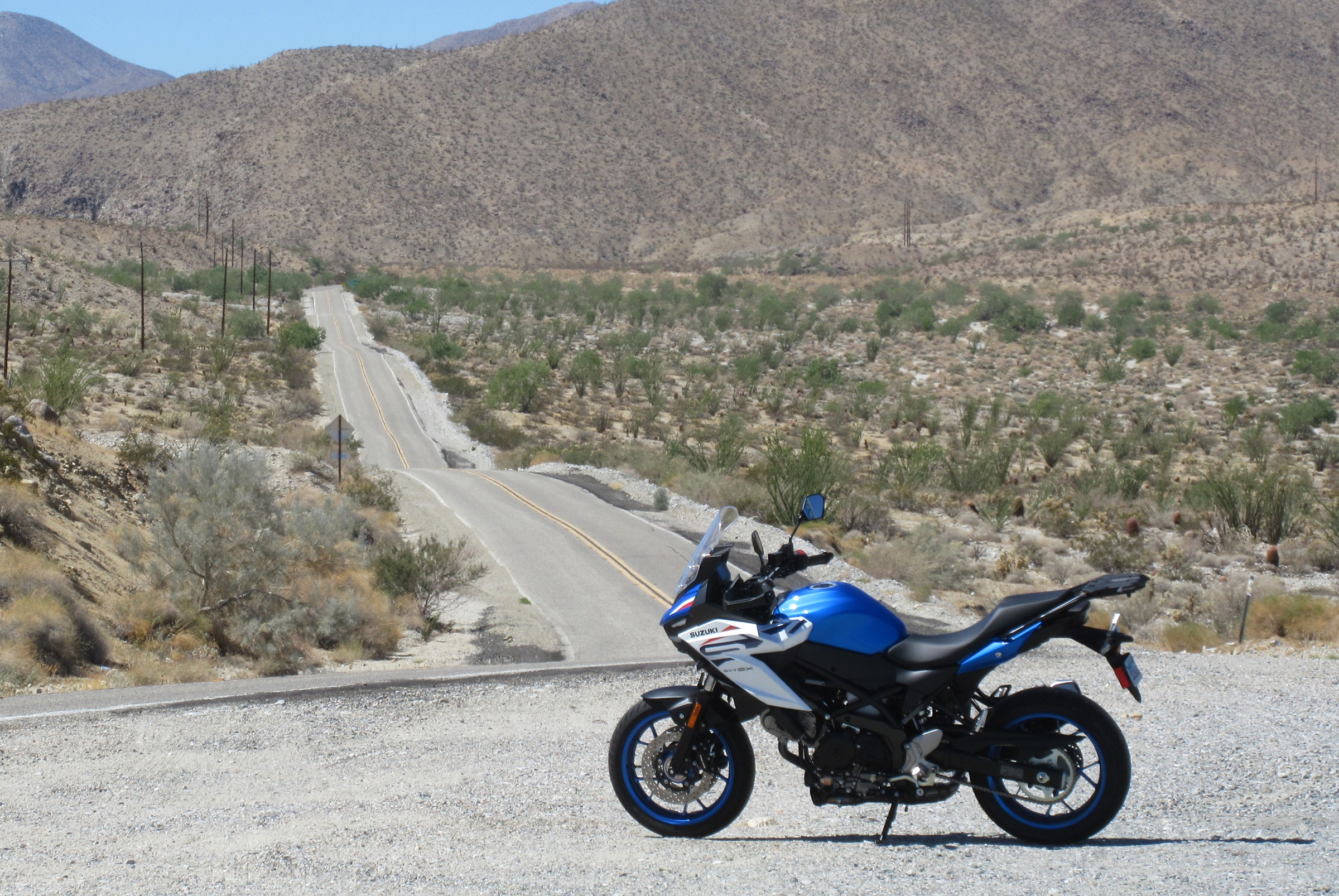
While the SV-7GX will probably most often be used for commuting and sporty use, it is comfortable enough and capable enough for long-distance missions.
I finished off the ride with the best part: A loop of Palomar Mountain, with its non-stop curves, and then a return to Julian. Again, I was happy with the nimble handling. The brakes, while nothing special on the spec sheet, were perfectly fine for the application. Light weight always makes everything else better, because it puts less strain on brakes, suspension, and the engine.
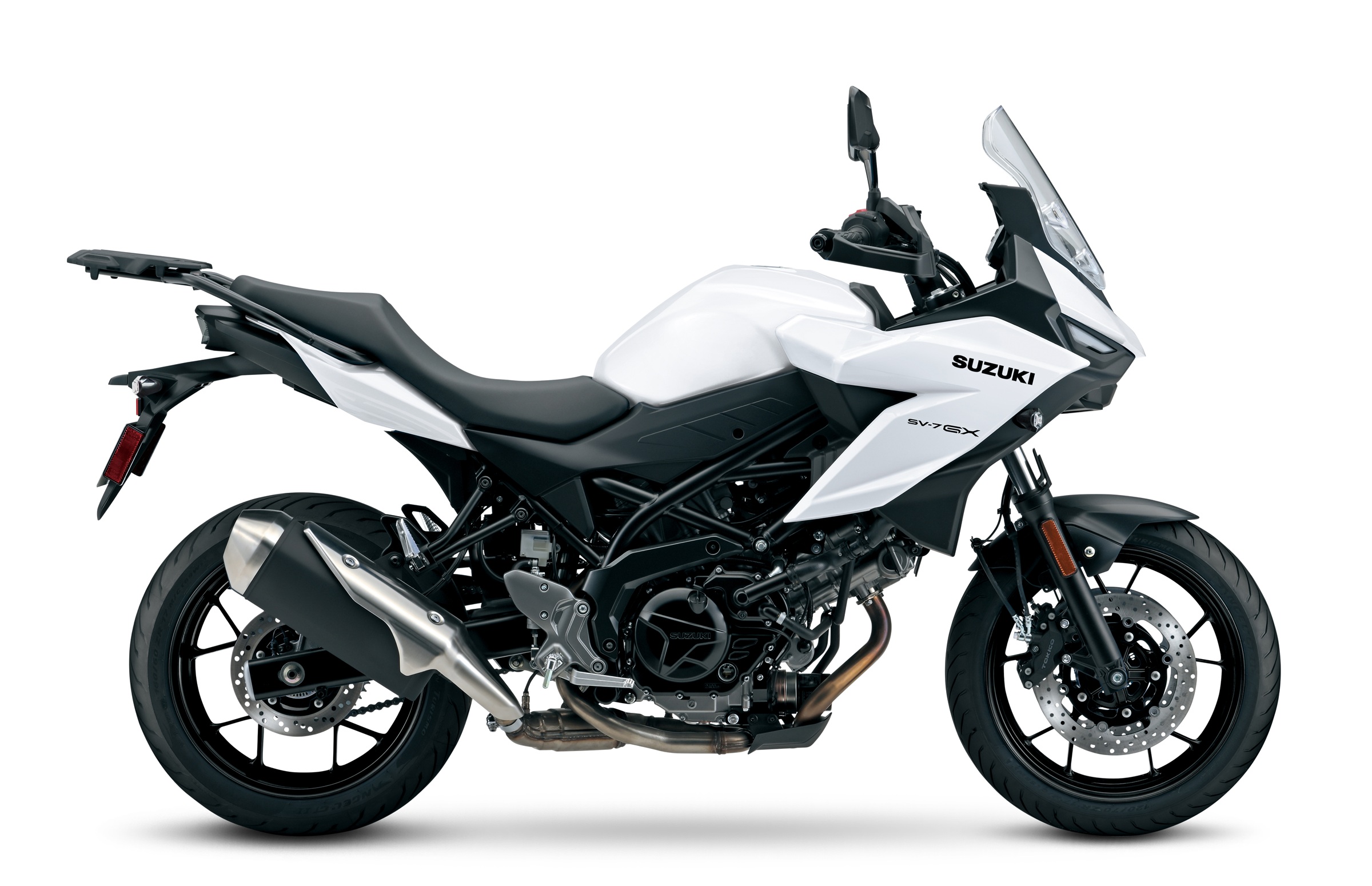
If you’re not into the graphics or you want a blank canvas for your own customization, the SV-7GXV is mechanically identical to the two SV-7GX versions. The only difference is paint and a $200 lower price. Suzuki photo.
As I found out on my day-long ride, which included all kinds of riding, a necessary stop for apple pie in Julian, and time for plenty of photos, the V in SV-7GX may indicate the V-twin engine, but it also could stand for “versatile.” And that feeling was reinforced the next day as I was lane-splitting my way into the Los Angeles sprawl and dodging city traffic.
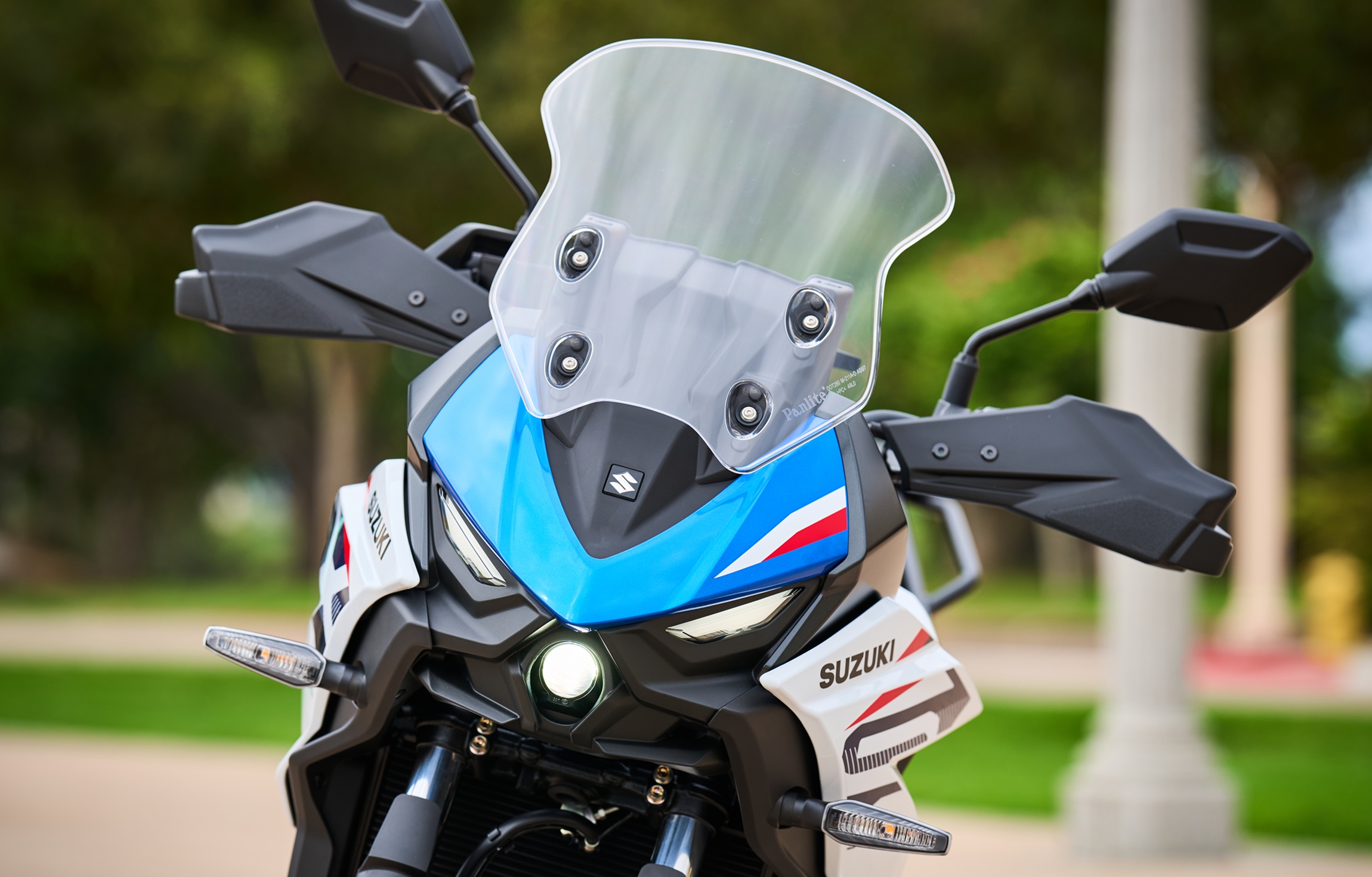
Plenty of modern touches on the SV-7GX, from the TFT display to the LED lighting all around. The projector-style LED headlight uses a lens to focus a broad spread of light on the road ahead and the two driving lights above it are intended to resemble eyes, according to Suzuki’s stylists. Photo by Joseph Agustin.
Highs and lows of the SV-7GX
I’ll start with the lows. There aren’t many, if you view this motorcycle in the context of its price. Maybe it wouldn’t matter much if this motorcycle weren’t otherwise so capable of long-haul travel, but I was disappointed that the seat wasn’t more comfortable. Suzuki reps pointed out the added padding, compared to the SV650, but it was still pretty hard after an hour or two. Plus, as is often the case with affordable bikes with lower seat heights (and therefore marketed to newer riders, among other potential customers), the front of the seat is narrower, allowing for an easier reach to the ground. But that reduces the seating area. And when I slid back on the seat to where it was broader, then the reach to the hand grips had my arms fully extended and I found my shoulders getting tired on the stretch across Interstate 8.
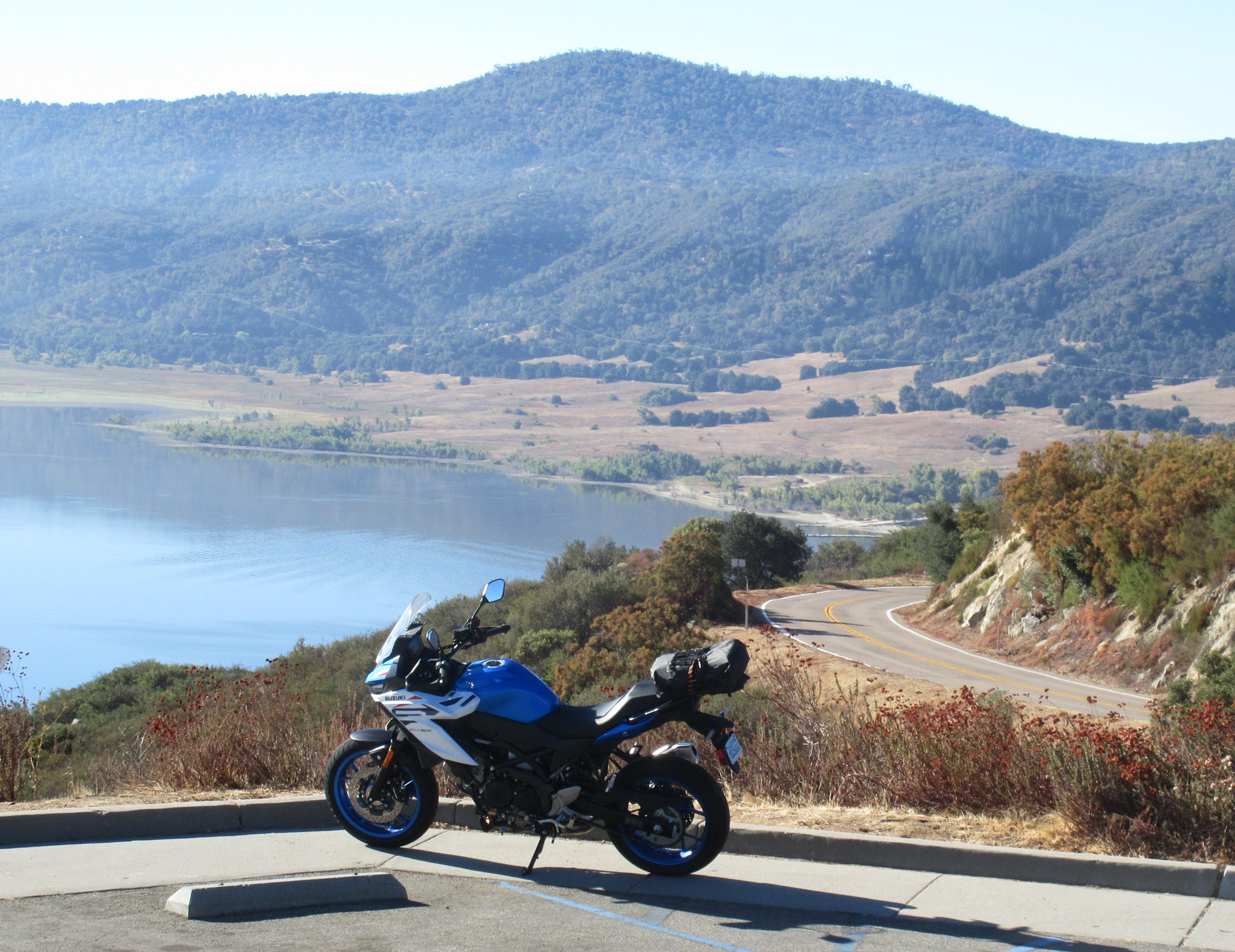
The rear rack makes it easy to strap a dry bag to the SV-7GX and take off for a weekend of lightweight sport-touring.
The other issue for long-haul usage (and maybe for commuters, as well) is luggage. By including the rear rack standard, Suzuki makes it easy to add a top box, whether you choose one of their two options, either a 45-liter or 27-liter box, or go with an aftermarket offering. For those of us who don’t love top boxes, options are fewer. Suzuki offers a set of throw-over semi-rigid saddlebags, plus a tank bag that attaches with a locking ring on the fuel filler. I expect other aftermarket luggage options will be coming out for this new model.
The high points are the price, the nimble handling, and the proven reliability and appeal of the V-twin engine. As I mentioned in the beginning, riders who like the middleweight sport-touring category don’t have many turn-key choices. A Kawaski Versys 650 LT ABS is the most obvious competitor. It costs more, with an MSRP of $10,399, but that includes the integrated, locking panniers. I’m sure some riders will prefer having Kawasaki’s side cases while others will prefer having Suzuki’s V-twin engine instead of the parallel twin. Another option is the Triumph Tiger Sport 660, which makes 20 more horsepower and has cruise control with an MSRP of $10,445. In other markets, the Yamaha Tracer 7 is obvious competition but Yamaha doesn’t sell that model in the United States.
We’ve seen an increasing number of options and some very enticing new motorcycles in other smaller categories, from small sport bikes to middleweight adventure-tourers. With the SV-7GX I can say one thing for sure and be hopeful of another: The popular and venerable Suzuki V-twin engine has a worthy new home and a future many of us did not expect, and this new model could be the first of new options in a middleweight sport-touring category that I love and has too long been neglected.
| 2027 Suzuki SV-7GX | |
|---|---|
| MSRP | SV-7GX: $8,599; SV-7GXV: $8,399 |
| Engine | 645 cc liquid-cooled, eight-valve, 90-degree V-twin |
| Transmission, final drive | Six-speed, chain |
| Claimed output | 72 horsepower @ 8,500 rpm; 47 foot-pounds of torque @ 6,800 |
| Electronics | Three ride modes; three levels of traction control plus off; bi-directional quickshifter on or off |
| Front brakes | Dual 290 discs, four-piston Tokico calipers; ABS standard |
| Rear brake | Single 240 mm disc, single-piston caliper rear; ABS standard |
| Front suspension | 41 mm conventional fork, 4.9 inches of travel |
| Rear suspension | Linkage-style single rear shock, adjustable for preload, 5.1 inches of travel |
| Wheelbase; rake; trail | 56.9 inches; 25.0 degrees; 4.2 inches |
| Seat height | 31.3 inches |
| Fuel capacity | 4.6 gallons |
| Weight | 465 pounds |
| Tires | Pirelli Angel GT II, 120/70ZR17 front, 160/60ZR17 rear |




I still dont get why they didnt offer a package with the imu and cruise. Its got the throttle by wire system.
It would make it more competitive between the Tiger Sport 800 and the european Tracer 7. Im in similar mindset of getting a good value for money middle weight. Two big requirements are cruise and imu. The hornet has no cruise either.
At this moment its between the Tiger or the Tracer. I love my Suzukis, I’ve owned four. But the lack of electronics leaves me looking elsewhere.
I hear you, not because I want cruise control myself (I appreciate it now and then when I have it but don’t miss it much when I lack it) but because I realize it’s a must-have feature for many other riders. Some speculate that in some cases, such as the Honda Transalp, a particularly travel-worthy ADV, the manufacturer leaves off cruise control in hopes it will push some buyers to the more expensive, full-featured Africa Twin. But in this case, that doesn’t apply. The SV-7GX and the GSX-S1000GX+ are so far apart, in price, size, power, and everything else, that nobody is going to be wavering between the two.
So bottom line, I’m with you. I wonder why Suzuki didn’t go ahead and offer it.