It dawned on me that it’s been five years since I last wrote a year-end “my year in riding” piece. In part that’s because I felt a little self-conscious, writing about my personal riding over the course of the past year. Everyone has their own year of riding to look back on, so who wants to hear about mine? Seems kind of navel-gazing, honestly.
But this year I’m reviving the annual look back because I think it’s of at least some interest for two reasons. One, the year gave me the opportunity to do long rides on two flagship touring motorcycles bristling with the latest technology, from transmissions that shift themselves to cruise control that adjusts itself on the fly. It was an instructive year, giving me a chance to become truly — not just passingly — familiar with the latest in motorcycle technology. And second, 2025 was remarkable in that it was, for me, a year of riding that was almost exactly the opposite in every way from 2020, the last time I did a “year in riding” look back. And while that may sound like something of personal rather than general interest, it really means that I had more to talk about this year that might be of broad interest.
I’ll explain.
Starting with that second point: 2025 was unique for me in that it was the first year I ever rode more miles on motorcycles I didn’t own than on motorcycles I did own. That’s the normal situation for my colleagues who live in Southern California and are constantly testing new bikes available in the press fleets based there. But living in Ohio for many years and now in Massachusetts, I don’t have such steady access to test bikes. That was especially true in 2020, when everything shut down and I didn’t ride a single test motorcycle all year. My entire mileage was on my own rides.
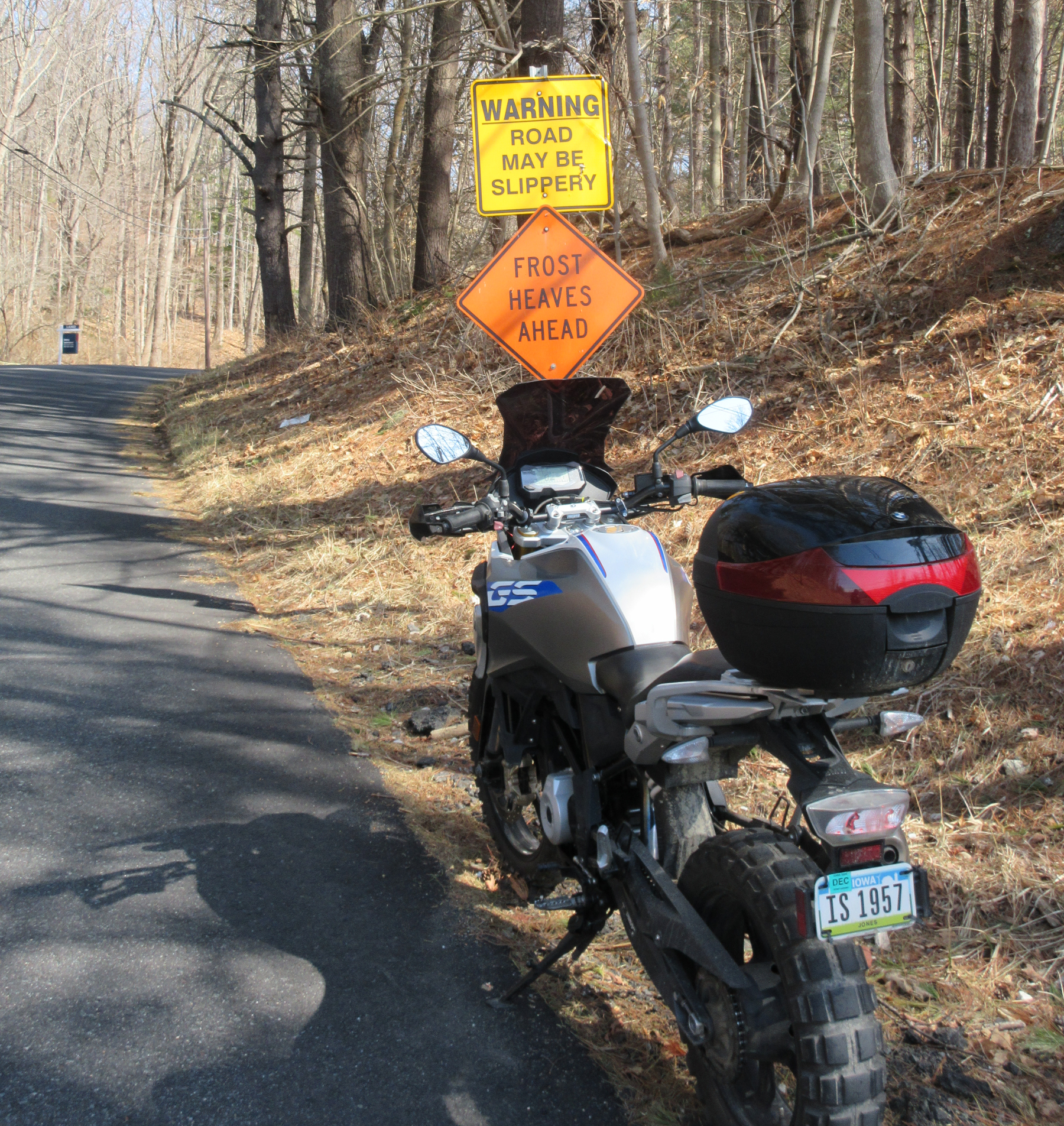
I started the year, in the long-lingering winter of the Berkshire Mountains, riding the company-owned 2019 BMW G 310 GS, a relatively light, sure-footed option for days when conditions are possibly less than perfect.
And the majority of that was on the 2014 Honda VFR800 Interceptor Deluxe I bought in 2020, days before the pandemic shut down everything. In 2025, I sold that same VFR and only rode it twice, for a total of 130 miles. About 74% of the miles I rode in 2025 were on others’ motorcycles, from the Comoto-owned BMW G 310 GS I rode for local winter transportation and longer highway excursions alike, to the 2025 Honda Transalp I took on a long road test to Ohio and back, to a short but instructive ride on borrowed bikes modified for ice-riding. The fact that I rode 16 different motorcycles in 2025 (instead of just my own four, as I did in 2020) meant I had more to report on that might be of interest to you, the reader. But two of those motorcycles were really the bookends to my year in riding, and they set the tone for 2025.
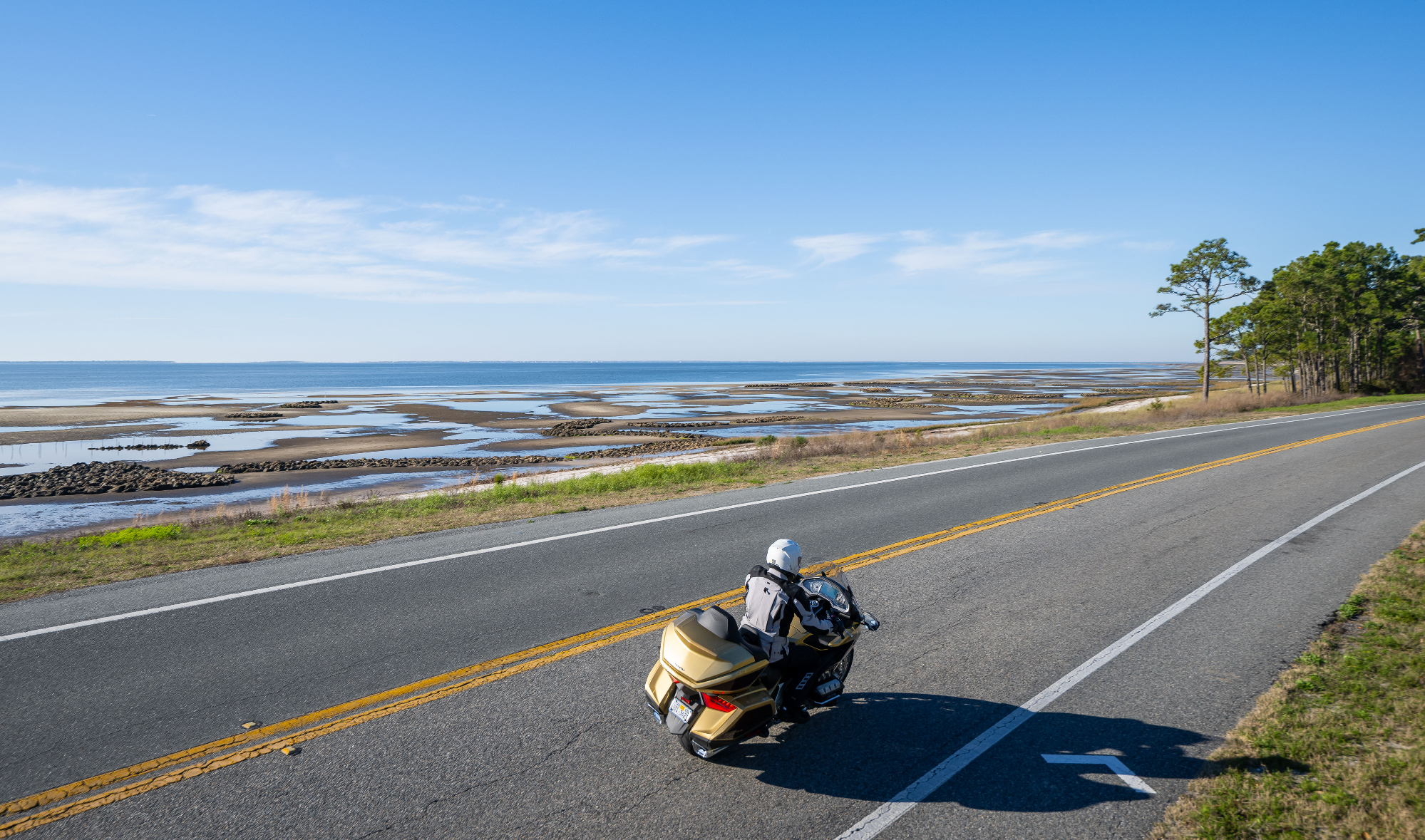
The Honda Gold Wing has 50 years of laying down big miles. How many motorcycle models last half a century? You can count on one hand. Align Media photo.
Coming through without the clutch: Riding the flagship tourers
In February, I rode out of Barber Motorsports Park with a group of motorcycle media types on a two-day ride to Daytona Bike Week on a new 50th Anniversary Honda Gold Wing Tour DCT. In October, I rode into Barber Motorsports Park after a two-day media ride on a BMW R 1300 RT. Neither motorcycle had a clutch lever. And that was far from the only similarity.

If you’ve ridden through the Little River Canyon National Preserve in northern Alabama, you know this rock. If you haven’t ridden there, you should. Photo by Kevin Wing.
Both of these motorcycles topped $30,000 in as-tested form and are laden with comfort features from electrically adjustable windscreens to heated seats, plus all the tech you can imagine, from traction control to linked anti-lock brakes. On top of that, the BMW adds adaptive cruise control, beyond the Honda’s regular cruise control. But more than any other feature, their transmissions distinguish them from the ordinary. Honda and BMW take two very different approaches to giving you the option of letting the motorcycle shift gears for you or letting you choose when to shift, but all without a clutch, and while both worked amazingly well, those differences mean most riders will have a definite preference for one or the other. If you’re interested in those details, go read my in-depth reviews at Common Tread: the Honda here and the BMW here.
Those two touring bikes were my first real in-depth experiences with the two companies’ shiftless options, Honda’s Dual-Clutch Transmission (DCT) and BMW’s Automated Shift Assist (ASA). And while the technology was truly impressive, and the features of these luxury models allowed me to cover many miles (684 on the Gold Wing and 2,083 on the R 1300 RT, to be exact) in total comfort, they also reinforced my deep-seated biases. I’ve always favored lighter motorcycles, and while the R 1300 RT claims to be more than 200 pounds lighter than the Gold Wing Tour, they both just plain felt heavy in use. I never felt like I could really relax. From choosing a parking spot that wasn’t sloped the wrong way to watching for slick spots at the gas station, I was constantly on guard, making sure that weight didn’t get away from me.
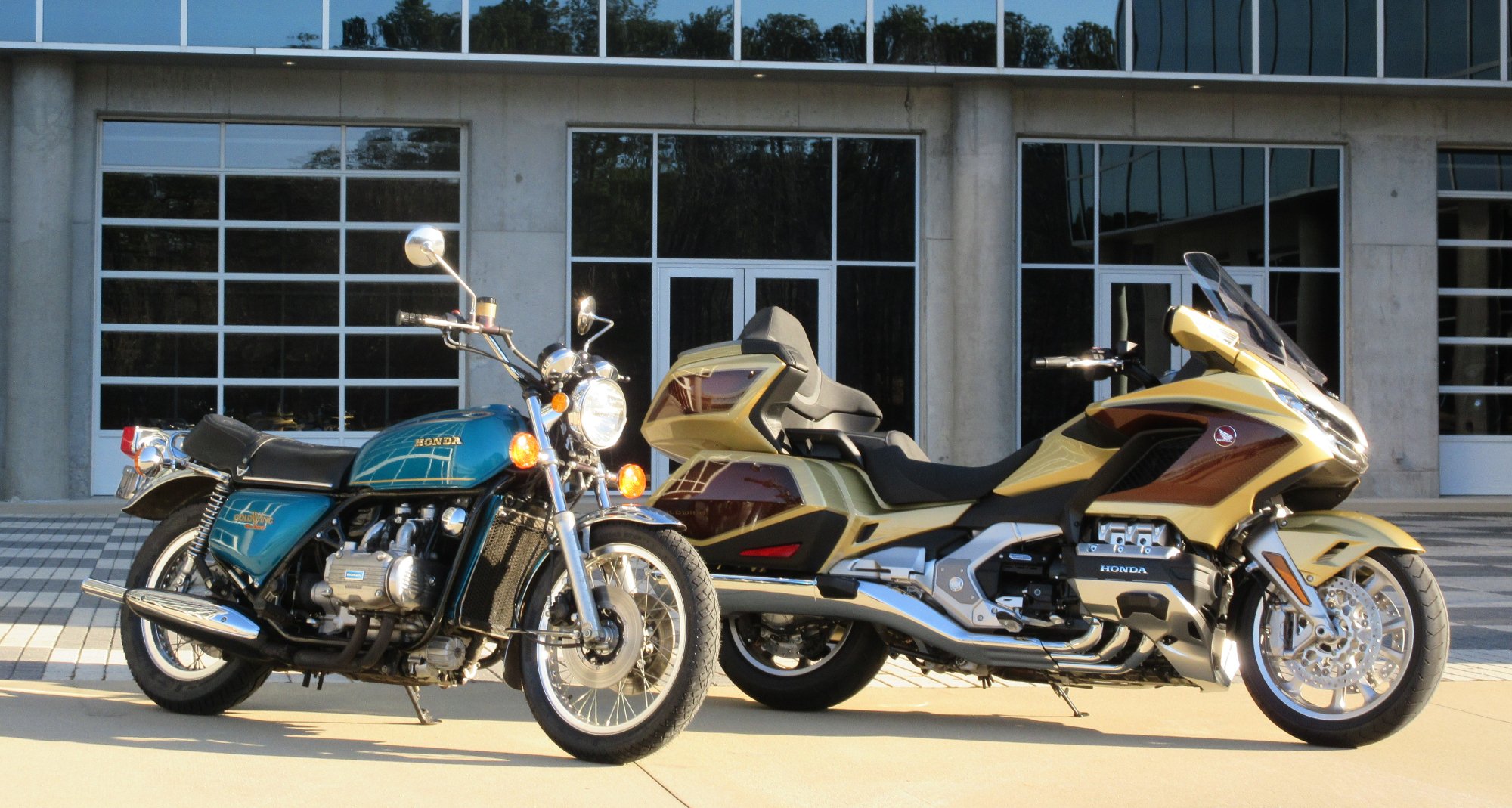
The Gold Wing was a large motorcycle when it came out in 1975. It looks a little different from the perspective of 2025.
Readers over at Common Tread talk about the ever increasing technology in motorcycles today, but what gets less attention is their ever-growing size. My first jolt of awareness was when I got a chance to ride two laps of Barber Motorsports Park track on an original 1975 Gold Wing. That first-year Gold Wing was a large motorcycle when it came out. Now, parked next to a 2025 model in the Barber paddock, it looked like a toy. I got an even bigger jolt of contrast when I got home from Alabama on the R 1300 RT and parked it in my garage next to the Kawasaki KLX300SM I bought this summer. The two experiences of riding them back to back were so different it felt it should be inaccurate to call them both motorcycles. Surely one must be a different category of thing from the other.
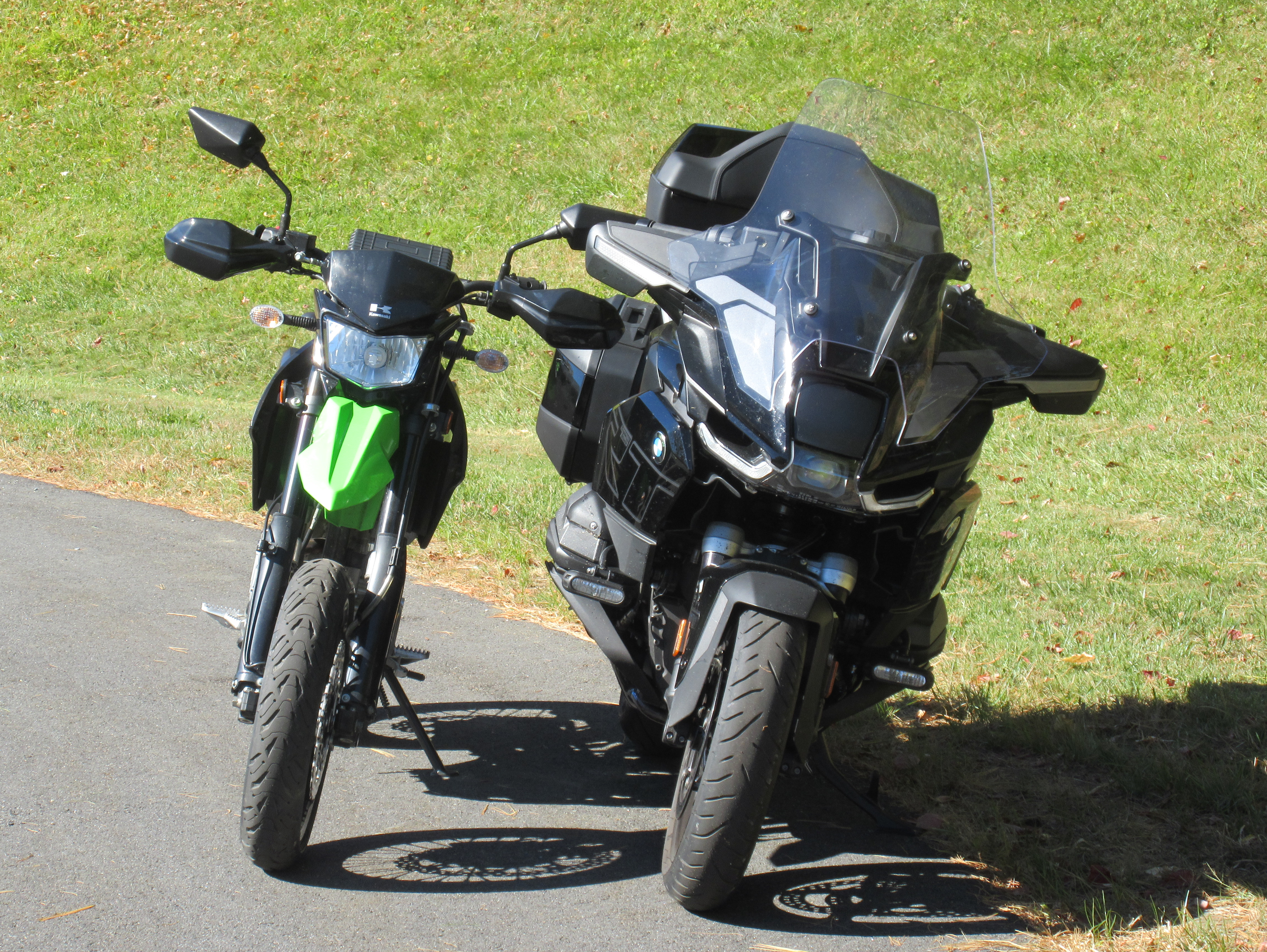
They’re both motorcycles, but the riding experience is quite different. As you’d expect.
Riding the two luxury touring motorcycles just reinforced my old bias toward lighter weight. Not to mention the fact that my deeply ingrained cheapness would never allow me to contemplate spending $30,000 for a motorcycle.
Summer break
A few summer rides on some Hondas reinforced those thoughts. Most notably, I took a Honda Transalp for a trip from my home in western Massachusetts past my old home in Ohio and went to the MotoAmerica round at the Mid-Ohio Sports Car Course, a track I know well both as a race spectator and a track-day rider. The Transalp doesn’t have cruise control and won’t shift gears for me and is in no way as luxurious as its Gold Wing big brother or the BMW, but I traveled a total of 1,891 miles on the Transalp and I never felt unduly uncomfortable. In part, that just proves how versatile today’s middleweight adventure-touring motorcycles are.
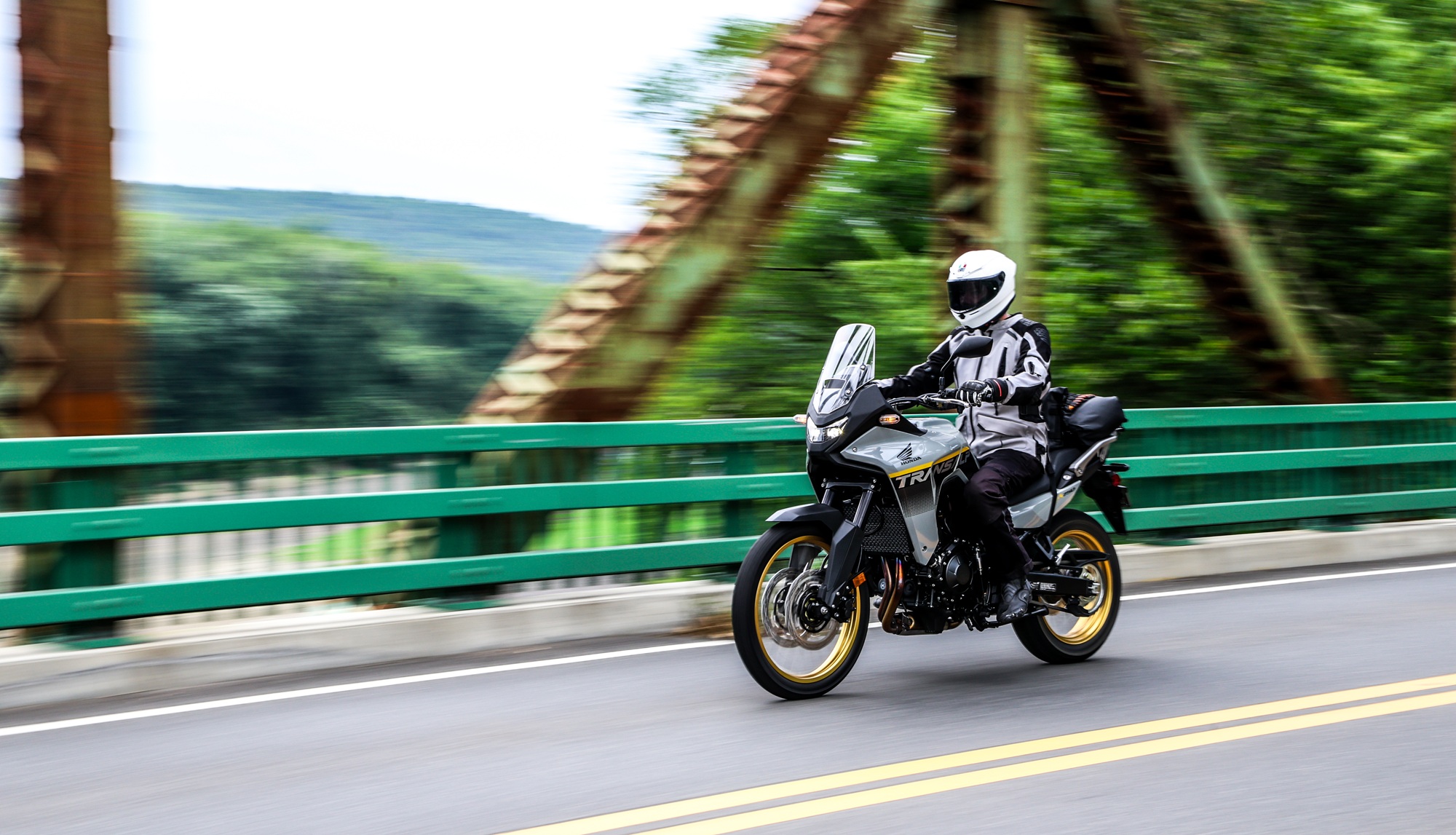
The Honda Transalp wasn’t as luxurious as the Gold Wing Tour, but it was perfectly capable of the multi-state trip I did and in most cases, I’d prefer riding it. Photo by Todd Verlander.
After returning the Transalp, I also did a short test on a Honda NX500, the lighter, more street-focused adventure bike in the lineup. I also went to California for the media introduction for the Honda CB750 Hornet and the CB1000 Hornet SP. Those bikes, all under 500 pounds, and all but the bigger Hornet costing less than a third of the Gold Wing Tour DCT, were perfectly capable of doing the riding I do, from trips like the one to Mid-Ohio to everyday runs to the grocery or hardware store or simply zipping up to the peak of nearby Mount Greylock for a cool breeze and fantastic view on a summer day. They won’t pound out hundreds of interstate miles with the luxury of the Gold Wing, but they do almost all those other tasks better, by some measures.
And all that helped focus my thinking for the real theme of 2025, on a personal level: which was answering the question of what I would buy to replace the 2014 Honda VFR800 Interceptor I sold early in the year after five years of ownership — the one I bought back in 2020, that far different year of riding. Riding a personal record number of press bikes this year accomplished two things. For one, it enabled me to do the trips I wanted to do for fun and needed to do for work, despite owning one motorcycle too old and one motorcycle too small for long-distance travel. And second, it helped me shape my thinking about the answer to the question in that previous article linked a few lines above. What comes next?
I have a few thoughts on that, though not yet a firm decision. But that’s a story for 2026. For my year in riding, 2025, my story was one about riding other people’s motorcycles. And some very comfy ones at that. And that’s not a bad year of riding.