“I’ve been riding for 25 years! I don’t need no training course.”
I’ve heard that sentiment expressed many, many times over the years. In various forms, with differing levels of indignation, but always by someone who would benefit from training. Always?
Yes, always. Because anyone can benefit from training. Cameron Beaubier recently recorded his 90th AMA Pro roadracing victory across all classes during his career, breaking the all-time wins record. And he works with a rider coach. Unless you are paid to race in MotoGP, you are not a better rider than Cameron Beaubier. And, by the way, MotoGP riders work with coaches, too.
But I’ve run into lots of riders who shrug off the idea they have anything to learn from an expert. And let’s be blunt about a few facts. In the United States, most riders are men and a big slice of those riders are middle-aged or older. In our culture, it’s hard for men of a certain age to admit they aren’t good at something. At the same time, the average rider in this country is only riding a couple of thousand miles a year. So not only are they untrained, their skills are probably also rusty.
The answer is not just riding more, either. A lot of those riders who say they have nothing to gain from training because they have been riding for 25 years, do not have a 25-year riding career of progressive learning. In many cases, especially the ones who only ride occasionally, they actually have 25 years of repeating the same first-year mistakes. And, unfortunately, ingraining those bad habits even more deeply.
What we need, instead, like any good construction, is two things: a solid foundation and ongoing, careful maintenance. That means starting with some formal training so we have the basics in place. I don’t mean just the Motorcycle Safety Foundation Basic RiderCourse, though it would be a great start if everyone took that. But also I mean continuing education. There are plenty of advanced courses available. And if there isn’t one close to you or you can’t afford it, there are some great books you can read. The other component of that continuing education is constantly reinforcing those skills, riding with awareness, analyzing near misses, and learning from every ride.
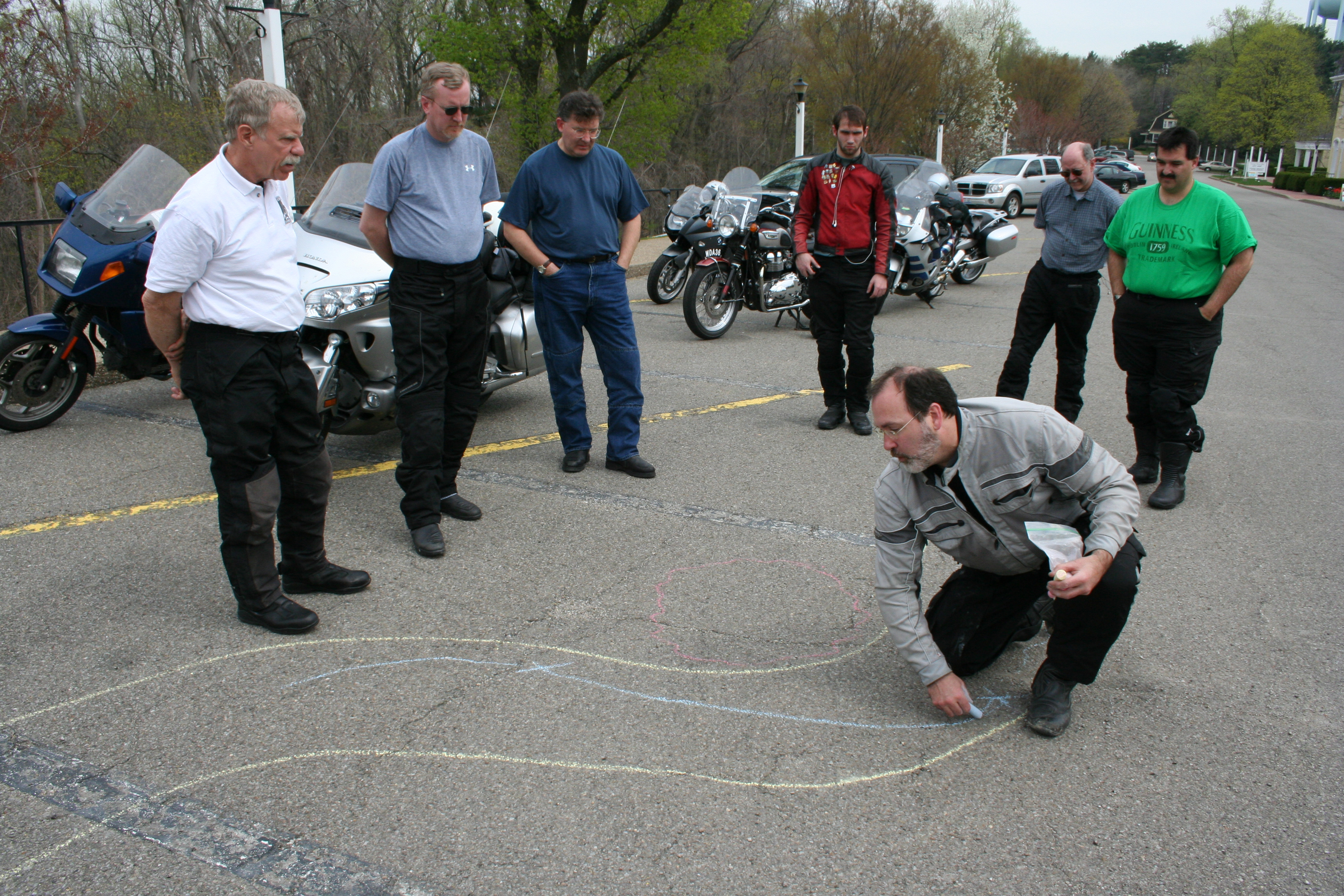
While most advanced motorcycle instruction — even that aimed at street riders, not would-be racers — takes place on race tracks, some courses, such as Stayin’ Safe, take place on public roads and focus on managing the threats of street riding. Another example is on-street training from Riding in the Zone Rider Training.
To some people, the idea of taking a relaxing ride and turning off the mind may sound appealing. But it’s far from the best strategy for arriving home safely from that ride. When you’re on a motorcycle, the words carefree and careless are very closely related.
The Motorcycle Crash Causation Study found, no surprise, that intersections are the most dangerous spot, and yes, car drivers do hit us too often. But a lot of the crashes in the study were blamed on the rider drinking and nearly half of the fatal crashes were when a rider failed to make a curve. Training can help with that last one, in particular.
With a couple of interruptions when I was younger, I’ve been riding motorcycles on the street since I was 18. When I started riding, training options were non-existent, in my time and place. Once I discovered my college’s library had motorcycle magazines in the stacks, I at least spent hours studying the articles on riding skills in all those back issues (and, of course, looking at the shiny new models, too). It wasn’t until many years later I got my first true formal training when I took the Jason Pridmore Star School course.
Since then, I’ve tried to get some kind of instruction at least every other year, and usually I’ve exceeded that goal, if only by taking advantage of the free coaching and advice from the control riders at track days I’ve attended. On the track-focused end of the spectrum, I’ve taken the Kevin Schwantz Suzuki School, and on the street-focused end I’ve twice taken the on-road Stayin’ Safe Motorcycle Training course, once under the founder, the late Larry Grodsky, and years later under his successor, Eric Trow. Those courses taught me, someone who thought he was a pretty aware street rider, that there was another entire level of situational awareness to aspire to. Two years ago I took Ken Condon’s Advanced Street Rider Training course, and I planned to take it again this year. But a last-minute tire problem had me worried I’d get there and waste the day in the pits with a mechanical problem, so I didn’t go. So this year I missed my every-other-year minimum schedule. I’ll be back to repeat Ken’s training for sure in 2026.
So I’ve been riding for decades. I’ve ridden more than 125 different motorcycles of all kinds, from 50 cc to 1,977 cc. But you’ll never hear me say I have nothing left to learn, and you’ll definitely never hear me say that my motorcycle riding skills, which are perishable things by nature, don’t need any honing.
What’s stopping you from trying to be a better rider by getting some instruction? Is it because you know it all? Or because your pride doesn’t want to let you admit you don’t?




Truer words have never been written
Interesting distinction between confidence and pride. I am and have always been wide open to training. Even so, my pride and overconfidence is an impediment. Lee Parks, in his book “Total Control,” points to the value of beginner’s mind. I aspire to that approach to training.